Comment utiliser le psyllium : méthode efficace pas à pas
Avertissement médical : Les informations de cet article sont fournies à titre éducatif uniquement. Elles ne remplacent pas l’avis d’un médecin ou d’un professionnel de santé qualifié. Consultez votre médecin avant de débuter toute supplémentation, notamment si vous prenez des médicaments ou souffrez d’une pathologie chronique.
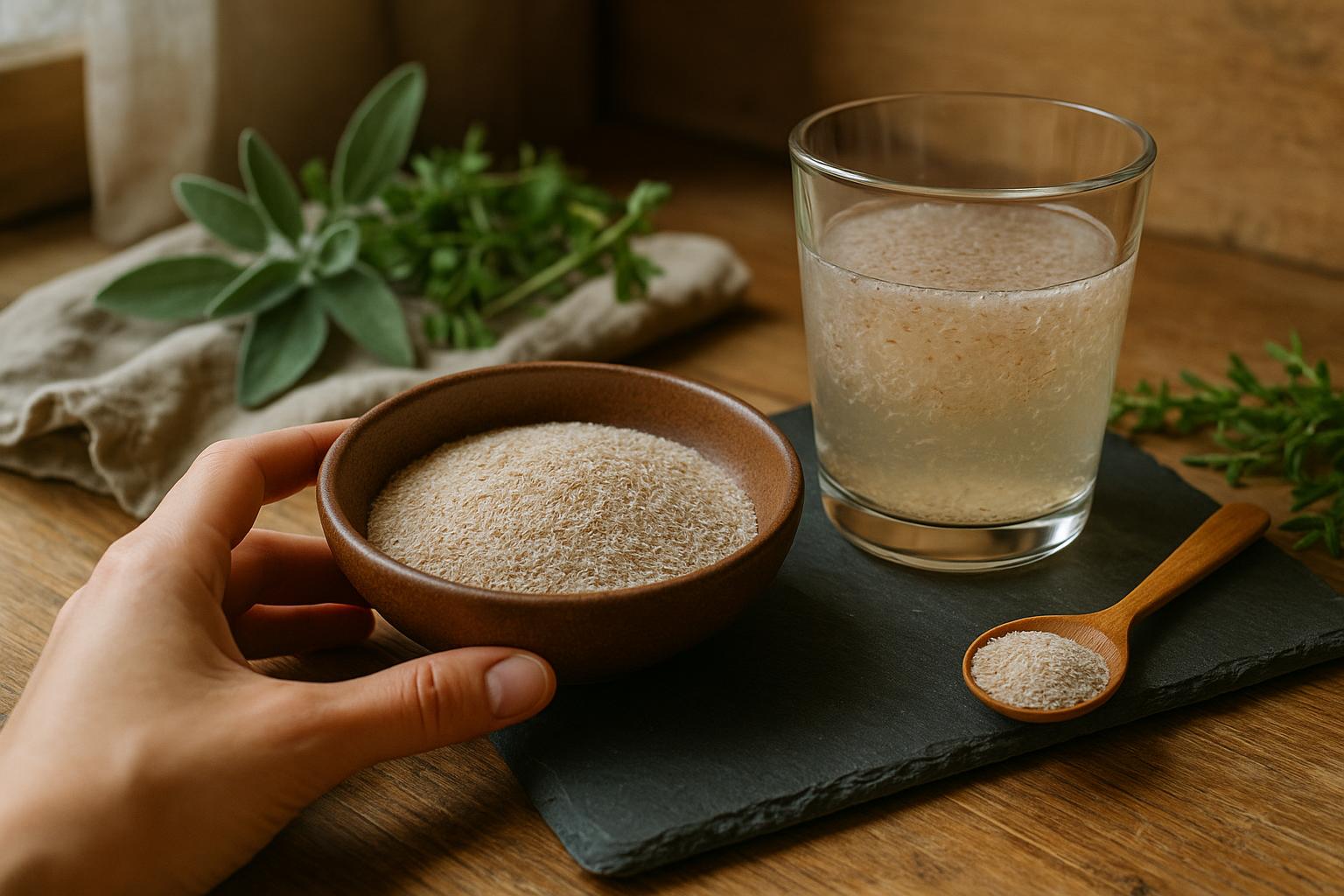
Comment utiliser le psyllium : mélangez 5 à 10 g de tégument de psyllium dans 250 ml d’eau, buvez immédiatement, puis ingérez un second verre d’eau — idéalement 30 minutes avant un repas. Cette fibre soluble issue des enveloppes de graines de Plantago ovata forme un gel visqueux dans l’intestin qui régule le transit, abaisse le cholestérol LDL et stabilise la glycémie postprandiale. Selon une méta-analyse publiée dans le American Journal of Clinical Nutrition, une supplémentation quotidienne de 7 à 10 g réduit le cholestérol LDL de 6 à 24 % en 8 semaines.
- Régulation du transit intestinal (constipation et diarrhée)
- Réduction du cholestérol LDL jusqu’à 24 %
- Stabilisation de la glycémie après les repas
- Effet satiétant pour la gestion du poids
- Soutien du microbiote intestinal via l’effet prébiotique
Qu’est-ce que le psyllium exactement ?
Le psyllium désigne les téguments — les enveloppes externes — des graines de Plantago ovata, une plante originaire d’Inde et d’Iran. Ces enveloppes sont composées à 70 % de fibres solubles, principalement des arabinoxylanes. Au contact de l’eau, elles absorbent jusqu’à 50 fois leur poids en liquide et forment un gel épais. Ce gel n’est pas digéré par les enzymes humaines : il traverse l’intestin intact, agissant mécaniquement sur le transit.
Il existe deux variétés principales : le psyllium blond (Plantago ovata) et le psyllium noir (Plantago psyllium). Le psyllium blond est la forme la plus concentrée en fibres solubles et la plus utilisée en supplémentation. différence entre ispaghul et psyllium est souvent source de confusion : ispaghul est simplement le nom pharmaceutique du psyllium blond.
La teneur en fibres varie selon la forme : les téguments entiers contiennent environ 85 % de fibres, la poudre fine environ 70 %, et les gélules dépendent du dosage inscrit sur l’emballage.
Poudre, gélules ou téguments : quelle forme choisir ?
Comprendre comment utiliser le psyllium commence par choisir la bonne forme. Chaque présentation a ses avantages selon votre mode de vie et votre objectif. psyllium en gélule ou poudre : voici les différences essentielles à connaître avant d’acheter.
| Forme | Teneur en fibres | Facilité d’utilisation | Idéale pour |
|---|---|---|---|
| Téguments entiers | 85 % | Moyenne (à diluer) | Usage quotidien, cuisson |
| Poudre fine | 70 % | Bonne (se mélange mieux) | Smoothies, yaourts, recettes |
| Gélules | Variable (dosage indiqué) | Excellente (pratique) | Déplacements, précision de dose |
| Comprimés | Variable | Bonne | Personnes ne supportant pas la texture |
Les téguments entiers sont la forme la plus économique et la plus concentrée. La poudre fine se dissout mieux dans les préparations culinaires. Les gélules conviennent aux personnes qui voyagent ou qui n’apprécient pas la texture gélatineuse. Pour des effets digestifs optimaux, les téguments ou la poudre dilués dans l’eau restent les formes les plus efficaces.
Quelle dose de psyllium prendre par jour ?
Savoir comment utiliser le psyllium implique de maîtriser les doses. L’Autorité européenne de sécurité des aliments (EFSA) a validé une allégation santé pour le psyllium à partir de 10 g par jour pour le maintien d’une glycémie normale après les repas. Pour le cholestérol, la dose efficace validée est de 6 à 10 g par jour.
- Débutants : 2,5 à 5 g une fois par jour pendant 1 semaine
- Dose standard : 5 à 10 g, 1 à 3 fois par jour
- Dose maximale recommandée : 30 g par jour (répartis en 3 prises)
- Enfants (6-12 ans) : 2,5 à 5 g par jour, sur avis médical uniquement
- Personnes âgées : commencer à 2,5 g et augmenter lentement
La règle d’or : augmentez la dose progressivement sur deux semaines. Une augmentation trop rapide provoque des ballonnements, des gaz et des crampes abdominales. Le corps a besoin de temps pour adapter son microbiote à l’apport accru en fibres fermentescibles.
Quand prendre le psyllium : le timing qui optimise les effets
Le moment de la prise influence directement l’efficacité. Pour savoir comment utiliser le psyllium selon votre objectif, voici les créneaux recommandés. quand prendre le psyllium selon votre objectif de santé.
- Pour la satiété et le poids : 30 minutes avant chaque repas principal
- Pour la glycémie : juste avant ou pendant le repas
- Pour le cholestérol : répartir les prises sur la journée, aux repas
- Pour la constipation : le soir au coucher ou le matin à jeun
- Pour la diarrhée : entre les repas, avec beaucoup d’eau
Évitez de prendre le psyllium en même temps que vos médicaments. Le gel formé peut ralentir l’absorption de certains principes actifs. Respectez un intervalle d’au moins 1 heure avant ou 2 heures après la prise de médicaments.
Comment préparer le psyllium dans l’eau : la méthode standard
La méthode de base pour savoir comment utiliser le psyllium est simple mais doit être respectée à la lettre. Une préparation incorrecte réduit l’efficacité et augmente le risque d’étouffement.
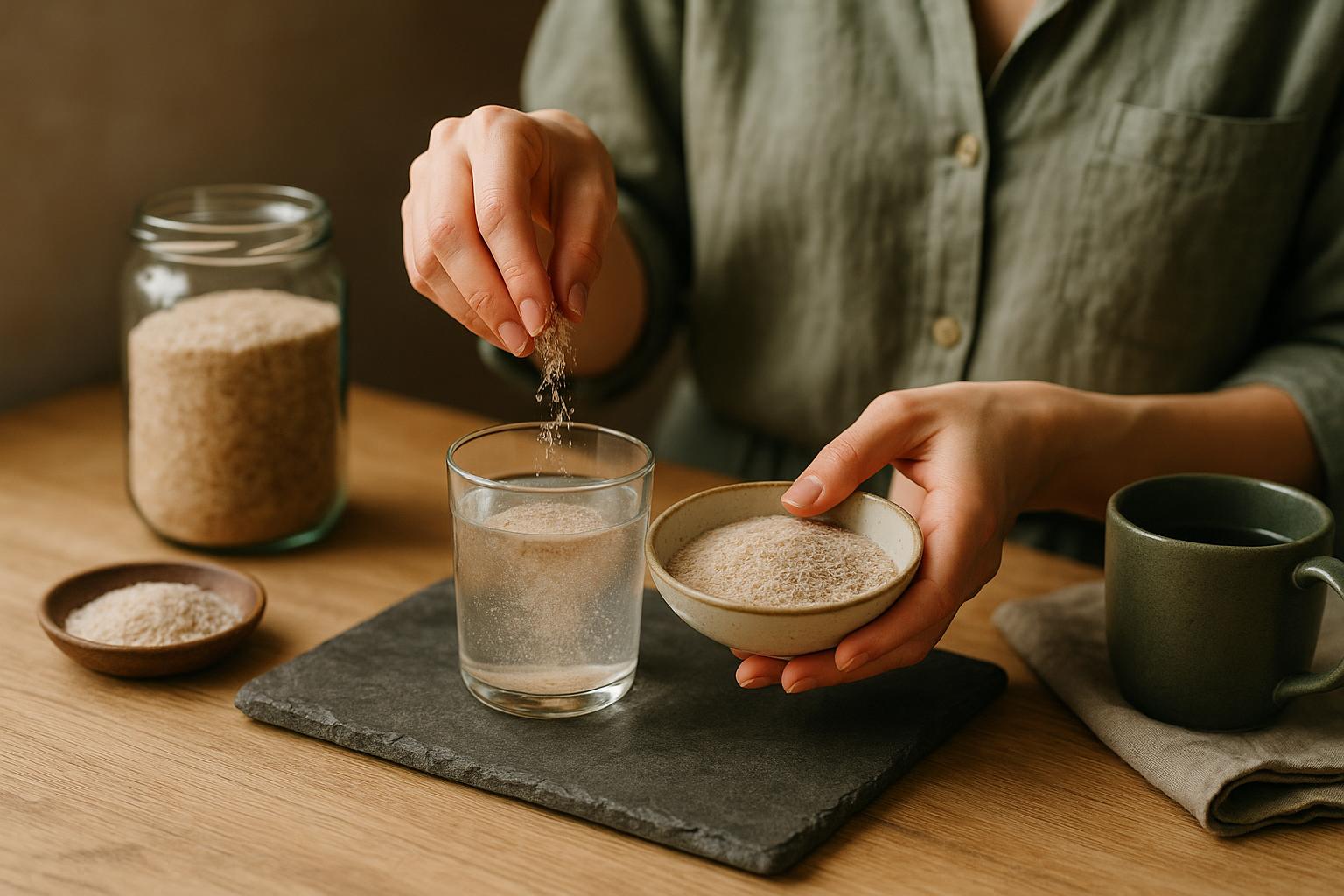
- Mesurez 5 à 10 g de téguments de psyllium (environ 1 à 2 cuillères à café rases)
- Versez dans un grand verre contenant au moins 250 ml d’eau froide ou tiède
- Mélangez vigoureusement pendant 10 secondes
- Buvez immédiatement, avant que le gel ne se forme (dans les 30 secondes)
- Buvez ensuite un second verre d’eau de 250 ml minimum
- Maintenez une hydratation totale de 1,5 à 2 litres d’eau par jour
Ne jamais avaler le psyllium sec ou en poudre non diluée. Sans eau suffisante, le gel peut se former dans l’œsophage ou l’intestin et provoquer une obstruction. Cette précaution est absolument non négociable.
7 façons pratiques d’intégrer le psyllium dans votre alimentation
Apprendre comment utiliser le psyllium ne se limite pas au verre d’eau. Cette fibre neutre en goût s’intègre facilement dans de nombreuses préparations quotidiennes.
- Smoothie du matin : ajoutez 5 g dans votre smoothie fruits-légumes, mixez bien
- Yaourt : mélangez 5 g dans un yaourt nature, laissez reposer 2 minutes
- Soupe ou bouillon : incorporez 5 g dans une soupe chaude pour l’épaissir naturellement
- Pain sans gluten : utilisez 10 à 15 g pour remplacer le gluten et améliorer la texture
- Porridge : ajoutez 5 g à votre flocons d’avoine pour augmenter l’effet satiétant
- Jus de fruits : mélangez dans un jus d’orange ou de pomme, buvez vite
- Eau aromatisée : ajoutez quelques gouttes de citron pour améliorer l’acceptabilité
Pour la cuisson, le psyllium agit comme liant et épaississant. comment consommer du psyllium dans vos recettes quotidiennes sans en altérer le goût. Dans les préparations cuites, la dose habituelle est de 1 à 2 cuillères à café pour 200 g de farine.
Comment utiliser le psyllium contre la constipation
La constipation est l’indication la plus documentée. Savoir comment utiliser le psyllium pour ce problème spécifique permet d’obtenir des résultats en 12 à 72 heures. comment prendre le psyllium pour la constipation de façon optimale selon la sévérité des symptômes.
Le mécanisme est mécanique : le gel absorbe l’eau dans le côlon, ramollit les selles et augmente leur volume. Ce volume accru stimule les contractions péristaltiques. Une revue Cochrane de 2020 confirme que le psyllium est plus efficace qu’un placebo pour augmenter la fréquence des selles et améliorer leur consistance.
- Dose recommandée : 10 g le soir, avec 300 ml d’eau minimum
- Résultats attendus : 12 à 72 heures après la première prise
- Durée de cure : 4 à 8 semaines pour un effet durable
- Associer à une hydratation de 2 litres d’eau par jour
- Maintenir une activité physique modérée pour optimiser le transit
Psyllium et cholestérol : le protocole validé
L’effet hypocholestérolémiant du psyllium est l’un des mieux documentés en nutrition. Comprendre comment utiliser le psyllium pour réduire le cholestérol LDL nécessite de respecter un protocole précis sur la durée.
Le gel de psyllium piège les acides biliaires dans l’intestin grêle. Le foie doit alors synthétiser de nouveaux acides biliaires à partir du cholestérol sanguin, ce qui réduit mécaniquement le LDL circulant. La FDA américaine autorise depuis 1998 une allégation santé pour le psyllium et la réduction du risque cardiovasculaire.
- Dose minimale efficace : 7 g de fibres de psyllium par jour (environ 10 g de téguments)
- Répartir en 2 à 3 prises quotidiennes aux repas
- Durée minimale pour observer un effet : 4 semaines
- Réduction moyenne du LDL : 6 à 24 % selon les études
- Associer à une alimentation pauvre en graisses saturées
Psyllium et glycémie : comment l’utiliser efficacement
Savoir comment utiliser le psyllium pour la glycémie est particulièrement utile pour les personnes diabétiques de type 2 ou prédiabétiques. L’EFSA a validé l’allégation selon laquelle 10 g de psyllium par jour contribuent au maintien d’une glycémie normale après les repas.
Le gel ralentit la vidange gastrique et l’absorption des glucides dans l’intestin grêle. Cet effet tampon réduit le pic glycémique postprandial. Une méta-analyse de 2019 publiée dans Diabetes Care montre une réduction de l’HbA1c de 0,4 % en moyenne après 8 semaines de supplémentation à 10 g par jour.
Pour maximiser cet effet, prenez le psyllium juste avant ou pendant les repas riches en glucides. La prise post-repas est moins efficace car le gel n’a pas le temps de se former avant l’absorption des sucres.
Précautions et effets secondaires à connaître
Comprendre comment utiliser le psyllium en toute sécurité implique de connaître les contre-indications et les effets indésirables possibles.
- Ballonnements et gaz : fréquents les 2 premières semaines, diminuent avec l’adaptation
- Obstruction intestinale : risque réel si pris sans eau suffisante
- Allergie : rare mais possible, surtout chez les personnes exposées professionnellement
- Interactions médicamenteuses : ralentit l’absorption de la digoxine, warfarine, lithium, metformine
- Hypoglycémie : surveiller la glycémie si traitement antidiabétique en cours
Contre-indications absolues :
- Occlusion intestinale ou sténose digestive
- Difficulté à avaler (dysphagie)
- Fécalome non traité
- Allergie connue au psyllium ou aux Plantaginacées
Comment faire une cure de psyllium : durée et protocole
Savoir comment utiliser le psyllium en cure structurée permet d’optimiser les bénéfices à long terme. Une cure bien conduite suit un protocole en trois phases.
- Phase d’introduction (semaine 1-2) : 2,5 à 5 g une fois par jour, le matin
- Phase active (semaine 3-8) : 5 à 10 g, 2 à 3 fois par jour selon l’objectif
- Phase de maintenance (après 8 semaines) : 5 g par jour en entretien ou pause de 2 semaines
Une cure standard dure 4 à 8 semaines. Pour les objectifs cardiovasculaires, les études montrent des bénéfices dès 4 semaines. Pour la régulation du transit chronique, une utilisation continue de 3 mois est souvent nécessaire. Le psyllium ne crée pas de dépendance et peut être utilisé au long cours sans risque d’accoutumance, contrairement aux laxatifs stimulants.
Psyllium et microbiote : un prébiotique naturel
Au-delà du transit, comprendre comment utiliser le psyllium pour nourrir le microbiote ouvre de nouvelles perspectives. Le gel de psyllium est partiellement fermenté par les bactéries du côlon, notamment les Bifidobacterium et Lactobacillus. Cette fermentation produit des acides gras à chaîne courte (AGCC), notamment le butyrate, qui nourrit les cellules de la paroi intestinale.
Une étude publiée dans Gut Microbes en 2021 montre que 10 g de psyllium par jour pendant 4 semaines augmentent significativement la diversité microbienne intestinale. Associer le psyllium à des aliments fermentés renforce cet effet prébiotique.
- Comment utiliser le psyllium : toujours dans 250 ml d’eau minimum, boire immédiatement avant la gélification, suivi d’un second verre d’eau.
- Comment utiliser le psyllium pour la constipation : 10 g le soir avec 300 ml d’eau, résultats en 12 à 72 heures.
- Comment utiliser le psyllium pour le cholestérol : 7 à 10 g par jour répartis en 2-3 prises aux repas, pendant au moins 4 semaines.
- Comment utiliser le psyllium en toute sécurité : commencer à 2,5 g, augmenter progressivement, respecter un intervalle de 1 à 2 heures avec les médicaments.
- Comment utiliser le psyllium au quotidien : intégrez-le dans un yaourt, un smoothie ou un porridge pour faciliter l’observance sur le long terme.
Questions fréquentes sur comment utiliser le psyllium
Comment utiliser le psyllium pour la première fois ?
Commencez par 2,5 g (environ 1/2 cuillère à café) dans 250 ml d’eau, une fois par jour le matin. Buvez immédiatement et ajoutez un second verre d’eau. Maintenez cette dose pendant 7 jours avant d’augmenter. Cette approche progressive minimise les ballonnements et permet à votre microbiote de s’adapter en douceur.
Peut-on prendre du psyllium tous les jours ?
Oui, le psyllium peut être utilisé quotidiennement sans risque d’accoutumance. Contrairement aux laxatifs stimulants, il n’irrite pas la muqueuse intestinale. Des études cliniques confirment son innocuité sur des périodes allant jusqu’à 12 mois. Consultez un médecin si vous l’utilisez plus de 3 mois consécutifs pour un bilan digestif.
Comment utiliser le psyllium pour maigrir ?
Prenez 5 à 10 g dans 250 ml d’eau 30 minutes avant chaque repas principal. Le gel formé occupe de l’espace dans l’estomac, prolonge la satiété et réduit l’appétit. Les études montrent une réduction de l’apport calorique de 5 à 10 % en moyenne. Associez cette pratique à une alimentation équilibrée pour des résultats durables.
Quelle est la différence entre psyllium blond et psyllium noir ?
Le psyllium blond (Plantago ovata) contient environ 85 % de fibres solubles et est la forme la plus utilisée en supplémentation. Le psyllium noir (Plantago psyllium) contient moins de mucilages et est moins efficace. Pour les usages thérapeutiques, privilégiez toujours le psyllium blond ou ispaghul, dont l’efficacité est validée par les autorités sanitaires européennes et américaines.
Peut-on mélanger le psyllium dans du lait ou un jus ?
Oui, le psyllium peut être mélangé dans du lait, un jus de fruits ou un yaourt liquide. L’eau reste le liquide de référence pour une gélification optimale. Dans le lait, la gélification est légèrement ralentie. Évitez les liquides très chauds qui peuvent dénaturer les mucilages. Buvez toujours le mélange immédiatement après préparation.
Comment utiliser le psyllium en gélules ?
Avalez les gélules avec au moins 250 ml d’eau, jamais à sec. Respectez le dosage indiqué sur l’emballage, généralement 3 à 6 gélules par prise selon la concentration. Les gélules libèrent leur contenu dans l’estomac, où la gélification se produit normalement. L’effet est identique aux téguments en poudre, mais l’action est légèrement plus lente.
Le psyllium est-il efficace contre la diarrhée ?
Oui. Le gel de psyllium absorbe l’excès d’eau dans le côlon, ce qui raffermit les selles liquides. C’est l’un des rares remèdes naturels validés pour les deux extrêmes du transit. Pour la diarrhée, prenez 5 g entre les repas avec 300 ml d’eau. L’effet se manifeste généralement en 2 à 6 heures. Consultez un médecin si la diarrhée persiste plus de 48 heures.
Quels médicaments ne pas prendre avec le psyllium ?
Le psyllium peut réduire l’absorption de la digoxine, de la warfarine, du lithium, de la metformine, de la carbamazépine et des hormones thyroïdiennes. Respectez un intervalle de 1 heure avant ou 2 heures après la prise de ces médicaments. Informez toujours votre médecin ou pharmacien de votre supplémentation en psyllium si vous suivez un traitement chronique.
Comment utiliser le psyllium dans le pain sans gluten ?
Utilisez 10 à 15 g de téguments de psyllium pour 200 g de farine sans gluten. Le psyllium remplace le réseau glutineux en formant une structure élastique qui retient les gaz de fermentation. Hydratez d’abord le psyllium dans 150 ml d’eau pendant 2 minutes avant de l’incorporer à la pâte. Le résultat est un pain à la mie moelleuse et à la croûte croustillante.
Y a-t-il des risques à prendre trop de psyllium ?
Une dose excessive (au-delà de 30 g par jour) peut provoquer des ballonnements sévères, des crampes abdominales et une obstruction intestinale si l’hydratation est insuffisante. Des cas d’allergie respiratoire ont été rapportés chez des personnes manipulant de grandes quantités de poudre. Respectez la dose maximale recommandée et maintenez une hydratation de 2 litres d’eau par jour.
Comment utiliser le psyllium pendant la grossesse ?
Le psyllium est généralement considéré comme sûr pendant la grossesse pour traiter la constipation, fréquente au troisième trimestre. Consultez votre sage-femme ou gynécologue avant de commencer. La dose recommandée est de 5 g une fois par jour avec 250 ml d’eau. Le psyllium n’est pas absorbé systémiquement et ne présente pas de risque connu pour le fœtus aux doses standard.
Comment utiliser le psyllium pour nettoyer le côlon ?
Pour un effet de nettoyage colique, prenez 10 g de psyllium le soir avec 300 ml d’eau pendant 4 semaines. Le gel balaie mécaniquement les parois du côlon et facilite l’élimination des résidus. comment consommer le psyllium pour une cure de nettoyage efficace. Associez cette cure à une alimentation riche en légumes et à une hydratation de 2 litres par jour.
Ce qu’il faut retenir
Savoir comment utiliser le psyllium correctement transforme une simple fibre en outil thérapeutique polyvalent. Comment utiliser le psyllium au quotidien se résume en trois règles : la bonne dose (5 à 10 g), le bon liquide (250 ml d’eau minimum), et le bon timing (avant les repas ou selon l’objectif). Augmentez progressivement sur deux semaines pour éviter les inconforts digestifs.
Commencez dès demain matin : mélangez 2,5 g de téguments de psyllium dans un grand verre d’eau et buvez-le 30 minutes avant votre petit-déjeuner. Maintenez cette routine 7 jours, puis doublez la dose si vous la tolérez bien.
Sources et études
- Anderson JW et al. — Psyllium cholesterol-lowering effects, American Journal of Clinical Nutrition, 2000
- EFSA — Scientific Opinion on the substantiation of health claims related to psyllium seed husk, 2011
- NCCIH — Psyllium: What You Need To Know, National Center for Complementary and Integrative Health
- Harvard Health Publishing — Soluble fiber and cholesterol reduction, 2022
- ANSES — Les fibres alimentaires : définition, sources et effets sur la santé, 2023
Cet article est fourni à titre informatif uniquement et ne constitue pas un avis médical. Consultez un professionnel de santé qualifié avant toute utilisation.