Ispaghul ou psyllium : tout savoir pour un choix éclairé
⚠️ Avertissement médical : Les informations de cet article sont fournies à titre informatif uniquement. Elles ne remplacent pas l’avis d’un médecin ou d’un professionnel de santé qualifié. Consultez votre médecin avant de modifier votre alimentation ou de prendre un complément alimentaire.
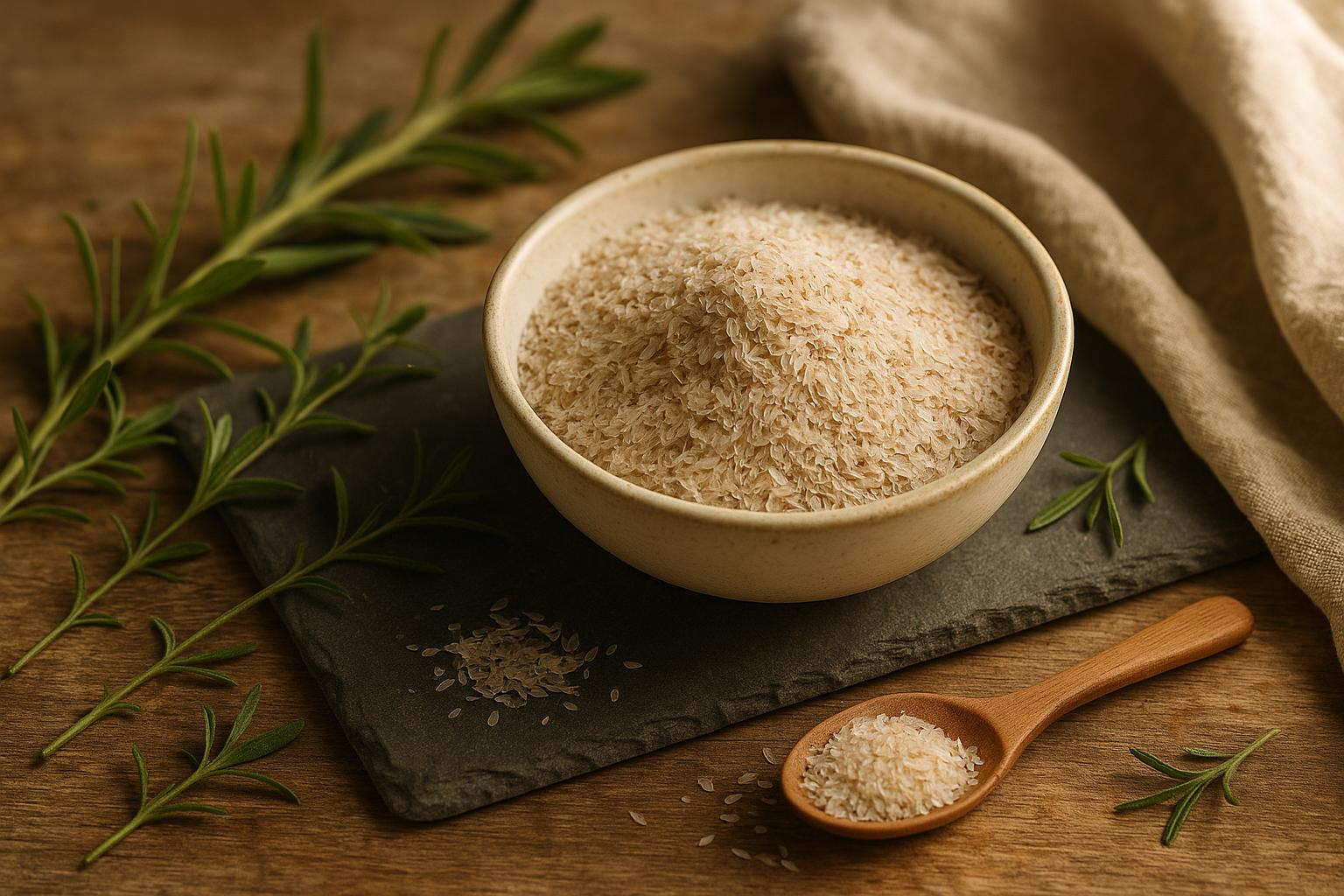
Ispaghul ou psyllium : ces deux noms désignent exactement la même plante, Plantago ovata, dont les enveloppes de graines sont riches en fibres solubles mucilagineuses utilisées depuis des siècles pour réguler le transit intestinal. Selon une méta-analyse publiée dans le American Journal of Clinical Nutrition () [1], une consommation quotidienne de 10 à 12 g de psyllium améliore significativement le transit chez plus de 70 % des patients souffrant de constipation chronique.
- Ispaghul et psyllium sont deux noms pour la même plante : Plantago ovata
- Les fibres solubles de cette plante absorbent jusqu’à 40 fois leur poids en eau
- Effets prouvés sur le transit, le cholestérol LDL et la glycémie postprandiale
- Dose recommandée : 5 à 10 g par jour, à prendre avec un grand verre d’eau
- Bien toléré, mais contre-indiqué en cas d’occlusion intestinale ou d’allergie aux Plantaginacées
1. Ispaghul ou psyllium : deux noms, une seule plante
La confusion entre ispaghul ou psyllium est très répandue, même chez les professionnels de santé. Les deux termes désignent pourtant la même espèce botanique : Plantago ovata, membre de la famille des Plantaginacées.
Le mot « ispaghul » vient du persan ispaghol, signifiant « oreille de cheval », en référence à la forme des graines. Le terme « psyllium » dérive du grec psyllos, signifiant « puce », pour la même raison morphologique.
- Psyllium blond : Plantago ovata — cultivé en Inde (Gujarat) et en Iran
- Psyllium noir : Plantago psyllium — espèce différente, moins utilisée en Europe
- Ispaghul : nom pharmacopéen officiel du psyllium blond en France
- Plantain des Indes : autre appellation vernaculaire courante
Quand un médecin prescrit de l’ispaghul ou qu’un diététicien recommande du psyllium, il parle du même produit. La partie utilisée est l’enveloppe (testa) de la graine, riche en arabinoxylanes, le principal composant actif.
2. Composition : ce qui rend cette fibre unique
L’enveloppe de graine d’ispaghul ou psyllium contient entre 70 et 80 % de fibres solubles, une concentration exceptionnelle parmi les fibres végétales. C’est cette richesse en arabinoxylanes qui explique ses multiples effets physiologiques.
Au contact de l’eau, ces fibres absorbent jusqu’à 40 fois leur poids et forment un gel visqueux. Ce mécanisme est à la base de tous les bénéfices cliniquement documentés.
- Fibres solubles (arabinoxylanes) : 70-80 % du poids sec
- Fibres insolubles : 15-20 %
- Protéines : environ 2 %
- Lipides : traces
- Glucides digestibles : quasi nuls (index glycémique très bas)
Cette composition fait de l’ispaghul ou psyllium un aliment fonctionnel à part entière, distinct des laxatifs chimiques par son mode d’action mécanique et non irritant.
3. Transit intestinal : l’effet bidirectionnel prouvé
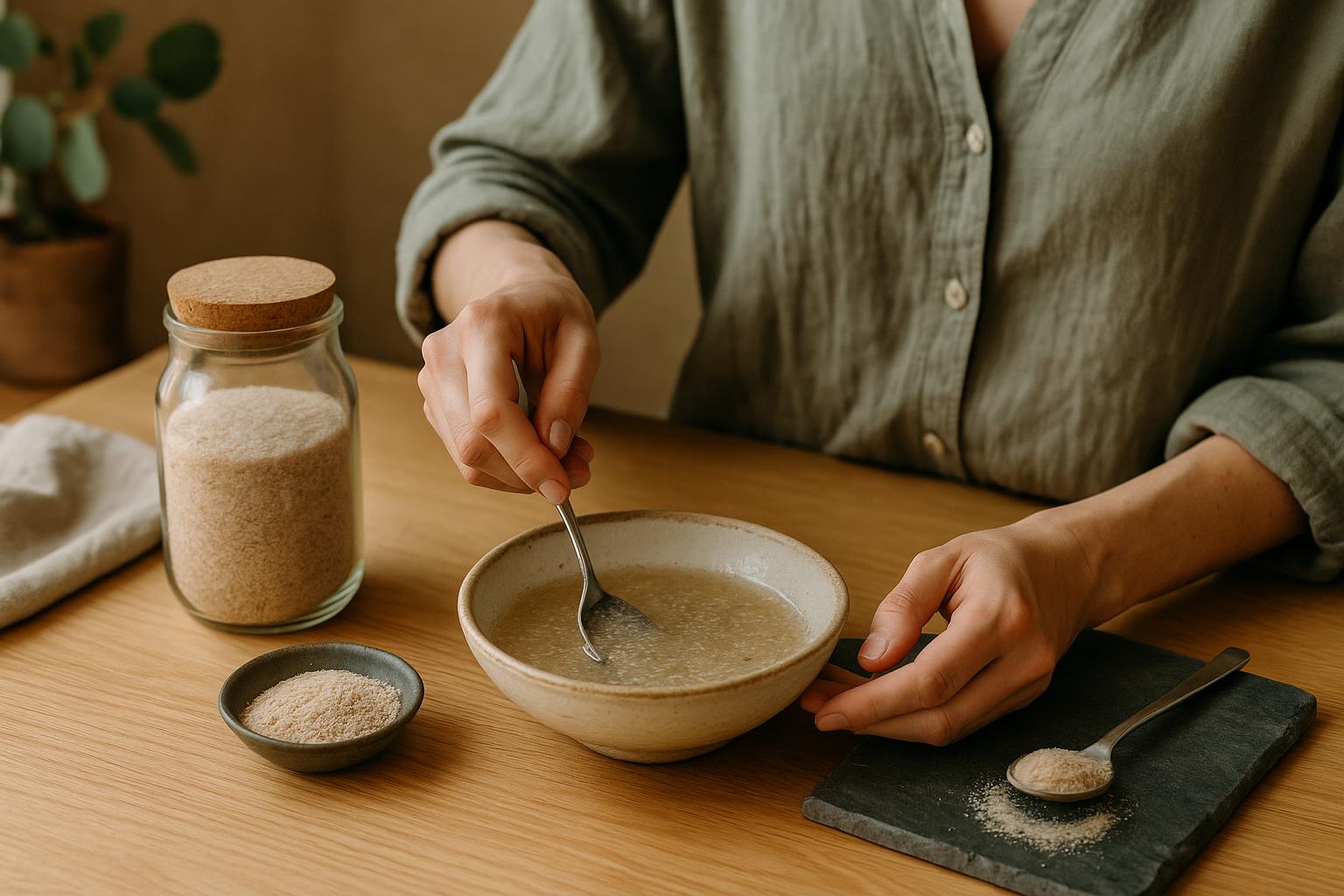
L’ispaghul ou psyllium est l’une des rares fibres à agir efficacement dans les deux sens du trouble intestinal. Il soulage la constipation en ramollissant les selles, et réduit la diarrhée en épaississant le contenu intestinal.
Une méta-analyse publiée dans le World Journal of Gastroenterology () [3] portant sur 14 essais cliniques confirme une réduction significative des symptômes du SII avec une consommation régulière de psyllium. De nombreux lecteurs nous signalent que les effets sur le transit se font sentir dès 48 à 72 heures après la première prise.
- Constipation : augmente le volume des selles et accélère le transit
- Diarrhée : absorbe l’excès de liquide et normalise la consistance
- SII : réduit les douleurs abdominales et l’inconfort
- Hémorroïdes : ramollissement des selles, moins d’effort à la défécation
Pour comprendre à quoi sert le psyllium en détail, il est utile de distinguer ces effets selon votre trouble spécifique avant de commencer une cure.
4. Cholestérol : une allégation santé officielle EFSA
L’EFSA a accordé en une allégation santé officielle à l’ispaghul ou psyllium pour « le maintien d’un taux de cholestérol sanguin normal » [2]. C’est l’un des rares compléments à bénéficier de cette reconnaissance réglementaire européenne.
Le mécanisme est bien compris : le gel formé par les fibres solubles piège les acides biliaires dans l’intestin. Le foie doit alors synthétiser de nouveaux acides biliaires à partir du cholestérol circulant, ce qui réduit le taux de LDL.
- Réduction du LDL : -5 à -10 % avec 10 g/jour selon les études
- Pas d’effet significatif sur le HDL (bon cholestérol)
- Effet additif avec un régime pauvre en graisses saturées
- Dose efficace validée par l’EFSA : 10 g de psyllium par jour
5. Glycémie : un allié pour les personnes diabétiques
L’ispaghul ou psyllium ralentit l’absorption des glucides dans l’intestin grêle grâce à son gel visqueux. Cet effet se traduit par une réduction de la glycémie postprandiale, particulièrement utile pour les personnes atteintes de DT2.
Une étude publiée dans le European Journal of Clinical Nutrition () [4] montre une réduction de 11 % de la glycémie postprandiale avec 10 g de psyllium pris avant les repas principaux chez des patients diabétiques de type 2.
- Réduit le pic glycémique après les repas
- Améliore la sensibilité à l’insuline sur le long terme
- Compatibilité avec les antidiabétiques oraux à vérifier avec le médecin
- Ne remplace pas un traitement médical prescrit
6. Perte de poids : un soutien, pas une solution miracle
L’ispaghul ou psyllium contribue à la satiété en ralentissant la vidange gastrique et en augmentant le volume du bol alimentaire. Cet effet peut réduire les apports caloriques spontanés, mais ne constitue pas une solution de perte de poids à lui seul.
Pour découvrir tous les bienfaits du psyllium dans un contexte de gestion du poids, il est important de l’intégrer dans une démarche alimentaire globale, avec un suivi professionnel si nécessaire.
- Augmente la sensation de satiété pendant 2 à 4 heures
- Réduit les fringales entre les repas
- Apport calorique quasi nul (environ 20 kcal pour 5 g)
- Efficacité renforcée combiné à une alimentation équilibrée
7. Dosage : combien prendre et comment ?
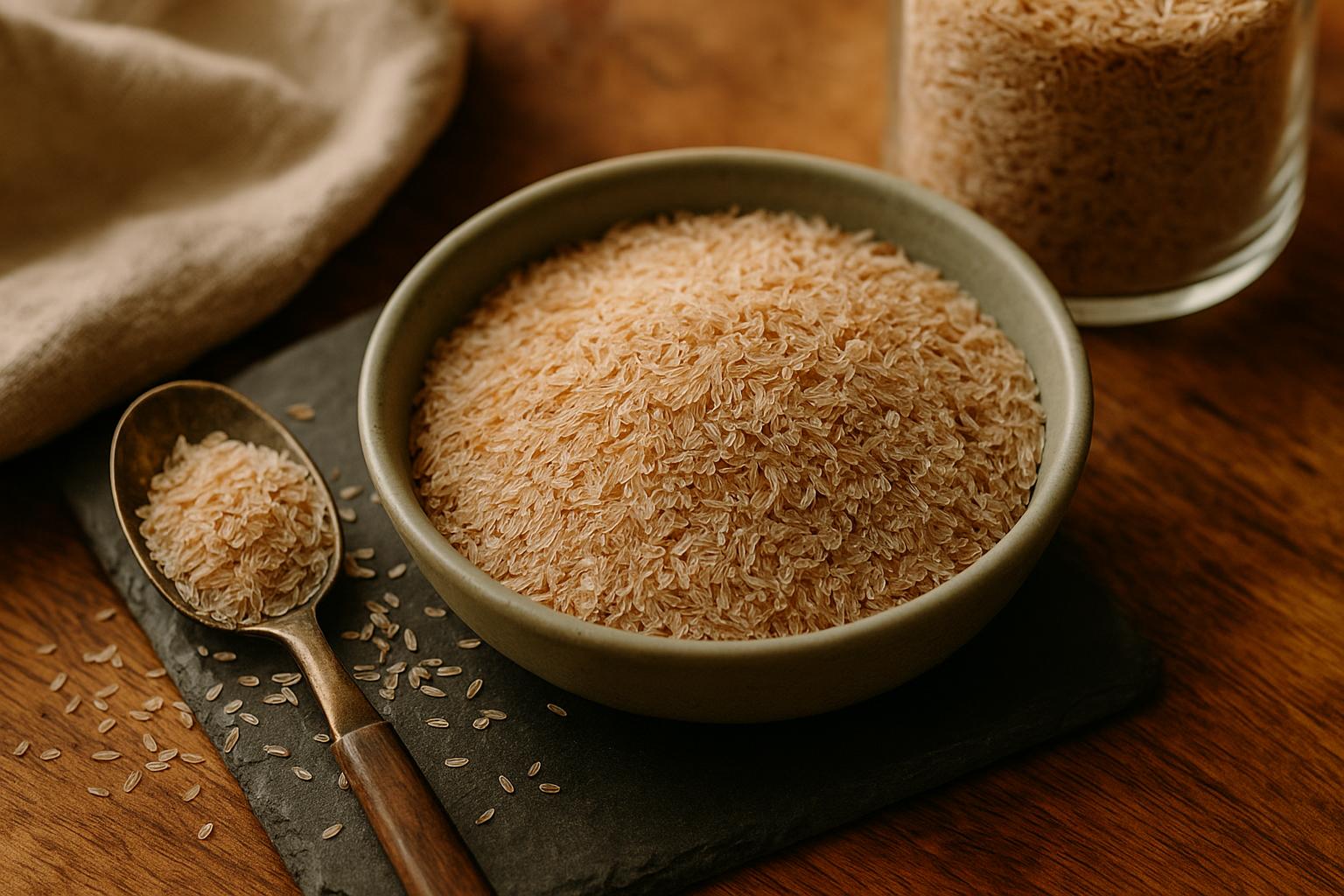
Le dosage de l’ispaghul ou psyllium dépend de l’objectif thérapeutique. Les doses validées cliniquement varient de 5 g à 15 g par jour, toujours accompagnées d’une hydratation suffisante.
Pour savoir comment prendre le psyllium pour la constipation de façon optimale, il est essentiel de respecter les règles d’administration pour éviter tout risque d’obstruction.
| Objectif | Dose quotidienne | Moment de prise | Eau minimale |
|---|---|---|---|
| Constipation | 5 à 10 g | Matin à jeun ou soir | 250 ml minimum |
| Diarrhée / SII | 5 à 7 g | Avant les repas | 200 ml minimum |
| Cholestérol | 10 g | Réparti en 2 prises | 300 ml minimum |
| Glycémie | 10 g | Avant les repas principaux | 250 ml minimum |
| Satiété / poids | 5 à 10 g | 30 min avant les repas | 300 ml minimum |
La règle d’or : ne jamais prendre l’ispaghul ou psyllium sans eau suffisante. Un apport hydrique insuffisant peut provoquer une obstruction œsophagienne ou intestinale.
8. Formes disponibles : poudre, gélules ou coques entières ?
L’ispaghul ou psyllium se présente sous plusieurs formes commerciales, chacune avec ses avantages pratiques. Le choix dépend de votre tolérance digestive, de votre mode de vie et de votre objectif.
Pour comparer psyllium en gélule ou en poudre selon vos besoins spécifiques, plusieurs critères entrent en jeu : biodisponibilité, praticité et coût.
- Poudre fine : dissolution rapide, idéale pour les smoothies et les recettes
- Coques entières (téguments) : texture plus grossière, action légèrement plus lente
- Gélules : pratiques en déplacement, mais dose par prise plus faible
- Sachets dosés : format pharmacie, dosage précis garanti
9. Contre-indications et précautions essentielles
L’ispaghul ou psyllium est généralement bien toléré, mais certaines situations nécessitent une vigilance particulière. L’ANSES recommande de consulter un médecin avant toute utilisation prolongée [5].
- Contre-indications absolues : occlusion intestinale, sténose œsophagienne, mégacôlon, allergie aux Plantaginacées
- Précautions : diabète traité (ajustement des doses d’insuline possible), prise de médicaments (espacer de 1 à 2 heures)
- Effets indésirables possibles : ballonnements, flatulences en début de cure (disparaissent généralement après 5 à 7 jours)
- Interactions médicamenteuses : peut réduire l’absorption de certains médicaments (digoxine, lithium, antidiabétiques)
En cas de douleurs abdominales sévères, d’obstruction ou de saignements rectaux, arrêtez immédiatement et consultez un médecin.
10. Psyllium blond vs psyllium noir : quelle différence ?
L’ispaghul ou psyllium blond (Plantago ovata) est la forme la plus utilisée en Europe et en Amérique du Nord. Le psyllium noir (Plantago psyllium ou Plantago indica) est moins courant et présente une teneur en mucilage légèrement inférieure.
- Psyllium blond : 70-80 % de fibres solubles, couleur crème à beige
- Psyllium noir : 60-70 % de fibres solubles, couleur brun foncé
- Goût : le blond est plus neutre, le noir légèrement plus amer
- Usage pharmacopéen : seul le blond (ispaghul) est inscrit à la Pharmacopée européenne
- Disponibilité : le blond est de loin le plus facile à trouver en France
Pour comprendre ce qu’est la fibre de psyllium et ses différentes formes botaniques, la distinction blond/noir est essentielle pour choisir le bon produit.
11. Où acheter et comment choisir un produit de qualité ?
La qualité de l’ispaghul ou psyllium varie considérablement selon les marques. Plusieurs critères permettent d’identifier un produit fiable et efficace.
- Cherchez la mention « Pharmacopée européenne » ou « grade pharmaceutique »
- Vérifiez la teneur en mucilage : minimum 85 % pour la poudre de qualité supérieure
- Privilégiez les produits certifiés biologiques pour éviter les résidus de pesticides
- Évitez les produits contenant des additifs (arômes artificiels, édulcorants)
- Les pharmacies et parapharmacies proposent des produits contrôlés (Psyllium Arkopharma, Metamucil, Spagulax)
- Les herboristeries en ligne peuvent proposer de la poudre en vrac à moindre coût
12. Intégrer l’ispaghul ou psyllium dans votre alimentation quotidienne
L’ispaghul ou psyllium s’intègre facilement dans de nombreuses préparations culinaires sans altérer significativement le goût. Sa texture gélifiante est même un atout dans certaines recettes.
- Mélangé dans un verre d’eau ou de jus de fruit (méthode classique)
- Incorporé dans les smoothies du matin
- Ajouté aux yaourts ou compotes
- Utilisé comme liant dans les recettes de pain sans gluten
- Intégré dans les porridges et les bouillies de céréales
Commencez toujours par une dose faible (2 à 3 g/jour) et augmentez progressivement sur 2 semaines pour laisser votre microbiote s’adapter.
13. Ce que disent les études récentes sur le microbiote
Au-delà de ses effets mécaniques sur le transit, l’ispaghul ou psyllium agit comme un prébiotique partiel. Une étude publiée dans le Gut Microbes () [3] montre une augmentation des Bifidobacterium et des Lactobacillus chez des sujets consommant 10 g de psyllium par jour pendant 8 semaines.
Cet effet prébiotique reste moins marqué que celui d’autres fibres comme l’inuline ou le FOS, mais il contribue à l’équilibre global du microbiote intestinal. Pour une action combinée sur la flore intestinale, certains professionnels recommandent d’associer psyllium et probiotiques.
- Augmentation des bactéries productrices de butyrate
- Réduction relative des bactéries pro-inflammatoires
- Amélioration de la perméabilité intestinale sur le long terme
14. Ce qu’il faut retenir
Ispaghul ou psyllium, c’est la même plante, les mêmes fibres, les mêmes bénéfices. Cette fibre soluble mucilagineuse issue de Plantago ovata est l’une des mieux documentées scientifiquement pour le transit intestinal, le cholestérol et la glycémie. L’ispaghul ou psyllium est validé par l’EFSA, bien toléré et accessible sans ordonnance.
Votre action concrète : commencez avec 5 g d’ispaghul ou psyllium le matin dans un grand verre d’eau pendant 2 semaines, puis évaluez les effets sur votre transit avant d’ajuster la dose à vos besoins spécifiques.
- Ispaghul ou psyllium désignent la même plante (Plantago ovata) : pas de différence de composition ni d’effet
- L’ispaghul ou psyllium régule le transit dans les deux sens : constipation et diarrhée
- L’ispaghul ou psyllium réduit le cholestérol LDL de 5 à 10 % avec 10 g/jour, allégation EFSA validée
- L’ispaghul ou psyllium doit toujours être pris avec au moins 200 à 300 ml d’eau pour éviter l’obstruction
- L’ispaghul ou psyllium est contre-indiqué en cas d’occlusion intestinale et peut interagir avec certains médicaments
Questions fréquentes sur ispaghul ou psyllium
Ispaghul ou psyllium : quelle est la vraie différence ?
Il n’y a aucune différence entre ispaghul ou psyllium : les deux noms désignent la même plante, Plantago ovata. « Ispaghul » est le nom pharmacopéen officiel utilisé en France et en Europe, tandis que « psyllium » est le terme anglophone plus répandu dans la littérature scientifique internationale et dans les compléments alimentaires grand public.
Peut-on prendre de l’ispaghul ou psyllium tous les jours ?
Oui, l’ispaghul ou psyllium peut être pris quotidiennement sur de longues périodes. Les études cliniques ont évalué des cures allant jusqu’à 12 mois sans effets indésirables significatifs. Il est conseillé de commencer par une faible dose et d’augmenter progressivement. En cas d’usage prolongé, un bilan médical annuel est recommandé.
Ispaghul ou psyllium : à quelle heure le prendre ?
Le moment idéal dépend de l’objectif. Pour la constipation, prenez l’ispaghul ou psyllium le matin à jeun ou le soir avant de dormir. Pour le cholestérol et la glycémie, répartissez la dose avant les repas principaux. Pour la satiété, consommez-le 30 minutes avant le repas avec un grand verre d’eau.
Combien de temps faut-il pour que l’ispaghul ou psyllium agisse ?
Les effets sur le transit apparaissent généralement en 12 à 72 heures après la première prise. Pour le cholestérol, il faut attendre 4 à 8 semaines de consommation régulière pour observer une réduction mesurable du LDL. L’effet sur la glycémie postprandiale est immédiat dès la première prise avant un repas.
Ispaghul ou psyllium est-il sans danger pendant la grossesse ?
L’ispaghul ou psyllium est généralement considéré comme sûr pendant la grossesse pour soulager la constipation, fréquente chez les femmes enceintes. Il agit mécaniquement sans être absorbé par l’organisme. Cependant, consultez toujours votre médecin ou sage-femme avant de commencer toute supplémentation pendant la grossesse ou l’allaitement.
Peut-on donner de l’ispaghul ou psyllium à un enfant ?
L’ispaghul ou psyllium peut être utilisé chez les enfants de plus de 6 ans, à des doses adaptées (2 à 3 g/jour). Pour les enfants de moins de 6 ans, l’avis d’un pédiatre est indispensable. La dose adulte ne doit jamais être appliquée à un enfant. L’hydratation est encore plus critique chez les jeunes enfants.
L’ispaghul ou psyllium fait-il grossir ?
Non, l’ispaghul ou psyllium ne fait pas grossir. Son apport calorique est négligeable (environ 20 kcal pour 5 g) et ses fibres ne sont pas digestibles. Au contraire, il favorise la satiété et peut contribuer à réduire les apports caloriques spontanés. Il est souvent intégré dans les programmes de gestion du poids pour cette raison.
Ispaghul ou psyllium : quelle différence avec le son d’avoine ?
L’ispaghul ou psyllium contient 70 à 80 % de fibres solubles, contre 45 % environ pour le son d’avoine. Le psyllium forme un gel plus visqueux et a un effet plus marqué sur le transit et le cholestérol à dose égale. Le son d’avoine apporte également des protéines et des glucides, ce qui n’est pas le cas du psyllium, quasi dépourvu de calories digestibles.
Comment conserver l’ispaghul ou psyllium ?
Conservez l’ispaghul ou psyllium dans un contenant hermétique, à l’abri de l’humidité, de la chaleur et de la lumière directe. La poudre en vrac se conserve 12 à 24 mois dans ces conditions. Une fois ouvert, utilisez le produit dans les 3 à 6 mois. Un produit humidifié perd ses propriétés mucilagineuses et doit être jeté.
L’ispaghul ou psyllium est-il compatible avec un régime sans gluten ?
Oui, l’ispaghul ou psyllium est naturellement sans gluten. Il est d’ailleurs très utilisé en boulangerie sans gluten comme agent liant, remplaçant le réseau glutineux dans les pains et gâteaux. Vérifiez cependant l’étiquette du produit pour vous assurer de l’absence de contamination croisée si vous souffrez de maladie cœliaque.
Ispaghul ou psyllium interagit-il avec les médicaments ?
Oui, l’ispaghul ou psyllium peut réduire l’absorption de certains médicaments en formant un gel qui les piège dans l’intestin. Les médicaments concernés incluent la digoxine, le lithium, les antidiabétiques oraux, les anticoagulants et certains antidépresseurs. Espacez toujours la prise de psyllium d’au moins 1 à 2 heures par rapport à vos médicaments.
Quelle est la meilleure marque d’ispaghul ou psyllium ?
Les marques pharmaceutiques comme Spagulax, Psyllium Arkopharma et Metamucil offrent des garanties de qualité et de dosage précis. Pour la poudre en vrac, recherchez des produits certifiés biologiques avec une teneur en mucilage d’au moins 85 %. L’origine indienne (Gujarat) est généralement gage de qualité pour l’ispaghul ou psyllium blond.
Sources et études
- Psyllium fiber improves glycemic control proportional to loss of glycemic control: a meta-analysis of data in euglycemic subjects, patients at risk of type 2 diabetes mellitus, and patients being treated for type 2 diabetes mellitus — American Journal of Clinical Nutrition,
- Scientific Opinion on the substantiation of health claims related to psyllium seed husk and maintenance of normal blood cholesterol concentrations — EFSA,
- Psyllium fiber as a useful adjunct to dietary and pharmacological management of irritable bowel syndrome — World Journal of Gastroenterology,
- Effects of psyllium supplementation on postprandial glucose and insulin concentrations in patients with type 2 diabetes: a systematic review and meta-analysis — European Journal of Clinical Nutrition,
- Les fibres alimentaires : définitions, propriétés et recommandations — ANSES,
Cet article est fourni à titre informatif uniquement et ne constitue pas un avis médical. Consultez un professionnel de santé qualifié avant toute utilisation.