Grains de kéfir où acheter : guide complet et 5 meilleures sources
Cet article a une vocation informative et ne remplace pas un avis médical professionnel. Consultez un professionnel de santé avant d’intégrer le kéfir à votre alimentation en cas de pathologie.
Grains de kefir ou achete : vous pouvez vous procurer des grains de kéfir dans une boutique bio, sur une marketplace spécialisée, ou directement auprès d’un particulier via des réseaux d’échange gratuits.
- Des grains vivants et actifs disponibles sans ordonnance ni prescription
- Un coût très faible, voire nul si vous passez par un réseau de dons
- Une solution adaptée aussi bien aux débutants qu’aux fermenteurs expérimentés
- Des grains de kéfir de fruits ou de lait selon vos préférences
- Une disponibilité croissante en grandes surfaces bio et en ligne
La question grains de kefir ou achete revient régulièrement chez les personnes qui souhaitent démarrer leur propre production à domicile. Selon une étude publiée sur PubMed, la consommation de boissons fermentées à base de kéfir est en hausse constante en Europe depuis 2015, portée par l’intérêt croissant pour les probiotiques naturels. Savoir grains de kefir ou achete est donc la première étape concrète avant de se lancer.
Pourquoi se poser la question des grains de kefir ou achete avant tout
Les grains de kéfir sont des cultures symbiotiques composées de bactéries lactiques, de levures et d’une matrice polysaccharidique. Sans ces grains vivants, impossible de produire du kéfir maison. La question grains de kefir ou achete est donc fondamentale : la qualité de vos grains détermine directement la qualité de votre boisson fermentée.
Des grains sains, bien nourris et actifs produisent une boisson riche en probiotiques. Des grains de mauvaise qualité ou mal conservés donnent un kéfir fade, peu fermenté, avec peu de bénéfices pour la flore intestinale. Choisir la bonne source d’approvisionnement est donc une décision stratégique pour tout amateur de fermentation.
Pour aller plus loin sur les bases, consultez notre guide : qu’est-ce que le kéfir et comment fonctionne-t-il.
Les boutiques bio : première réponse à grains de kefir ou achete
Les enseignes de distribution bio sont la réponse la plus immédiate à la question grains de kefir ou achete. Biocoop, La Vie Claire, Naturalia, Bio c’ Bon et leurs équivalents régionaux proposent régulièrement des grains de kéfir de fruits déshydratés en sachet de 7 à 10 g.
Ces grains déshydratés sont pratiques : ils se conservent plusieurs mois à température ambiante et se réhydratent facilement en 24 à 48 heures dans de l’eau sucrée. Leur prix oscille entre 3 et 8 euros selon la marque et le grammage. C’est une solution fiable pour débuter sans risque de contamination.
Avantages des boutiques bio :
- Disponibilité immédiate sans délai de livraison
- Traçabilité du produit et conseils en magasin
- Grains certifiés sans OGM ni additifs
- Possibilité de vérifier la date de conditionnement
Inconvénient principal : les grains déshydratés mettent plus de temps à devenir pleinement actifs que les grains frais. Comptez 3 à 5 cycles de fermentation avant d’obtenir un kéfir de qualité optimale.
Acheter en ligne : la solution la plus complète pour grains de kefir ou achete
Internet offre la réponse la plus large à la question grains de kefir ou achete. Plusieurs plateformes spécialisées proposent des grains frais ou déshydratés livrés directement chez vous.
Les sites spécialisés comme acheterkefir.fr ou kefiralia.com proposent des grains de kéfir d’eau (aussi appelé kéfir de fruits) et de lait en quantités variables, généralement entre 50 g et 200 g. Ces grains sont expédiés frais, conditionnés dans de l’eau sucrée ou du lait selon le type, et arrivent actifs sous 24 à 48 heures.
Sur Amazon et les marketplaces généralistes, on trouve surtout des grains déshydratés en sachets. La qualité est variable selon les vendeurs : lisez attentivement les avis clients et vérifiez que le vendeur précise le taux de bactéries vivantes.
Critères de sélection pour acheter en ligne :
- Vendeur basé en France ou en Europe (délai de livraison réduit)
- Grains frais plutôt que déshydratés si possible
- Avis clients vérifiés et nombreux (50+ avis)
- Garantie de remplacement en cas de grains inactifs
- Conditionnement alimentaire certifié
Les réseaux de particuliers : la meilleure source pour grains de kefir ou achete
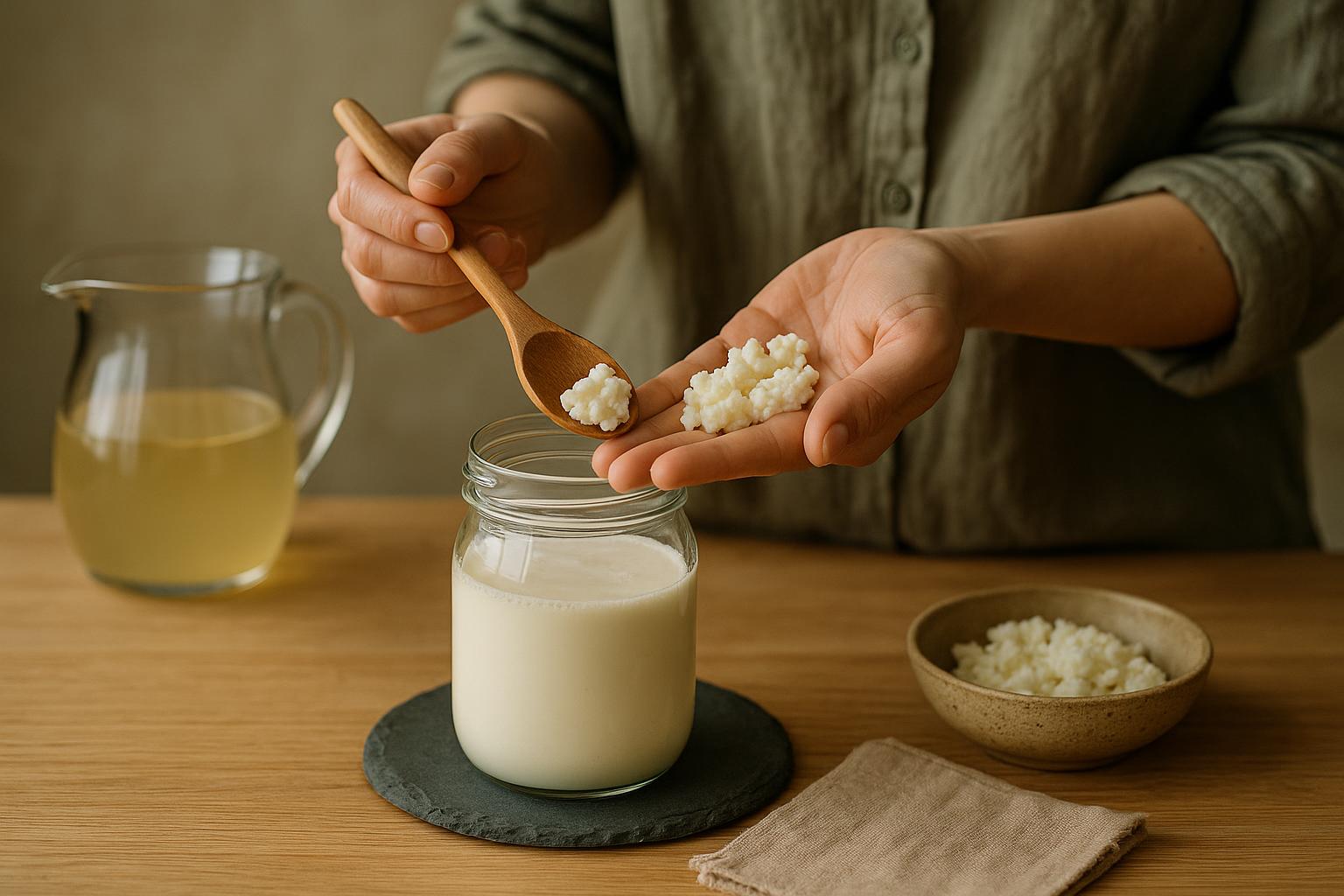
Pour beaucoup de spécialistes de la fermentation, la meilleure réponse à grains de kefir ou achete n’est pas d’acheter, mais d’obtenir gratuitement. Les grains de kéfir se multiplient naturellement à chaque cycle de fermentation. Les fermenteurs réguliers se retrouvent rapidement avec un surplus qu’ils partagent volontiers.
Plusieurs canaux permettent de trouver des grains de kéfir chez des particuliers :
- Forums spécialisés : les forums comme forum-kefir.fr ou les groupes Facebook dédiés à la fermentation maison sont des mines d’or. Des centaines de membres proposent régulièrement des grains frais, souvent gratuitement ou contre le remboursement des frais de port.
- Groupes Facebook : cherchez « kéfir don grains France » ou « fermentation maison partage ». Ces communautés sont très actives.
- LeBonCoin : des annonces de dons ou de ventes de grains de kéfir frais apparaissent régulièrement, souvent pour quelques euros symboliques.
- Marchés bio locaux : certains producteurs ou particuliers proposent leurs surplus directement sur les étals.
Les grains obtenus chez des particuliers présentent un avantage majeur : ils sont déjà actifs, acclimatés et prêts à fermenter dès le premier cycle. C’est la solution la plus économique et souvent la plus efficace.
Grains frais ou déshydratés : ce que change le choix pour grains de kefir ou achete
Quand on cherche grains de kefir ou achete, le choix entre grains frais et grains déshydratés est crucial. Les deux formes ont leurs avantages selon votre situation.
Grains frais : ils sont immédiatement actifs. Vous pouvez lancer votre première fermentation dans les heures qui suivent la réception. Ils contiennent une flore microbienne diversifiée et équilibrée. Inconvénient : ils doivent être utilisés ou réfrigérés rapidement (conservation 2 à 3 semaines au frigo dans de l’eau sucrée).
Grains déshydratés : ils se conservent plusieurs mois à température ambiante. Idéaux si vous n’êtes pas prêt à démarrer immédiatement. La réhydratation prend 24 à 48 heures et les premiers cycles de fermentation peuvent être moins actifs. Comptez 1 à 2 semaines pour retrouver une pleine activité.
Pour un débutant qui veut des résultats rapides, les grains frais sont recommandés. Pour quelqu’un qui prépare sa fermentation à l’avance, les grains déshydratés sont plus pratiques.
Kéfir de fruits ou de lait : quelle variété choisir pour grains de kefir ou achete
La question grains de kefir ou achete implique aussi de choisir entre deux types de grains aux propriétés différentes.
Les grains de kéfir de fruits (aussi appelés grains de kéfir d’eau) sont translucides, gélatineux, et fermentent dans de l’eau sucrée avec des fruits séchés. Ils produisent une boisson légèrement pétillante, peu alcoolisée, convenant aux personnes intolérantes au lactose et aux végétaliens.
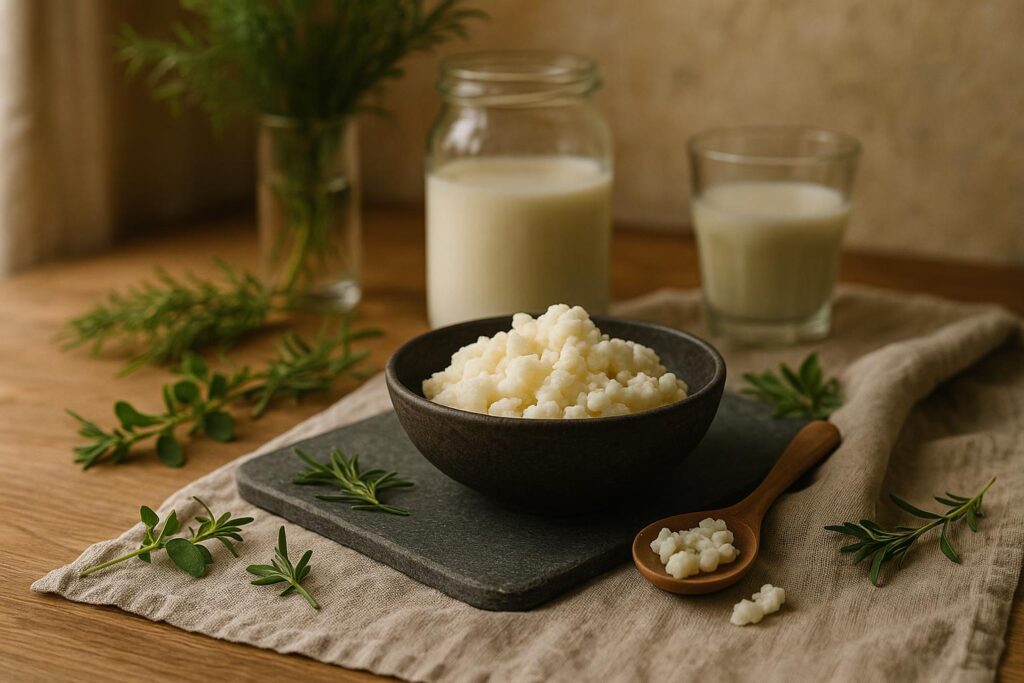
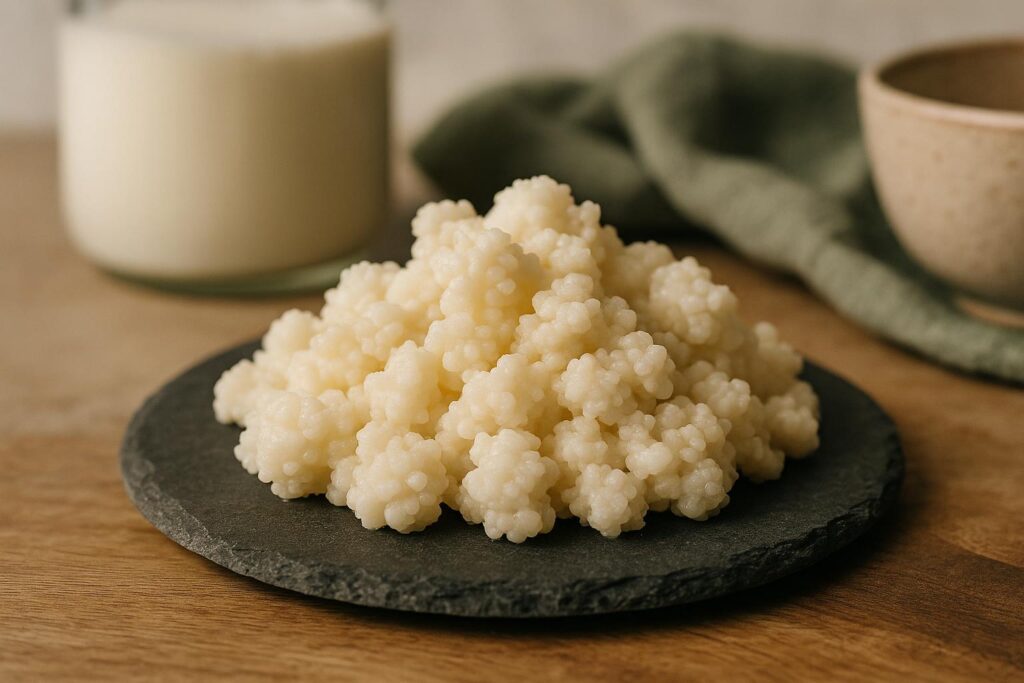
Les grains de kéfir de lait sont blancs, caoutchouteux, et fermentent dans du lait entier de vache, de chèvre ou de brebis. Ils produisent une boisson crémeuse proche du yaourt liquide, très riche en probiotiques selon les recherches publiées sur PubMed.
Les deux types sont disponibles dans les mêmes circuits d’approvisionnement. Précisez toujours le type souhaité lors de votre commande ou de votre demande de don.
Pour découvrir comment préparer votre première boisson, lisez notre guide : comment faire du kéfir de fruit en 7 étapes simples.
Combien coûtent les grains de kefir ou achete selon la source
Le prix des grains de kefir ou achete varie considérablement selon le canal d’approvisionnement choisi.
| Source | Prix moyen | Type de grains |
|---|---|---|
| Boutique bio (sachet déshydraté) | 3 à 8 € | Déshydratés |
| Site spécialisé (50 g frais) | 8 à 15 € | Frais |
| Amazon (sachet déshydraté) | 5 à 12 € | Déshydratés |
| Particulier (don) | 0 à 5 € (frais de port) | Frais |
| LeBonCoin | 2 à 10 € | Frais ou déshydratés |
À noter : une fois vos grains obtenus, l’approvisionnement futur est gratuit. Les grains se multiplient à chaque fermentation et peuvent être partagés indéfiniment.
Conserver ses grains de kefir ou achete après réception
Savoir grains de kefir ou achete ne suffit pas : encore faut-il bien conserver vos grains à la réception pour ne pas les perdre.
Conservation à court terme (moins de 2 semaines) : placez vos grains frais dans un bocal en verre fermé, couverts d’eau sucrée (1 cuillère à soupe de sucre pour 200 ml d’eau). Conservez au réfrigérateur entre 4 et 6°C. Changez l’eau sucrée tous les 7 à 10 jours.
Conservation à long terme (plusieurs mois) : déshydratez vos grains en les étalant sur du papier absorbant à température ambiante pendant 24 à 48 heures, puis stockez-les dans un sachet hermétique au réfrigérateur ou au congélateur.
Congélation : les grains supportent la congélation. Placez-les dans un sac congélation avec un peu de sucre. Ils se conservent ainsi jusqu’à 12 mois. La réactivation prend 2 à 3 cycles après décongélation.
Pour savoir si vos grains sont encore utilisables après une longue conservation, consultez notre article : comment savoir si les grains de kéfir sont encore bons.
Les erreurs à éviter avec grains de kefir ou achete
Plusieurs erreurs fréquentes peuvent compromettre votre expérience avec les grains de kefir ou achete.
- Acheter des grains de qualité inconnue : évitez les vendeurs sans avis ni garantie. Des grains contaminés peuvent produire une boisson impropre à la consommation.
- Confondre kéfir de fruits et kéfir de lait : les grains ne sont pas interchangeables. Vérifiez le type avant d’acheter.
- Utiliser des ustensiles métalliques : le métal peut endommager les grains. Privilégiez le verre, le plastique alimentaire ou le bois.
- Négliger la réhydratation des grains déshydratés : des grains mal réhydratés produisent un kéfir de mauvaise qualité. Respectez les 24 à 48 heures recommandées.
- Stocker les grains frais à température ambiante : sans réfrigération, les grains fermentent en continu et s’épuisent rapidement.
Pharmacies et parapharmacies : une option pour grains de kefir ou achete
Moins connue, la pharmacie est pourtant une réponse valide à la question grains de kefir ou achete. Certaines pharmacies et parapharmacies proposent des cultures de kéfir déshydratées ou lyophilisées, souvent sous forme de sachets de démarrage.
Ces produits sont généralement certifiés et contrôlés microbiologiquement. Ils peuvent être moins économiques que les alternatives en ligne, mais offrent une garantie de qualité et de sécurité appréciable, notamment pour les personnes immunodéprimées ou sensibles.
Renseignez-vous directement auprès de votre pharmacien : certains peuvent commander des cultures spécifiques sur demande, notamment des souches de kéfir de lait documentées scientifiquement.
Marchés locaux et épiceries fines : trouver des grains de kefir ou achete près de chez vous
Les marchés bio locaux et les épiceries fines spécialisées dans les aliments fermentés représentent une source de grains de kefir ou achete souvent sous-estimée. Dans les grandes villes françaises, des producteurs artisanaux proposent leurs grains en direct, parfois accompagnés de conseils personnalisés.
Cette approche présente plusieurs avantages : vous pouvez voir les grains avant de les acheter, vérifier leur aspect (translucides et gélatineux pour les grains de fruits, blancs et caoutchouteux pour les grains de lait), et bénéficier des conseils du vendeur pour démarrer votre première fermentation.
Les associations de consommateurs bio organisent également des ateliers de fermentation où il est courant d’échanger des grains. Renseignez-vous auprès de votre réseau local.
Après avoir trouvé vos grains de kefir ou achete : démarrer sa fermentation
Une fois la question grains de kefir ou achete résolue, il est temps de passer à l’action. La fermentation du kéfir de fruits nécessite peu de matériel : un bocal en verre d’un litre, de l’eau filtrée ou de source, du sucre de canne, des fruits séchés (figues, abricots, raisins) et une rondelle de citron bio.
Pour le kéfir de lait, vous n’avez besoin que d’un bocal, de lait entier et de vos grains. La fermentation dure 24 à 48 heures à température ambiante (18 à 22°C).
Pour une recette détaillée et complète, consultez notre guide : comment faire son kéfir soi-même étape par étape.
Savoir grains de kefir ou achete et bien démarrer sa fermentation sont les deux clés pour profiter pleinement des bienfaits probiotiques du kéfir, reconnus par de nombreuses études scientifiques disponibles sur le NCCIH et validés par l’EFSA.
- Les grains de kefir ou achete sont disponibles dans 5 circuits principaux : boutiques bio, sites spécialisés, particuliers, pharmacies et marchés locaux.
- Pour les grains de kefir ou achete les plus actifs, privilégiez les grains frais obtenus chez des particuliers via les forums ou groupes Facebook dédiés.
- Les grains de kefir ou achete déshydratés en boutique bio sont idéaux pour les débutants qui veulent une solution pratique et sûre.
- Le prix des grains de kefir ou achete varie de 0 € (don entre particuliers) à 15 € (site spécialisé), mais l’investissement est unique car les grains se multiplient indéfiniment.
- Après avoir obtenu vos grains de kefir ou achete, conservez-les correctement (réfrigérateur dans de l’eau sucrée) pour maintenir leur activité probiotique.
Questions fréquentes sur grains de kefir ou achete
Où acheter des grains de kéfir de fruits en France ?
Les grains de kéfir de fruits s’achètent en boutique bio (Biocoop, La Vie Claire), sur des sites spécialisés comme acheterkefir.fr, sur Amazon, ou s’obtiennent gratuitement via des groupes de dons sur Facebook ou LeBonCoin. Les boutiques bio proposent généralement des grains déshydratés en sachet entre 3 et 8 euros.
Peut-on obtenir des grains de kéfir gratuitement ?
Oui. Les grains de kéfir se multiplient à chaque fermentation. De nombreux fermenteurs partagent leur surplus gratuitement sur des forums spécialisés, des groupes Facebook dédiés à la fermentation maison ou sur LeBonCoin. Vous ne payez généralement que les frais de port, soit 3 à 5 euros.
Quelle différence entre grains de kéfir frais et déshydratés ?
Les grains frais sont immédiatement actifs et produisent un kéfir de qualité dès le premier cycle. Les grains déshydratés nécessitent une réhydratation de 24 à 48 heures et plusieurs cycles avant d’atteindre leur pleine activité. Les grains frais sont préférables pour un démarrage rapide, les déshydratés pour une conservation longue durée.
Les grains de kéfir vendus en pharmacie sont-ils de bonne qualité ?
Oui. Les cultures de kéfir vendues en pharmacie sont contrôlées microbiologiquement et offrent une garantie de sécurité. Elles sont souvent plus coûteuses que les alternatives en ligne, mais conviennent particulièrement aux personnes immunodéprimées ou qui souhaitent une traçabilité renforcée.
Combien de grains de kéfir faut-il pour démarrer ?
Entre 20 et 50 grammes de grains frais suffisent pour démarrer une fermentation d’un litre. Avec des grains déshydratés, un sachet de 7 à 10 grammes est suffisant pour commencer. Les grains se multiplient rapidement et vous aurez rapidement plus de grains que nécessaire.
Peut-on acheter des grains de kéfir de lait et de fruits chez le même vendeur ?
Oui, de nombreux sites spécialisés proposent les deux types. Vérifiez bien la description du produit avant d’acheter : les grains de kéfir de lait et de kéfir de fruits ne sont pas interchangeables et produisent des boissons très différentes. Précisez toujours le type souhaité lors de votre commande.
Les grains de kéfir achetés en supermarché bio sont-ils actifs ?
Les grains vendus en supermarché bio sont généralement déshydratés. Ils sont actifs mais nécessitent une réhydratation préalable de 24 à 48 heures dans de l’eau sucrée avant le premier cycle de fermentation. Vérifiez la date de conditionnement pour vous assurer de leur fraîcheur.
Comment reconnaître des grains de kéfir de qualité ?
Des grains de kéfir de fruits de qualité sont translucides, gélatineux et ressemblent à de petits cristaux. Les grains de kéfir de lait sont blancs, mous et ressemblent à du chou-fleur. Des grains sains ont une odeur légèrement acidulée. Des grains brunâtres, visqueux ou malodorants sont à éviter.
Peut-on faire du kéfir avec des grains achetés sur Amazon ?
Oui, à condition de choisir un vendeur sérieux avec de nombreux avis positifs. Sur Amazon, on trouve surtout des grains déshydratés. Vérifiez que le vendeur précise la composition microbienne et propose une garantie de remplacement en cas de grains inactifs. Lisez les avis récents avant d’acheter.
Les grains de kéfir se multiplient-ils après l’achat ?
Oui, c’est l’un des grands avantages du kéfir maison. Les grains se multiplient à chaque cycle de fermentation, généralement de 10 à 20% par semaine. Après quelques semaines, vous aurez largement assez de grains pour partager avec votre entourage ou pour constituer une réserve de secours.
Quelle quantité de grains acheter pour commencer ?
Pour un bocal d’un litre, prévoyez 30 à 50 g de grains frais ou un sachet de 7 à 10 g de grains déshydratés. Si vous souhaitez produire plus d’un litre par jour dès le départ, optez pour 100 g de grains frais. La proportion recommandée est de 3 à 5% du volume de liquide à fermenter.
Peut-on utiliser des grains de kéfir de fruits pour faire du kéfir de lait ?
Non. Les grains de kéfir de fruits et de lait sont deux cultures distinctes avec des compositions microbiennes différentes. Les grains de fruits fermentent dans l’eau sucrée, les grains de lait dans le lait. Les utiliser à l’envers ne produira pas de kéfir de qualité et peut endommager les grains.
Études et sources scientifiques
Cet article est fourni à titre informatif uniquement et ne constitue pas un avis médical. Consultez un professionnel de santé qualifié avant toute utilisation.