Kimchi danger : risques réels et précautions validées
⚠️ Avis médical : Les informations contenues dans cet article sont fournies à titre informatif uniquement et ne remplacent pas l’avis d’un professionnel de santé qualifié. Consultez votre médecin avant de modifier votre alimentation, notamment en cas de grossesse, de traitement médicamenteux ou de pathologie chronique.
Kimchi danger : consommé avec modération par un adulte en bonne santé, le kimchi est généralement sûr, mais il présente des risques réels pour certaines populations, notamment en raison de sa teneur élevée en sodium, de la présence possible de bactéries pathogènes lors d’une fermentation mal contrôlée, et d’interactions documentées avec certains médicaments. Une étude publiée dans le Journal of Ethnic Foods () [1] rappelle que la sécurité du kimchi dépend étroitement des conditions de préparation et du profil de santé du consommateur.
- Teneur en sodium pouvant dépasser 700 mg par portion de 100 g
- Risque de contamination bactérienne en cas de fermentation incorrecte
- Contre-indiqué ou déconseillé pendant la grossesse sans précautions
- Interactions possibles avec les anticoagulants et inhibiteurs de la MAO
- Effets indésirables digestifs fréquents lors d’une consommation excessive
1. Qu’est-ce que le kimchi danger signifie concrètement ?
Le kimchi danger ne désigne pas un aliment intrinsèquement toxique. Il désigne l’ensemble des risques conditionnels liés à sa consommation ou à sa préparation. Ces risques varient selon votre état de santé, votre mode de préparation et la quantité consommée.
Pour la majorité des adultes en bonne santé, le kimchi reste un aliment sûr et nutritif. Mais pour des groupes spécifiques, les précautions s’imposent. Découvrez d’abord ce qu’est exactement le kimchi avant d’évaluer ses risques.
- Adultes sains : risque faible si fermentation correcte
- Femmes enceintes : risque modéré à élevé selon la préparation
- Personnes hypertendues : risque cardiovasculaire lié au sodium
- Immunodéprimés : risque infectieux accru
- Patients sous anticoagulants : interaction possible avec la vitamine K
2. Sodium excessif : le kimchi danger cardiovasculaire le plus documenté
Le kimchi danger le plus fréquemment documenté dans la littérature scientifique est sa teneur en sodium. Une portion standard de 100 g de kimchi contient entre 700 et 900 mg de sodium, selon une analyse publiée dans le Nutrition Research and Practice () [2].
L’OMS recommande de ne pas dépasser 2 000 mg de sodium par jour. Une seule portion de kimchi peut donc représenter 35 à 45 % de cet apport. Pour les personnes souffrant d’hypertension artérielle, d’insuffisance rénale ou de maladies cardiovasculaires, cette concentration constitue un risque réel.
De nombreux lecteurs nous signalent que leur médecin leur a déconseillé le kimchi précisément pour cette raison, sans qu’ils aient été informés de la teneur en sel de cet aliment.
- 100 g de kimchi traditionnel : 700-900 mg de sodium
- Kimchi industriel : parfois jusqu’à 1 100 mg pour 100 g
- Apport journalier recommandé par l’OMS : 2 000 mg maximum
- Risque aggravé en cas d’hypertension, IRC ou insuffisance cardiaque
3. Intoxication alimentaire : quand le kimchi danger devient urgent
Le kimchi danger le plus grave est l’intoxication alimentaire. En , un épisode massif d’intoxication alimentaire en Corée du Sud a mis en cause du kimchi servi dans des cantines scolaires, affectant plusieurs centaines d’élèves et de membres du personnel éducatif [3].
Une fermentation mal conduite peut permettre la prolifération de bactéries pathogènes comme Listeria monocytogenes ou Escherichia coli entéropathogène. Ces risques sont amplifiés lorsque la chaîne du froid est rompue ou que les légumes ne sont pas correctement nettoyés.
Les signes d’un kimchi danger infectieux incluent :
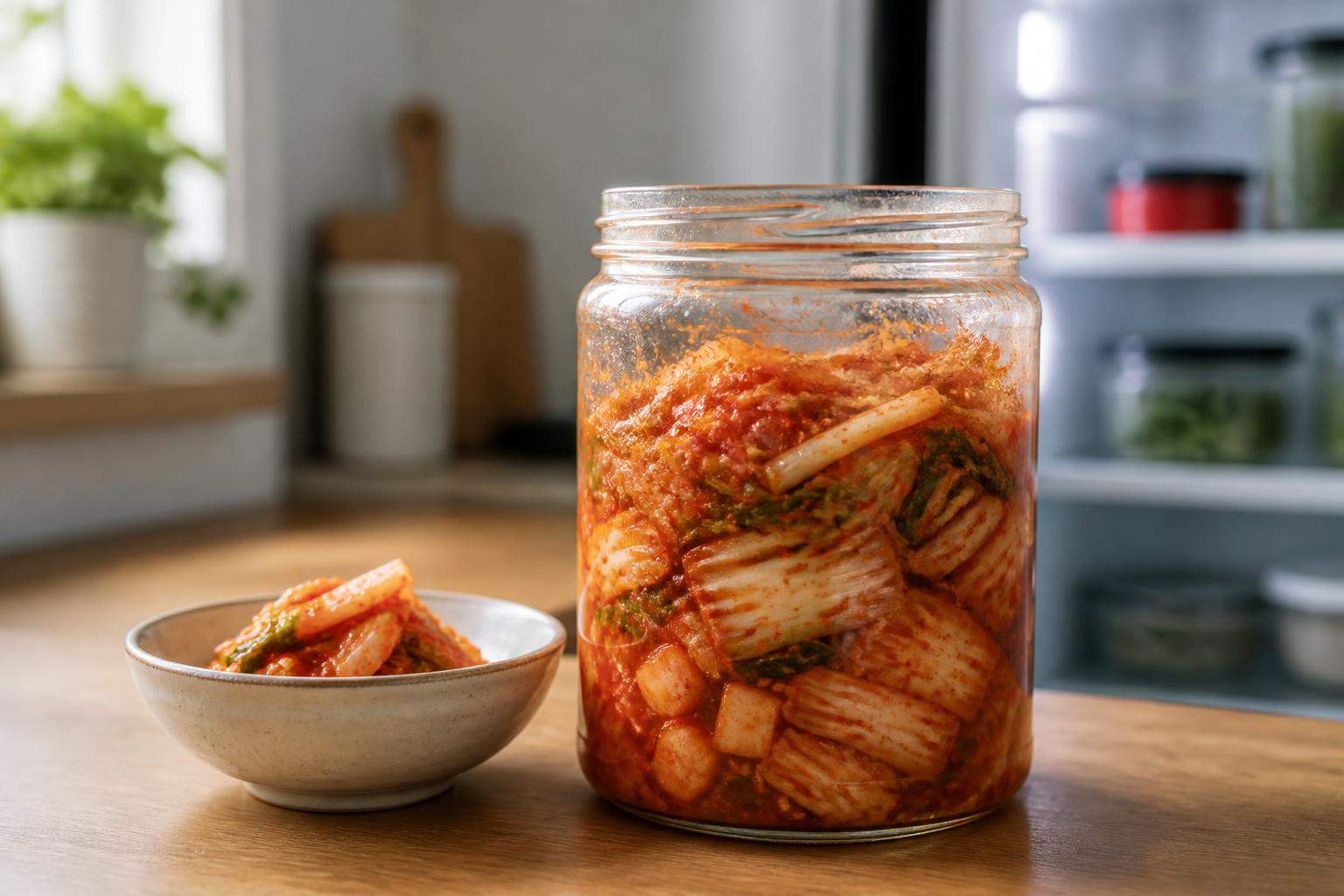
- Odeur anormalement putride (différente de l’acidité normale)
- Moisissures visibles à la surface
- Texture visqueuse ou liquide trouble inhabituel
- Gonflement anormal du contenant hermétique
- Changement de couleur vers le brun ou le noir
4. Kimchi danger pendant la grossesse : ce que recommandent les experts
Le kimchi danger pendant la grossesse est reconnu par plusieurs organismes de santé publique. Le Centre ALIMA Canada déconseille explicitement la consommation de légumes fermentés non pasteurisés aux femmes enceintes en raison du risque de listériose [3].
La listériose peut provoquer une fausse couche, un accouchement prématuré ou une infection néonatale grave. Le kimchi non pasteurisé, préparé à la maison ou artisanal, présente ce risque potentiel.
- Kimchi pasteurisé industriel : risque réduit mais sodium élevé
- Kimchi artisanal ou fait maison : déconseillé pendant la grossesse
- Kimchi cuit (dans des plats chauds) : risque infectieux éliminé
- Consultation médicale recommandée avant toute consommation régulière
Les légumes lacto-fermentés en général présentent des règles de sécurité similaires qu’il convient de connaître.
5. Interactions médicamenteuses : un kimchi danger souvent ignoré
Le kimchi danger pharmacologique est l’un des moins connus du grand public. Plusieurs interactions médicamenteuses ont été identifiées dans la littérature scientifique.
Le kimchi est riche en vitamine K, notamment via le chou napa fermenté. Cette vitamine peut réduire l’efficacité des anticoagulants oraux comme la warfarine. Une consommation irrégulière et variable de kimchi peut déstabiliser l’INR chez les patients traités.
- Anticoagulants (warfarine, acénocoumarol) : interaction avec la vitamine K
- Inhibiteurs de la MAO : interaction possible avec les amines biogènes du kimchi fermenté
- Médicaments antihypertenseurs : charge sodique pouvant réduire l’efficacité
- Immunosuppresseurs : risque infectieux accru lié aux bactéries vivantes
6. Amines biogènes : le kimchi danger méconnu de la fermentation
Le processus de fermentation du kimchi génère des amines biogènes comme l’histamine, la tyramine et la putrescine. Ces molécules peuvent provoquer des réactions indésirables chez les personnes sensibles ou sous certains traitements.
Une étude publiée dans Food Chemistry () [4] a mesuré des concentrations d’histamine allant jusqu’à 50 mg/kg dans certains kimchis fermentés longtemps. Ce niveau peut déclencher des symptômes pseudo-allergiques chez les personnes souffrant d’intolérance à l’histamine.
- Maux de tête et migraines après consommation
- Rougeurs cutanées et démangeaisons
- Troubles digestifs (nausées, diarrhées)
- Palpitations cardiaques chez les personnes sensibles
- Réactions sévères chez les patients sous inhibiteurs de la MAO
7. Kimchi danger et cancer gastrique : que dit la science ?
La relation entre kimchi danger et cancer gastrique est complexe et fait l’objet de débats scientifiques. Certaines études épidémiologiques ont observé une corrélation entre la consommation élevée de kimchi très salé et une incidence accrue du cancer de l’estomac en Corée du Sud.
L’CIRC, agence de l’OMS, a classé les aliments très salés comme probablement cancérogènes pour l’estomac (groupe 2A). Le kimchi danger dans ce contexte est principalement lié à la teneur en sel, et non aux probiotiques eux-mêmes.
À l’inverse, certains composés bioactifs du kimchi comme les glucosinolates du chou pourraient exercer un effet protecteur. La balance bénéfice-risque dépend donc de la quantité consommée et du mode de préparation.
8. Tableau comparatif : kimchi danger selon les profils de santé
| Profil de santé | Niveau de risque | Risque principal | Recommandation |
|---|---|---|---|
| Adulte sain | Faible | Sodium si consommation excessive | Limiter à 50-100 g/jour |
| Femme enceinte | Modéré à élevé | Listériose, sodium | Éviter le kimchi non pasteurisé |
| Hypertendu | Modéré | Surcharge sodique | Consulter un médecin, limiter fortement |
| Immunodéprimé | Élevé | Infection bactérienne | Éviter ou consommer uniquement cuit |
| Sous anticoagulants | Modéré | Interaction vitamine K / INR | Consommation stable et encadrée |
| Intolérance à l’histamine | Modéré à élevé | Amines biogènes | Éviter ou tester en très petite quantité |
| Insuffisance rénale | Élevé | Sodium et potassium | Déconseillé sans avis médical |
9. Kimchi maison vs industriel : quel kimchi danger choisir ?
Le kimchi danger varie significativement selon qu’il est préparé à la maison ou acheté dans le commerce. Le kimchi industriel pasteurisé présente un risque infectieux quasi nul, mais sa teneur en sodium est souvent plus élevée que le kimchi artisanal.
Le kimchi fait maison, en revanche, offre un meilleur contrôle des ingrédients mais expose à un risque plus élevé de contamination si les règles d’hygiène ne sont pas respectées. Apprenez à faire du kimchi maison en toute sécurité pour minimiser ces risques.
- Kimchi industriel pasteurisé : sodium élevé, risque infectieux faible
- Kimchi artisanal non pasteurisé : sodium variable, risque infectieux possible
- Kimchi fait maison bien préparé : profil le plus équilibré si les règles sont respectées
- Kimchi cuit dans des plats chauds : risque infectieux éliminé, probiotiques détruits
10. Effets secondaires digestifs du kimchi danger
Le kimchi danger digestif est fréquent lors d’une introduction trop rapide dans l’alimentation. Les probiotiques vivants du kimchi peuvent provoquer une dysbiose transitoire chez les personnes dont le microbiote n’est pas habitué aux aliments fermentés.
Ces effets sont généralement bénins et temporaires, mais peuvent être inconfortables. Comprendre le lien entre flore intestinale et probiotiques aide à mieux gérer cette transition.
- Ballonnements et flatulences (les plus fréquents)
- Diarrhées légères lors des premières consommations
- Crampes abdominales chez les personnes au côlon irritable
- Aggravation temporaire du reflux gastro-œsophagien
- Nausées si consommé à jeun en grande quantité
11. Comment réduire le kimchi danger sans renoncer à ses bienfaits ?
Réduire le kimchi danger est possible sans supprimer cet aliment de votre alimentation. Plusieurs stratégies permettent de profiter de ses bienfaits probiotiques tout en limitant les risques identifiés.
L’ANSES recommande de diversifier les sources de probiotiques et de ne pas dépendre d’un seul aliment fermenté pour couvrir ses besoins. Le kimchi bon pour la santé reste possible à condition de respecter ces précautions.
- Rincer légèrement le kimchi à l’eau froide pour réduire le sodium de 20 à 30 %
- Limiter la portion à 50 g par repas maximum
- Ne pas consommer de kimchi à jeun si vous avez des antécédents de reflux
- Introduire progressivement : commencer par 1 cuillère à soupe par jour
- Privilégier le kimchi peu fermenté (moins de 2 semaines) pour réduire les amines biogènes
- Conserver au réfrigérateur à moins de 4°C en permanence
- Utiliser des ustensiles propres et secs à chaque utilisation
12. Populations à risque : qui doit éviter le kimchi danger ?
Certaines populations doivent considérer le kimchi danger comme une contre-indication relative ou absolue. Cette liste est établie sur la base des recommandations de l’EFSA [5] et de l’ANSES concernant les aliments fermentés non pasteurisés.
- Femmes enceintes (kimchi non pasteurisé)
- Nourrissons et enfants de moins de 3 ans
- Personnes immunodéprimées (chimiothérapie, VIH, greffés)
- Patients sous anticoagulants oraux (warfarine, acénocoumarol)
- Personnes souffrant d’insuffisance rénale chronique
- Patients hypertendus non contrôlés
- Personnes souffrant d’intolérance à l’histamine confirmée
- Patients sous inhibiteurs de la MAO (antidépresseurs)
13. Kimchi danger et maladies chroniques : ce que montrent les études récentes
Le kimchi danger pour les personnes atteintes de maladies chroniques est documenté par plusieurs études récentes. Une méta-analyse publiée dans le European Journal of Nutrition () souligne que la consommation régulière de kimchi très salé est associée à une augmentation de la pression artérielle systolique chez les patients hypertendus.
Pour les patients diabétiques de type 2, le kimchi présente un profil plus nuancé. Son index glycémique bas est favorable, mais sa teneur en sodium peut aggraver la néphropathie diabétique. La consultation d’un diététicien-nutritionniste est recommandée avant toute intégration régulière dans le régime alimentaire.
Les bienfaits prouvés du kimchi doivent toujours être mis en balance avec ces risques spécifiques selon votre profil de santé.
14. Kimchi danger : les 5 erreurs les plus fréquentes à éviter
La majorité des incidents liés au kimchi danger résultent d’erreurs évitables dans la préparation ou la conservation. Voici les erreurs les plus documentées dans les rapports sanitaires.
- Rompre la chaîne du froid : laisser le kimchi à température ambiante plus de 2 heures favorise la prolifération bactérienne
- Utiliser des ustensiles contaminés : introduire de la graisse ou des résidus alimentaires dans le bocal accélère la dégradation
- Consommer du kimchi à odeur anormale : une odeur putride (différente de l’acidité normale) signale une contamination
- Préparer sans gants lors de plaies cutanées : risque de contamination croisée avec Staphylococcus aureus
- Sous-estimer la teneur en sodium : cumuler kimchi, sauce soja et plats salés dans le même repas dépasse facilement les recommandations
- Le kimchi danger principal pour la population générale est sa teneur élevée en sodium (700-900 mg/100 g), soit près de 40 % de l’apport journalier recommandé par l’OMS.
- Le kimchi danger infectieux est réel en cas de fermentation mal conduite : listériose, E. coli entéropathogène et contaminations bactériennes sont documentées.
- Le kimchi danger pendant la grossesse justifie d’éviter tout kimchi non pasteurisé et de consulter un médecin avant consommation régulière.
- Le kimchi danger pharmacologique concerne les patients sous anticoagulants (vitamine K) et sous inhibiteurs de la MAO (amines biogènes).
- Le kimchi danger peut être fortement réduit en limitant les portions à 50 g/jour, en rinçant légèrement le kimchi et en respectant scrupuleusement la chaîne du froid.
Questions fréquentes sur kimchi danger
Le kimchi danger est-il réel ou exagéré ?
Le kimchi danger est réel pour certaines populations (femmes enceintes, immunodéprimés, hypertendus, patients sous anticoagulants) mais généralement faible pour les adultes en bonne santé qui consomment des portions raisonnables de kimchi bien préparé.
Peut-on manger du kimchi tous les jours sans risque ?
Pour un adulte sain, consommer 50 à 100 g de kimchi par jour est généralement considéré comme sûr. Au-delà, le kimchi danger lié au sodium devient significatif, surtout si votre alimentation est déjà riche en sel.
Le kimchi danger est-il plus élevé avec le kimchi fait maison ?
Oui, le kimchi danger infectieux est plus élevé avec le kimchi artisanal non pasteurisé si les règles d’hygiène ne sont pas respectées. Le kimchi industriel pasteurisé présente un risque infectieux quasi nul, mais une teneur en sodium souvent plus élevée.
Quel kimchi danger existe pendant la grossesse ?
Le kimchi danger pendant la grossesse est principalement lié au risque de listériose avec les kimchis non pasteurisés. La listériose peut provoquer fausse couche, accouchement prématuré ou infection néonatale grave. Le kimchi pasteurisé cuit présente un risque infectieux éliminé.
Le kimchi danger concerne-t-il les enfants ?
Le kimchi est déconseillé aux enfants de moins de 3 ans en raison de sa teneur en sodium et du risque infectieux lié aux bactéries vivantes. Pour les enfants plus âgés, des portions très limitées de kimchi bien préparé peuvent être tolérées.
Quels sont les symptômes d’un kimchi danger infectieux ?
Les symptômes d’une intoxication alimentaire au kimchi incluent nausées, vomissements, diarrhées, crampes abdominales et fièvre apparaissant dans les 6 à 72 heures après consommation. En cas de symptômes graves, consultez immédiatement un médecin.
Le kimchi danger est-il lié au cancer ?
Certaines études épidémiologiques ont observé une corrélation entre consommation très élevée de kimchi très salé et cancer gastrique. Le kimchi danger dans ce contexte est lié à la teneur en sel, classée probablement cancérogène pour l’estomac par le CIRC (groupe 2A), et non aux probiotiques.
Comment reconnaître un kimchi dangereux à consommer ?
Un kimchi présentant un kimchi danger infectieux se reconnaît à une odeur putride anormale (différente de l’acidité normale), des moisissures visibles, une texture visqueuse, un liquide trouble inhabituel ou un gonflement anormal du contenant. Ne consommez jamais un kimchi présentant ces signes.
Le kimchi danger existe-t-il pour les personnes sous anticoagulants ?
Oui, le kimchi danger pour les patients sous anticoagulants oraux est documenté. La teneur en vitamine K du kimchi peut interférer avec l’efficacité de la warfarine et déstabiliser l’INR. Une consommation stable et encadrée par un médecin est recommandée.
Peut-on réduire le kimchi danger en le rinçant ?
Rincer légèrement le kimchi à l’eau froide peut réduire sa teneur en sodium de 20 à 30 %. Cette pratique réduit le kimchi danger cardiovasculaire mais diminue également une partie des probiotiques présents en surface. C’est un compromis acceptable pour les personnes sensibles au sodium.
Le kimchi danger est-il différent selon la durée de fermentation ?
Oui. Un kimchi fermenté longtemps (plus de 4 semaines) présente des concentrations plus élevées en amines biogènes comme l’histamine, augmentant le kimchi danger pour les personnes intolérantes. Un kimchi jeune (moins de 2 semaines) est généralement mieux toléré.
Existe-t-il des alternatives au kimchi sans les mêmes dangers ?
Pour bénéficier de probiotiques sans le kimchi danger lié au sodium, vous pouvez vous tourner vers le kéfir, le yaourt nature, la choucroute peu salée ou les compléments alimentaires probiotiques. Ces alternatives présentent des profils de risque différents selon votre état de santé.
Ce qu’il faut retenir
Le kimchi danger est une réalité nuancée : faible pour l’adulte sain qui consomme des portions modérées de kimchi bien préparé, il devient significatif pour les femmes enceintes, les immunodéprimés, les hypertendus et les patients sous certains traitements médicamenteux. La teneur en sodium reste le kimchi danger le plus universel, avec 700 à 900 mg pour 100 g.
La bonne nouvelle est que le kimchi danger est largement maîtrisable. En limitant vos portions à 50 g par jour, en respectant scrupuleusement la chaîne du froid, en choisissant un kimchi pasteurisé si vous êtes dans un groupe à risque, et en consultant votre médecin si vous prenez des médicaments, vous pouvez profiter des bienfaits probiotiques de cet aliment fermenté coréen en toute sécurité.
Action concrète : Si vous n’avez jamais consommé de kimchi, commencez par une cuillère à soupe par jour pendant une semaine, observez votre tolérance digestive, et consultez votre médecin si vous appartenez à l’un des groupes à risque identifiés dans cet article.
Sources et études
- Safety and health benefits of kimchi: a review — Journal of Ethnic Foods,
- Sodium content and dietary patterns associated with kimchi consumption in Korean adults — Nutrition Research and Practice,
- Les légumes fermentés, comme le kimchi, sont-ils sécuritaires pendant la grossesse ? — Centre ALIMA Canada,
- Biogenic amines in fermented foods: occurrence, detection methods and health effects — Food Chemistry,
- Safety of fermented foods: a systematic review of microbiological hazards — EFSA Journal,
Cet article est fourni à titre informatif uniquement et ne constitue pas un avis médical. Consultez un professionnel de santé qualifié avant toute utilisation.