Kimchi origine : histoire, culture et tradition coréenne
⚠️ Avis éditorial : Cet article est rédigé à des fins d’information générale. Il ne remplace pas l’avis d’un professionnel de santé. Consultez un médecin ou un diététicien avant de modifier votre alimentation.
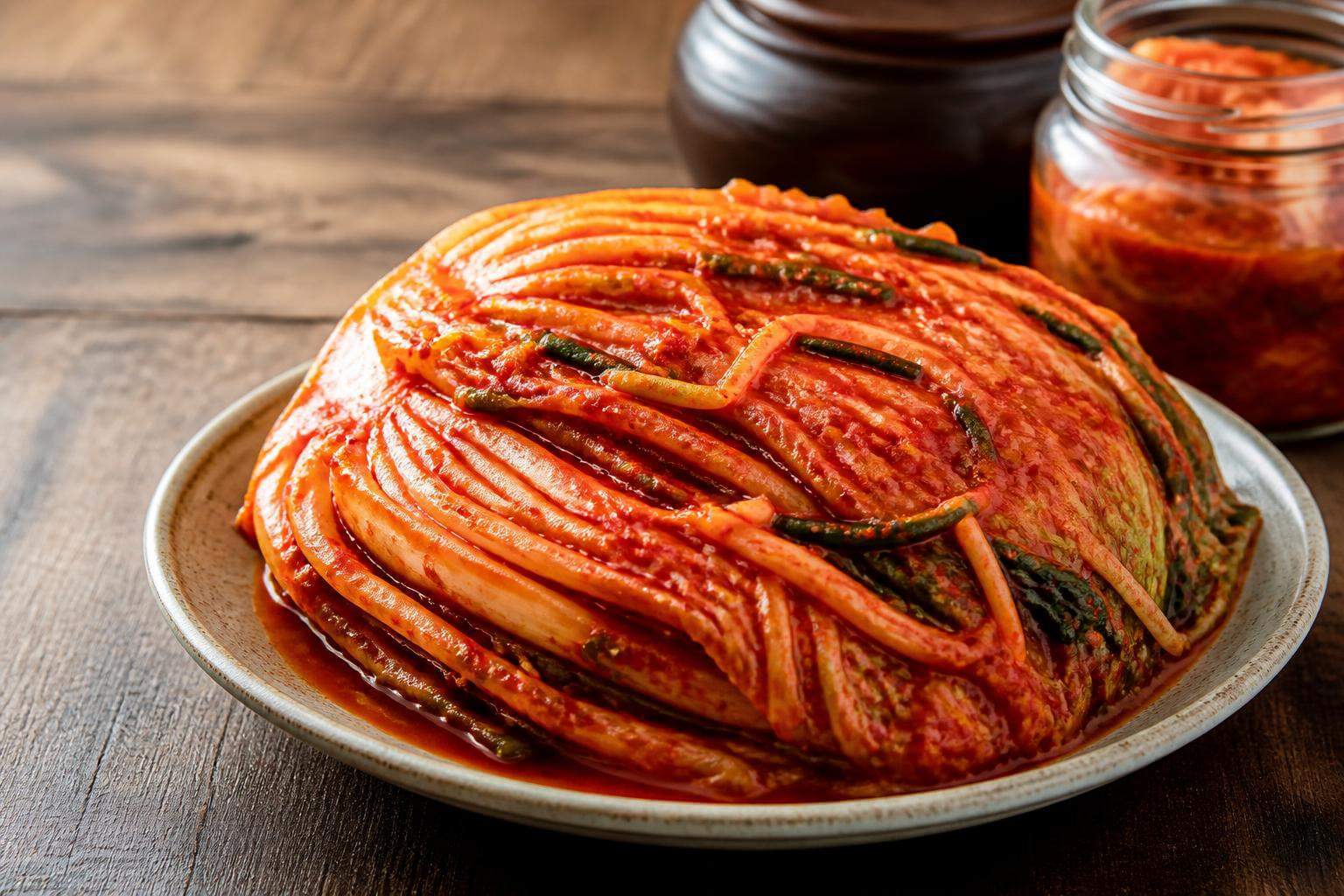
Kimchi origine : ce condiment fermenté emblématique est né en Corée il y a plus de 3 000 ans, issu d’une tradition de conservation des légumes par le sel et les épices. Une étude publiée dans le Journal of Ethnic Foods () [1] estime que le kimchi est consommé quotidiennement par plus de 95 % des foyers coréens. Voici les points essentiels à connaître :
- Le kimchi trouve ses premières traces écrites dans les annales coréennes du après J.-C.
- La fermentation lactique est au cœur de sa préparation traditionnelle.
- Le piment rouge (gochugaru) n’a été intégré à la recette qu’au .
- Le kimjang, rituel de préparation collective du kimchi, est inscrit au patrimoine immatériel de l’UNESCO depuis .
- Plus de 200 variétés de kimchi existent à travers la péninsule coréenne.
Kimchi origine : 3 000 ans d’histoire en Corée
Le kimchi origine plonge ses racines dans la nécessité de conserver les légumes pendant les longs hivers coréens. Les premières mentions écrites apparaissent dans le Samguk Sagi, chronique historique du compilant des faits remontant au [2]. À cette époque, la conservation se faisait uniquement avec du sel, sans piment.
Les fouilles archéologiques confirment que les Coréens pratiquaient la salaison des légumes dès la période des Trois Royaumes. Le chou, le radis et les concombres étaient les légumes les plus couramment utilisés. Cette technique simple permettait de maintenir un apport nutritionnel constant en hiver.
Selon l’UNESCO [3], le kimchi incarne un savoir-faire transmis de génération en génération, faisant de lui bien plus qu’un simple aliment : un vecteur d’identité culturelle coréenne.
Avant le piment : la forme originelle du kimchi
La kimchi origine la plus ancienne n’avait rien à voir avec la préparation rouge et épicée que l’on connaît aujourd’hui. Pendant plus de 2 000 ans, le kimchi était simplement du chou ou du radis conservé dans une saumure salée, parfois agrémentée d’ail ou de gingembre. Ce type de kimchi blanc, appelé baek kimchi, existe encore aujourd’hui.
Des textes du mentionnent l’ajout d’épices comme la moutarde et les oignons sauvages. La fermentation naturelle produisait déjà des probiotiques, notamment des bactéries lactiques du genre Lactobacillus. Une étude publiée dans Food Microbiology () [4] a identifié plus de 700 souches de bactéries lactiques dans les préparations traditionnelles de kimchi.
Cette richesse microbienne explique en partie pourquoi le kimchi a traversé les siècles sans perdre sa place dans l’alimentation coréenne. Pour en savoir plus sur les légumes fermentés en général, consultez notre guide sur les légumes lacto-fermentés.
Le XVIIe siècle : l’arrivée du piment transforme le kimchi
Le tournant majeur dans l’histoire du kimchi origine survient au , avec l’introduction du piment rouge en Corée via le commerce portugais et japonais. Le gochugaru (piment rouge séché en flocons) a révolutionné la recette traditionnelle.
Avant cette date, aucun texte coréen ne mentionne le piment dans la préparation du kimchi. Après son introduction, le piment s’est imposé en moins d’un siècle comme ingrédient incontournable. Il apportait non seulement de la saveur, mais aussi des propriétés antimicrobiennes naturelles qui amélioraient la conservation.
Les historiens de l’alimentation notent que cette adoption rapide témoigne de la capacité d’adaptation de la cuisine coréenne. Le kimchi est ainsi passé d’un aliment de subsistance à un élément gastronomique complexe, riche en capsaïcine et en antioxydants.
Kimjang : le rituel collectif au cœur de la kimchi origine
Le kimjang est la pratique traditionnelle de préparation collective du kimchi, généralement réalisée en novembre ou décembre avant l’hiver. Ce rituel communautaire est au cœur de la kimchi origine culturelle : des familles entières, des voisins et des communautés se réunissent pour préparer des centaines de kilogrammes de kimchi.
En , l’UNESCO a inscrit le kimjang sur la liste représentative du patrimoine culturel immatériel de l’humanité [3]. Cette reconnaissance souligne que le kimchi n’est pas seulement un aliment, mais un lien social fondamental dans la société coréenne.
Lors du kimjang, les familles préparent suffisamment de kimchi pour toute la saison froide. Les quantités varient selon la taille du foyer : une famille de quatre personnes prépare en moyenne 50 à 60 kilogrammes de kimchi lors de cette session annuelle.
Les ingrédients fondateurs de la kimchi origine
La recette traditionnelle de kimchi repose sur quelques ingrédients essentiels, dont la sélection reflète la géographie et le climat de la péninsule coréenne. Voici les composants historiquement documentés :
- Chou chinois (baechu) : légume de base depuis l’Antiquité coréenne.
- Sel de mer : agent de conservation primaire depuis 3 000 ans.
- Ail : utilisé depuis le pour ses propriétés antimicrobiennes.
- Gingembre : intégré pour sa saveur et ses vertus digestives.
- Piment rouge (gochugaru) : arrivé au via le commerce international.
- Sauce de poisson ou crevettes fermentées (jeotgal) : ajoutées pour la profondeur umami.
- Oignons verts : présents dans la quasi-totalité des variétés régionales.
Ces ingrédients créent ensemble un environnement acide favorable à la fermentation lactique, produisant naturellement des bactéries bénéfiques pour le microbiote intestinal. Découvrez comment ces bactéries agissent sur votre santé dans notre article sur la flore intestinale et les probiotiques.
Les 200+ variétés : diversité régionale de la kimchi origine
La kimchi origine a donné naissance à une diversité remarquable. On recense aujourd’hui plus de 200 variétés officiellement documentées, chacune reflétant les ressources locales et les préférences régionales de la péninsule coréenne.
| Variété | Région d’origine | Ingrédient distinctif | Époque d’apparition |
|---|---|---|---|
| Baechu kimchi | Nationale | Chou chinois entier | XVIIe siècle |
| Kkakdugi | Séoul | Radis en cubes | XVIIIe siècle |
| Baek kimchi | Nationale (ancienne) | Sans piment | Antiquité |
| Oi sobagi | Régions du Sud | Concombre farci | XVIIe siècle |
| Yeolmu kimchi | Régions centrales | Radis de printemps | XIXe siècle |
| Gat kimchi | Île de Jeju | Moutarde indienne | XVIIIe siècle |
Les régions du nord de la Corée, plus froides, produisent traditionnellement des kimchis moins épicés et plus aqueux. Les régions du sud, comme la province du Jeolla, sont réputées pour leurs kimchis riches en épices et en sauce de poisson fermentée.
Kimchi origine : reconnaissance internationale et mondialisation
La kimchi origine coréenne a franchi les frontières nationales au cours du , d’abord portée par la diaspora coréenne, puis adoptée par les amateurs de cuisine asiatique du monde entier. Aujourd’hui, le kimchi est vendu dans plus de 80 pays.
La Corée du Sud exporte chaque année plus de 40 000 tonnes de kimchi, selon les données du Korea Agro-Fisheries and Food Trade Corporation (). Les États-Unis, le Japon et l’Australie figurent parmi les principaux marchés importateurs.
Cette popularité croissante s’explique en partie par l’intérêt scientifique grandissant pour les aliments fermentés. Une méta-analyse publiée dans Nutrients () [5] a confirmé que la consommation régulière de kimchi est associée à une amélioration de la diversité du microbiote intestinal. Pour approfondir le sujet, lisez notre article sur les bienfaits du kimchi validés par la science.
La controverse Corée-Chine sur l’origine du kimchi
La question de la kimchi origine a fait l’objet d’une controverse diplomatique notable entre la Corée du Sud et la Chine. En , la Chine a soumis une demande de reconnaissance de son propre chou fermenté, le pao cai, à l’ISO, ce que la Corée du Sud a interprété comme une tentative d’appropriation culturelle.
Le gouvernement coréen a répondu en renforçant la documentation historique de la kimchi origine, soulignant que les pratiques de fermentation coréennes sont distinctes des techniques chinoises. L’UNESCO a maintenu sa reconnaissance du kimjang comme patrimoine coréen.
Cette controverse a paradoxalement renforcé la visibilité mondiale du kimchi et de son histoire. De nombreux lecteurs nous signalent que cette polémique les a conduits à s’intéresser davantage à la culture culinaire coréenne et à tester le kimchi pour la première fois.
Fermentation lactique : le mécanisme scientifique derrière la kimchi origine
La kimchi origine repose sur un processus de fermentation lactique naturelle. Lorsque les légumes sont salés, l’eau est extraite par osmose, créant un environnement anaérobie propice au développement des bactéries lactiques naturellement présentes sur les végétaux.
Les principales espèces bactériennes impliquées dans la fermentation du kimchi comprennent :
- Leuconostoc mesenteroides : dominant en début de fermentation.
- Lactobacillus plantarum : prédominant en fermentation avancée.
- Lactobacillus sakei : contribue à la conservation et à la saveur.
- Weissella koreensis : espèce spécifiquement identifiée dans le kimchi.
- Lactobacillus brevis : producteur d’acide lactique et de dioxyde de carbone.
Ce processus produit de l’acide lactique, qui abaisse le pH du kimchi entre 3,5 et 4,5, inhibant la croissance de bactéries pathogènes. C’est ce mécanisme, découvert empiriquement il y a des millénaires, qui a assuré la sécurité alimentaire du kimchi à travers les siècles.
Kimchi origine et valeur nutritionnelle : ce que dit la science
La kimchi origine ancestrale a produit un aliment dont la valeur nutritionnelle est aujourd’hui validée par la recherche moderne. Le kimchi est naturellement pauvre en calories (environ 15 à 30 kcal pour 100 g) tout en étant riche en nutriments essentiels.
Voici ce que 100 grammes de kimchi traditionnel apportent :
- Vitamine C : 18 à 22 mg (source d’antioxydants).
- Vitamine K : 43 µg (important pour la coagulation sanguine).
- Folates : 28 µg (essentiels pour la division cellulaire).
- Fibres alimentaires : 2 à 3 g (favorisent le transit intestinal).
- Probiotiques vivants : 1 à 2 milliards d’UFC par gramme.
- Capsaïcine : composé actif du piment aux propriétés anti-inflammatoires.
Une étude de l’ANSES sur les aliments fermentés () [2] confirme que les légumes lacto-fermentés comme le kimchi contribuent à la diversité microbienne intestinale, un facteur clé de la santé globale.
Comment préparer le kimchi selon la tradition originelle
Respecter la kimchi origine dans la préparation implique de suivre des étapes précises, transmises oralement de génération en génération avant d’être codifiées dans des textes culinaires coréens comme le Eumsik dimibang du .
Les étapes fondamentales de la préparation traditionnelle sont :
- Salaison : couper le chou et le masser avec du sel de mer pendant 2 à 4 heures.
- Rinçage : rincer abondamment pour éliminer l’excès de sel.
- Préparation de la pâte d’assaisonnement : mélanger gochugaru, ail, gingembre, sauce de poisson.
- Massage : incorporer la pâte uniformément dans les feuilles de chou.
- Fermentation : placer dans des pots hermétiques, laisser fermenter 1 à 5 jours à température ambiante.
- Conservation : réfrigérer pour ralentir la fermentation et conserver plusieurs semaines.
Traditionnellement, le kimchi était conservé dans des jarres en terre cuite (onggi) enterrées dans le sol pour maintenir une température constante. Cette technique ingénieuse permettait une fermentation lente et régulière. Pour reproduire cette recette chez vous, consultez notre guide comment faire du kimchi maison.
Kimchi origine dans la culture populaire et la gastronomie mondiale
La kimchi origine coréenne a inspiré une vague mondiale d’intérêt pour les aliments fermentés. Des chefs étoilés aux blogueurs culinaires, le kimchi est devenu un ingrédient de fusion apprécié dans les cuisines du monde entier.
En France, le kimchi est disponible dans les épiceries asiatiques depuis les années 1990, mais sa popularité a explosé après , portée par la vague K-pop et les séries coréennes. Les supermarchés français proposent désormais du kimchi industriel, souvent pasteurisé, qui diffère du kimchi traditionnel vivant.
La distinction est importante : le kimchi pasteurisé perd une grande partie de ses bactéries vivantes, réduisant son intérêt probiotique. Pour bénéficier pleinement des apports de la kimchi origine traditionnelle, il convient de choisir un kimchi non pasteurisé, conservé au réfrigérateur. Pour savoir où vous en procurer, lisez notre guide qu’est-ce que le kimchi.
Kimchi origine et microbiote : les preuves scientifiques actuelles
La recherche moderne valide ce que les Coréens savaient empiriquement depuis des millénaires : la kimchi origine a produit un aliment exceptionnellement bénéfique pour le microbiote intestinal. Une étude clinique randomisée publiée dans Cell () [5] a démontré qu’un régime riche en aliments fermentés, dont le kimchi, augmente la diversité du microbiome et réduit les marqueurs d’inflammation systémique.
Les chercheurs ont observé une augmentation de 19 types de bactéries bénéfiques chez les participants consommant des aliments fermentés quotidiennement pendant 10 semaines. Ces résultats soulignent l’importance de la kimchi origine dans le contexte de la nutrition moderne.
Pour comprendre comment intégrer le kimchi dans une approche globale de santé intestinale, notre article sur les aliments probiotiques vous donnera des pistes complémentaires.
- La kimchi origine remonte à plus de 3 000 ans en Corée, avec des légumes conservés dans le sel bien avant l’arrivée du piment.
- Le piment rouge n’a intégré la recette de kimchi origine qu’au XVIIe siècle, transformant radicalement le profil gustatif du plat.
- Le kimjang, rituel collectif de préparation du kimchi, est inscrit au patrimoine immatériel de l’UNESCO depuis 2013, consacrant la kimchi origine comme trésor culturel mondial.
- La kimchi origine repose sur la fermentation lactique naturelle, produisant des probiotiques bénéfiques pour le microbiote intestinal, validés par la recherche scientifique moderne.
- Avec plus de 200 variétés documentées, la kimchi origine a donné naissance à une diversité culinaire remarquable, reflet de la géographie et des traditions régionales coréennes.
Questions fréquentes sur kimchi origine
Quelle est l’origine exacte du kimchi ?
La kimchi origine remonte à plus de 3 000 ans en Corée, où les légumes étaient conservés dans le sel pour survivre aux hivers rigoureux. Les premières traces écrites datent du Ier siècle après J.-C., dans les chroniques historiques coréennes.
Le kimchi vient-il vraiment de Corée ?
Oui, la kimchi origine est indiscutablement coréenne. L’UNESCO a reconnu le kimjang, pratique de préparation collective du kimchi, comme patrimoine culturel immatériel de la Corée en 2013. Bien que des légumes fermentés existent dans de nombreuses cultures, le kimchi tel qu’on le connaît est une création spécifiquement coréenne.
Depuis quand mange-t-on du kimchi en Corée ?
La kimchi origine est documentée depuis au moins le Ier siècle après J.-C. Cependant, des pratiques de salaison des légumes existaient probablement bien avant cette date, remontant à l’ère néolithique sur la péninsule coréenne.
Quand le piment a-t-il été ajouté au kimchi ?
Le piment rouge a été intégré à la recette de kimchi origine au XVIIe siècle, introduit en Corée via le commerce avec le Japon et le Portugal. Avant cette date, le kimchi était blanc et non épicé, conservé uniquement dans le sel.
Qu’est-ce que le kimjang dans la tradition de kimchi origine ?
Le kimjang est le rituel coréen de préparation collective du kimchi, généralement pratiqué en novembre ou décembre. Il symbolise la solidarité communautaire et est inscrit au patrimoine immatériel de l’UNESCO depuis 2013. C’est l’expression la plus pure de la kimchi origine culturelle.
Combien de variétés de kimchi existe-t-il ?
La kimchi origine a donné naissance à plus de 200 variétés officiellement documentées. Chaque région de Corée a développé ses propres recettes selon les légumes disponibles localement et les préférences gustatives régionales.
Le kimchi est-il bon pour la santé selon la science ?
Oui. La kimchi origine lactique produit des probiotiques naturels bénéfiques pour le microbiote intestinal. Une étude publiée dans Cell (2021) a démontré qu’une consommation régulière d’aliments fermentés comme le kimchi augmente la diversité microbienne et réduit l’inflammation.
Quelle est la différence entre kimchi traditionnel et kimchi industriel ?
Le kimchi traditionnel, fidèle à la kimchi origine, est non pasteurisé et contient des bactéries vivantes actives. Le kimchi industriel pasteurisé a une durée de conservation plus longue mais perd la majorité de ses probiotiques. Pour les bénéfices santé, choisissez un kimchi non pasteurisé réfrigéré.
Peut-on faire du kimchi sans piment pour respecter l’origine ?
Absolument. Le baek kimchi (kimchi blanc sans piment) représente la forme la plus ancienne de la kimchi origine. Il est préparé sans gochugaru, avec du chou, de l’ail, du gingembre et des légumes, et reste très populaire en Corée, notamment pour les enfants et les personnes sensibles aux épices.
Pourquoi l’UNESCO a-t-elle reconnu le kimchi ?
L’UNESCO a inscrit le kimjang en 2013 pour sa valeur culturelle immatérielle, reconnaissant que la kimchi origine dépasse le simple cadre alimentaire. Ce rituel de préparation collective renforce les liens communautaires et perpétue un savoir-faire ancestral transmis de génération en génération.
Quel est le lien entre kimchi origine et microbiote intestinal ?
La kimchi origine repose sur la fermentation lactique naturelle, qui produit des bactéries du genre Lactobacillus bénéfiques pour le microbiote intestinal. Ces bactéries vivantes, présentes dans le kimchi non pasteurisé, contribuent à l’équilibre de la flore intestinale selon plusieurs études cliniques récentes.
Comment conserver le kimchi pour respecter son origine fermentée ?
Pour respecter la kimchi origine et préserver ses bactéries vivantes, conservez le kimchi dans un récipient hermétique au réfrigérateur entre 0 et 4°C. La fermentation continue lentement au froid, développant progressivement les saveurs. Un kimchi bien conservé peut se garder plusieurs mois.
Ce qu’il faut retenir
La kimchi origine est l’une des histoires culinaires les plus riches et les mieux documentées de l’humanité : 3 000 ans de tradition, une reconnaissance mondiale par l’UNESCO, et une validation scientifique croissante de ses bienfaits pour la santé. La kimchi origine n’est pas seulement un héritage coréen, c’est une leçon de sagesse alimentaire que la science moderne continue de confirmer.
Pour intégrer cette tradition millénaire dans votre quotidien, commencez par ajouter 2 à 3 cuillères à soupe de kimchi non pasteurisé à un repas par jour. Choisissez un kimchi réfrigéré, non pasteurisé, pour bénéficier de ses probiotiques vivants et vous rapprocher au maximum de la kimchi origine traditionnelle.
Sources et études
- Kimchi, a fermented vegetable food, inhibits the growth of foodborne pathogens — Journal of Ethnic Foods,
- Les aliments fermentés et la santé intestinale — ANSES,
- Le kimjang, préparation et partage du kimchi en République de Corée — UNESCO,
- Diversity of lactic acid bacteria in kimchi — Food Microbiology,
- Gut-microbiota-targeted diets modulate human immune status — Cell,
Cet article est fourni à titre informatif uniquement et ne constitue pas un avis médical. Consultez un professionnel de santé qualifié avant toute utilisation.