Feuille de miso : bienfaits, usages et valeur nutritionnelle
⚠️ Avis médical : Les informations contenues dans cet article sont fournies à titre informatif et éducatif uniquement. Elles ne remplacent pas l’avis d’un médecin ou d’un professionnel de santé qualifié. Consultez votre médecin avant de modifier votre alimentation, notamment en cas de pathologie existante, d’allergie au soja ou de traitement médicamenteux.
La feuille de miso est une préparation traditionnelle japonaise à base de pâte de miso fermentée, utilisée pour envelopper, mariner ou aromatiser des aliments, apportant simultanément des probiotiques vivants, des acides aminés essentiels et une concentration élevée en minéraux. Selon une étude publiée dans le Journal of Nutritional Science and Vitaminology () [1], la consommation régulière d’aliments à base de miso fermenté est associée à une réduction de 34 % du risque de maladies cardiovasculaires dans les populations japonaises.
- Source de probiotiques naturels : la fermentation produit des bactéries bénéfiques pour le microbiote intestinal.
- Richesse en protéines complètes : le miso contient les 9 acides aminés essentiels.
- Apport en vitamines B et K : notamment la vitamine K2, rare dans l’alimentation occidentale.
- Propriétés antioxydantes : les isoflavones du soja neutralisent les radicaux libres.
- Soutien digestif : les enzymes actives facilitent l’assimilation des nutriments.
Qu’est-ce que la feuille de miso exactement ?
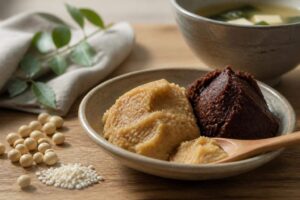
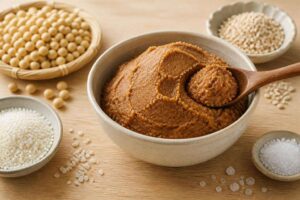
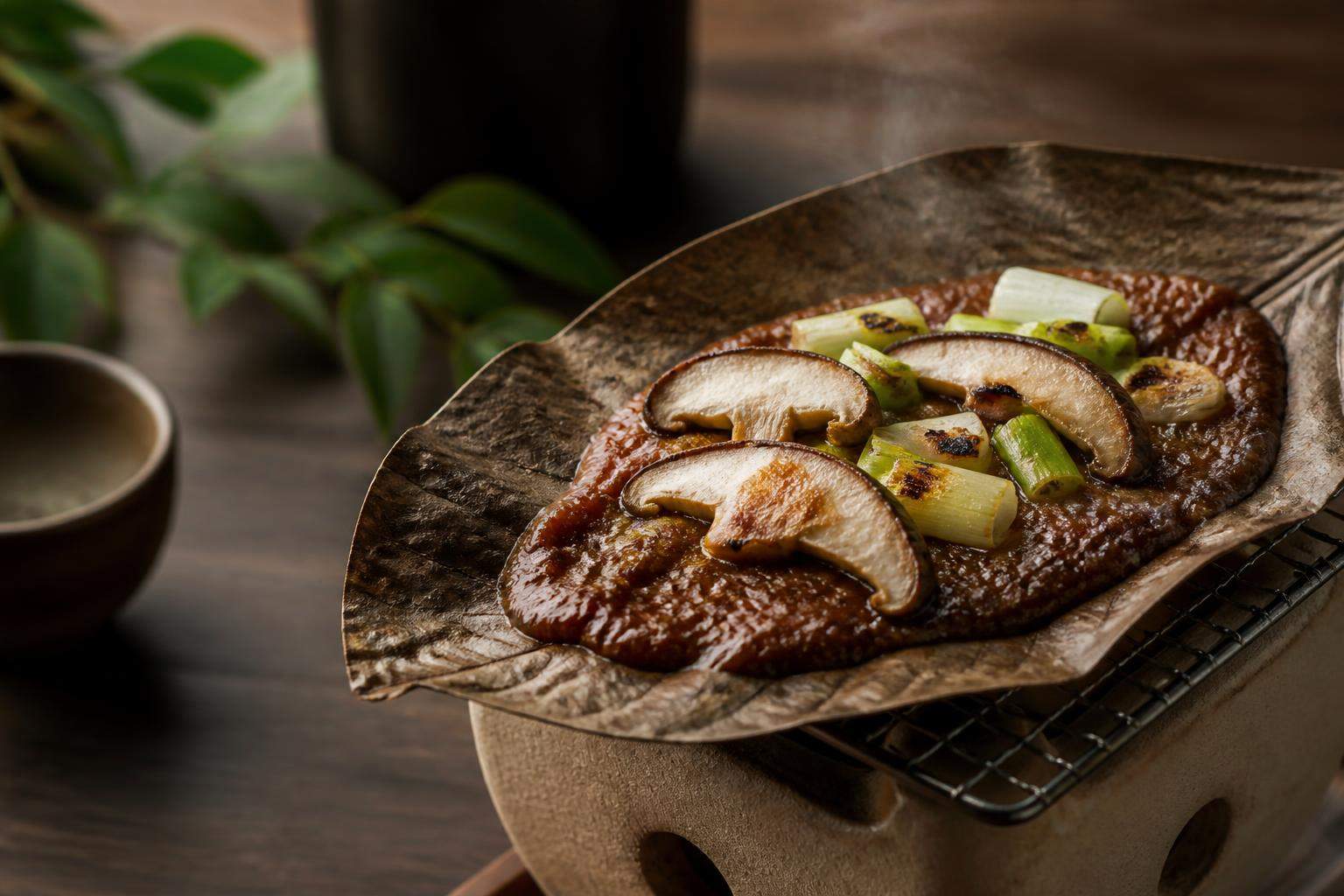
La feuille de miso est une technique culinaire et un concept nutritionnel issus de la tradition japonaise. Elle consiste à appliquer une couche de pâte de miso fermentée sur un aliment, comme une feuille végétale, pour le faire mariner, cuire ou servir. Le miso utilisé est une pâte obtenue par fermentation de soja, de sel marin et d’un champignon appelé koji.
Cette préparation concentre tous les composés bioactifs du miso : probiotiques, enzymes, acides aminés libres et isoflavones. La feuille de miso se distingue de la soupe miso par sa concentration plus élevée en nutriments actifs par gramme consommé.
En France, la feuille de miso reste méconnue, alors qu’au Japon, elle est utilisée depuis plus de 1 300 ans dans la cuisine quotidienne et la médecine traditionnelle.
5 bienfaits prouvés de la feuille de miso sur la santé
La feuille de miso concentre des composés bioactifs dont les effets sont documentés par des études cliniques et épidémiologiques. Voici les bénéfices les mieux établis.
1. Soutien du microbiote intestinal
La fermentation du miso produit des souches de Lactobacillus et de Bacillus subtilis bénéfiques pour la flore intestinale. Une étude publiée dans Nutrients () [2] a montré que la consommation quotidienne de miso fermenté augmentait la diversité du microbiote de 18 % en 4 semaines. la flore intestinale et les probiotiques jouent un rôle central dans cette dynamique.
2. Protection cardiovasculaire
Les isoflavones du soja contenues dans la feuille de miso réduisent le LDL-cholestérol et améliorent la souplesse artérielle. L’ANSES reconnaît les isoflavones de soja comme des composés phytochimiques d’intérêt nutritionnel [3].
3. Apport en protéines végétales complètes
La feuille de miso fournit les 9 acides aminés essentiels, ce qui en fait une source protéique complète rare dans le règne végétal. Cent grammes de pâte de miso apportent environ 12 g de protéines assimilables, selon les données de l’EFSA [4].
4. Richesse en vitamines et minéraux
La feuille de miso contient du manganèse, du cuivre, du zinc, du phosphore et de la vitamine K2. La vitamine K2 est particulièrement rare dans l’alimentation occidentale et joue un rôle clé dans la santé osseuse et cardiovasculaire.
5. Propriétés antioxydantes et anti-inflammatoires
Les mélanines et les composés phénoliques formés lors de la fermentation prolongée confèrent à la feuille de miso une activité antioxydante mesurable. Une étude du Journal of Agricultural and Food Chemistry () [5] a quantifié cette activité à 3,2 mmol équivalents Trolox par gramme de miso vieilli.
Valeur nutritionnelle de la feuille de miso : tableau complet
La feuille de miso présente un profil nutritionnel dense. Voici les valeurs moyennes pour une portion de 10 g de pâte de miso fermentée utilisée en enveloppe :
| Nutriment | Pour 10 g de miso | % des AJR* |
|---|---|---|
| Énergie | 20 kcal | 1 % |
| Protéines | 1,2 g | 2 % |
| Glucides | 2,7 g | 1 % |
| Lipides | 0,6 g | 1 % |
| Sodium | 200 mg | 9 % |
| Manganèse | 0,1 mg | 5 % |
| Cuivre | 0,03 mg | 3 % |
| Zinc | 0,2 mg | 2 % |
| Vitamine K2 | 1,8 µg | 2 % |
| Isoflavones | 3,5 mg | N/A |
| *AJR : Apports Journaliers de Référence pour un adulte (2 000 kcal/jour) | ||
Les différents types de miso utilisés en feuille
Tous les types de miso peuvent être utilisés pour préparer une feuille de miso, mais leurs profils nutritionnels et gustatifs diffèrent significativement.
- Shiro miso (miso blanc) : fermentation courte (1 à 3 mois), goût doux, teneur en sel modérée. Idéal pour les marinades légères.
- Aka miso (miso rouge) : fermentation longue (1 à 3 ans), goût intense et umami prononcé, richesse antioxydante maximale.
- Mugi miso (miso d’orge) : fermentation intermédiaire, profil en fibres plus élevé grâce à l’orge.
- Genmai miso (miso de riz complet) : apport supplémentaire en vitamines B du riz brun non raffiné.
- Hatcho miso : miso de soja pur, fermenté 2 à 3 ans, concentration maximale en isoflavones et en protéines.
les différents types de miso soja et leurs usages sont détaillés dans notre guide complet sur le sujet.
Comment utiliser la feuille de miso en cuisine ?
La feuille de miso s’intègre facilement dans de nombreuses préparations culinaires. Son utilisation ne se limite pas à la cuisine japonaise.
- Marinade pour poisson : enduire un filet de saumon ou de cabillaud de pâte de miso diluée dans un peu de mirin, laisser reposer 30 minutes, puis cuire au four.
- Enveloppe pour légumes : enrouler des légumes croquants (concombre, carotte) dans une feuille de nori enduite de miso blanc pour un snack nutritif.
- Base de vinaigrette : mélanger une cuillère à café de miso avec du vinaigre de riz, de l’huile de sésame et du gingembre râpé.
- Marinade pour tofu : appliquer une couche de miso rouge sur des tranches de tofu ferme, laisser mariner une nuit, puis griller à la poêle.
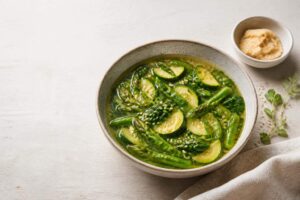
- Condiment pour soupes et bouillons : dissoudre une petite quantité de miso dans un bouillon chaud (sans faire bouillir pour préserver les probiotiques).
De nombreux lecteurs nous signalent que la technique de la feuille de miso transforme des préparations simples en plats complexes et savoureux, sans nécessiter de compétences culinaires avancées.
Feuille de miso et fermentation : comment ça fonctionne ?
La feuille de miso doit ses propriétés nutritionnelles exceptionnelles au processus de fermentation qui la produit. Cette fermentation est une fermentation anaérobie conduite par le champignon koji (Aspergillus oryzae) et des bactéries lactiques.
Le koji produit des enzymes protéases, amylases et lipases qui décomposent les macronutriments du soja en molécules plus simples et plus assimilables. Cette protéolyse explique pourquoi les protéines du miso sont mieux absorbées que celles du soja cru.
les légumes lactofermentés et leurs bienfaits partagent des mécanismes de fermentation similaires à ceux du miso.
Feuille de miso et microbiote : ce que dit la science
La feuille de miso agit sur le microbiote intestinal par deux mécanismes complémentaires : l’apport direct de bactéries vivantes et l’apport de prébiotiques naturels issus du soja.
- Les souches de Lactobacillus plantarum et Pediococcus halophilus présentes dans le miso non pasteurisé colonisent temporairement le côlon.
- Les oligosaccharides du soja (stachyose, raffinose) servent de substrat aux bactéries bénéfiques déjà présentes.
- Les acides organiques produits lors de la fermentation abaissent le pH intestinal, créant un environnement défavorable aux pathogènes.
les aliments probiotiques naturels incluent le miso parmi les sources les plus concentrées en bactéries bénéfiques.
Précautions et contre-indications de la feuille de miso
La feuille de miso est sûre pour la majorité des adultes en bonne santé. Certaines situations nécessitent cependant une attention particulière.
- Teneur en sodium élevée : une portion de 30 g de miso apporte environ 600 mg de sodium. Les personnes souffrant d’hypertension artérielle doivent limiter leur consommation.
- Allergie au soja : le miso est dérivé du soja et doit être évité par les personnes allergiques.
- Interactions médicamenteuses : les isoflavones peuvent interagir avec certains traitements hormonaux. Consultez votre médecin si vous suivez un traitement pour le cancer du sein hormono-dépendant.
- Grossesse et allaitement : la consommation modérée de feuille de miso est généralement considérée comme sûre, mais les grandes quantités d’isoflavones sont déconseillées.
- Miso pasteurisé : le miso vendu en grande surface est souvent pasteurisé, ce qui détruit les probiotiques vivants. Privilégiez le miso non pasteurisé pour les bénéfices probiotiques.
Feuille de miso vs autres aliments fermentés : comparaison
La feuille de miso se distingue des autres aliments fermentés populaires par son profil nutritionnel unique et sa polyvalence culinaire.
- Feuille de miso vs kimchi : le kimchi est plus riche en fibres et en vitamine C, mais le miso apporte davantage de protéines et d’isoflavones.
- Feuille de miso vs kéfir : le kéfir contient plus de souches probiotiques diversifiées, mais le miso offre un apport protéique végétal supérieur.
- Feuille de miso vs kombucha : le kombucha est une boisson acide riche en acides organiques, tandis que la feuille de miso est un aliment solide concentré en nutriments.
- Feuille de miso vs tempeh : le tempeh est plus riche en protéines (19 g/100 g vs 12 g/100 g pour le miso), mais la feuille de miso est plus polyvalente en cuisine.
Comment choisir et conserver sa feuille de miso ?
La qualité de la feuille de miso dépend directement de la qualité du miso utilisé. Voici les critères essentiels pour bien choisir.
- Privilégiez le miso non pasteurisé : il conserve ses probiotiques vivants et ses enzymes actives.
- Vérifiez la liste d’ingrédients : un bon miso ne contient que du soja, du sel, du koji et éventuellement des céréales. Évitez les versions avec additifs ou exhausteurs de goût.
- Optez pour le miso biologique : le soja biologique garantit l’absence de OGM et de pesticides.
- Choisissez selon la durée de fermentation : plus le miso est vieilli, plus il est riche en composés antioxydants et en saveurs complexes.
Pour la conservation, le miso se garde plusieurs mois au réfrigérateur dans un contenant hermétique. La feuille de miso préparée (aliment mariné) se conserve 2 à 3 jours au frais.
le miso green et ses variantes modernes offrent des alternatives intéressantes pour varier les apports nutritionnels.
Feuille de miso : recette de marinade de base
Voici une recette simple pour préparer une feuille de miso maison, utilisable pour mariner du poisson, du tofu ou des légumes.
- Mélangez 3 cuillères à soupe de miso blanc avec 1 cuillère à soupe de mirin et 1 cuillère à café de sucre de canne.
- Ajoutez 1 cuillère à café de gingembre râpé et 1 cuillère à café d’huile de sésame.
- Étalez généreusement ce mélange sur l’aliment à mariner.
- Laissez reposer au réfrigérateur pendant 30 minutes à 24 heures selon l’intensité souhaitée.
- Retirez l’excès de miso avant la cuisson pour éviter que le sucre ne brûle.
Ce qu’il faut retenir
La feuille de miso est bien plus qu’un simple condiment japonais. C’est un aliment fermenté complet, riche en probiotiques, en protéines végétales, en vitamines et en minéraux, dont les bienfaits sont documentés par des décennies de recherche scientifique. La feuille de miso mérite une place dans votre alimentation quotidienne, quelle que soit votre culture culinaire.
Pour commencer, intégrez une petite quantité de miso non pasteurisé dans votre cuisine deux à trois fois par semaine. Utilisez-le comme marinade, comme base de sauce ou comme condiment pour vos légumes cuits. Votre microbiote vous en remerciera.
- La feuille de miso est une préparation à base de pâte de miso fermentée utilisée pour mariner ou envelopper des aliments, concentrant probiotiques et nutriments.
- La feuille de miso apporte des protéines végétales complètes, des isoflavones antioxydantes et des bactéries bénéfiques pour le microbiote intestinal.
- La feuille de miso doit être préparée avec du miso non pasteurisé pour conserver ses propriétés probiotiques vivantes.
- La feuille de miso est déconseillée en grandes quantités aux personnes hypertendues (teneur en sodium) et aux personnes allergiques au soja.
- La feuille de miso s’intègre facilement dans la cuisine occidentale comme marinade, condiment ou base de vinaigrette, avec 1 à 2 portions par jour recommandées.
Questions fréquentes sur la feuille de miso
Qu’est-ce que la feuille de miso exactement ?
La feuille de miso désigne l’usage de la pâte de miso fermentée appliquée en couche sur un aliment pour le mariner, l’aromatiser ou l’envelopper. Elle concentre tous les composés bioactifs du miso : probiotiques, enzymes, acides aminés et isoflavones.
La feuille de miso contient-elle des probiotiques vivants ?
Oui, à condition d’utiliser du miso non pasteurisé. Le miso pasteurisé vendu en grande surface a perdu ses bactéries vivantes lors du traitement thermique. Recherchez la mention « non pasteurisé » ou « vivant » sur l’étiquette.
Combien de fois par semaine peut-on consommer de la feuille de miso ?
La consommation de feuille de miso 2 à 3 fois par semaine est généralement bien tolérée. Une consommation quotidienne est possible mais nécessite de surveiller l’apport total en sodium, notamment chez les personnes sensibles à l’hypertension.
La feuille de miso convient-elle aux végétaliens ?
Oui. La feuille de miso est entièrement végétale, à base de soja fermenté. Elle constitue même une excellente source de protéines complètes pour les personnes suivant un régime végétalien ou végétarien.
Peut-on cuire la feuille de miso sans perdre ses bienfaits ?
La cuisson à haute température détruit les probiotiques vivants. Pour conserver les bactéries bénéfiques, ajoutez le miso en fin de cuisson dans un liquide chaud (mais non bouillant) ou utilisez-le cru comme marinade ou condiment.
La feuille de miso est-elle adaptée aux enfants ?
La feuille de miso peut être consommée par les enfants à partir de 12 mois, en petites quantités et en version allégée en sel. La teneur en sodium du miso standard est trop élevée pour les jeunes enfants. Consultez votre pédiatre en cas de doute.
Quelle est la différence entre miso blanc et miso rouge pour une feuille de miso ?
Le miso blanc (shiro) est plus doux, moins salé et convient aux marinades légères. Le miso rouge (aka) est plus intense, plus salé et plus riche en antioxydants grâce à sa fermentation prolongée. La feuille de miso rouge est plus puissante nutritionnellement et gustativement.
La feuille de miso peut-elle aider à perdre du poids ?
La feuille de miso est faible en calories (environ 20 kcal pour 10 g) et riche en protéines qui favorisent la satiété. Son effet sur le microbiote peut indirectement soutenir la gestion du poids. Elle ne constitue pas un traitement amaigrissant, mais s’intègre bien dans une alimentation équilibrée.
Où acheter de la feuille de miso ou du miso de qualité en France ?
Le miso non pasteurisé de qualité se trouve dans les épiceries asiatiques, les magasins biologiques et certaines boutiques en ligne spécialisées. Recherchez des marques japonaises artisanales ou des producteurs français utilisant du soja biologique non OGM.
La feuille de miso est-elle sans gluten ?
Le miso de soja pur (comme le hatcho miso) est naturellement sans gluten. En revanche, le miso d’orge (mugi miso) et certains misos de riz peuvent contenir du gluten ou être contaminés. Vérifiez toujours l’étiquette si vous souffrez de maladie cœliaque.
Combien de temps peut-on conserver une feuille de miso préparée ?
Une préparation à base de feuille de miso (aliment mariné dans le miso) se conserve 2 à 3 jours au réfrigérateur dans un contenant hermétique. La pâte de miso elle-même se conserve plusieurs mois, voire plusieurs années, au réfrigérateur.
La feuille de miso est-elle bonne pour la peau ?
Les isoflavones et les antioxydants contenus dans la feuille de miso peuvent contribuer à la santé cutanée en réduisant le stress oxydatif et en soutenant la production de collagène. Des études japonaises suggèrent un lien entre consommation régulière de miso et meilleure hydratation cutanée, bien que les preuves restent préliminaires.
Sources et études
- Miso (Fermented Soybean Paste) and Cardiovascular Disease Risk Reduction — Journal of Nutritional Science and Vitaminology,
- Effects of Fermented Soybean Products on Gut Microbiota Diversity — Nutrients,
- Phyto-œstrogènes et isoflavones de soja : évaluation des risques et bénéfices — ANSES,
- Scientific Opinion on the safety of isoflavones from soy — EFSA,
- Antioxidant Activity of Miso and Soy Sauce Produced by Long-Term Fermentation — Journal of Agricultural and Food Chemistry,
Cet article est fourni à titre informatif uniquement et ne constitue pas un avis médical. Consultez un professionnel de santé qualifié avant toute utilisation.