Fibre de psyllium c’est quoi ? 7 vérités validées par la science
⚠️ Avertissement médical : Les informations contenues dans cet article sont fournies à titre éducatif uniquement. Elles ne remplacent pas l’avis d’un médecin ou d’un professionnel de santé qualifié. Consultez votre médecin avant de modifier votre alimentation ou de prendre un complément alimentaire, en particulier si vous souffrez d’une pathologie chronique ou prenez des médicaments.
Fibre de psyllium c’est quoi : il s’agit d’une fibre végétale soluble et mucilagineuse extraite des téguments de graines de Plantago ovata, utilisée depuis des siècles pour réguler le transit intestinal et soutenir la santé digestive. Selon l’EFSA (), une consommation quotidienne de 10 g de téguments de psyllium contribue significativement à maintenir un taux de cholestérol normal [1].
- Fibre soluble formant un gel dans l’intestin
- Issue de la plante Plantago ovata, aussi appelée ispaghul
- Efficace contre la constipation et la diarrhée
- Reconnue pour réduire le cholestérol LDL
- Utilisée comme prébiotique pour le microbiote intestinal
1. Fibre de psyllium c’est quoi : définition et origine botanique
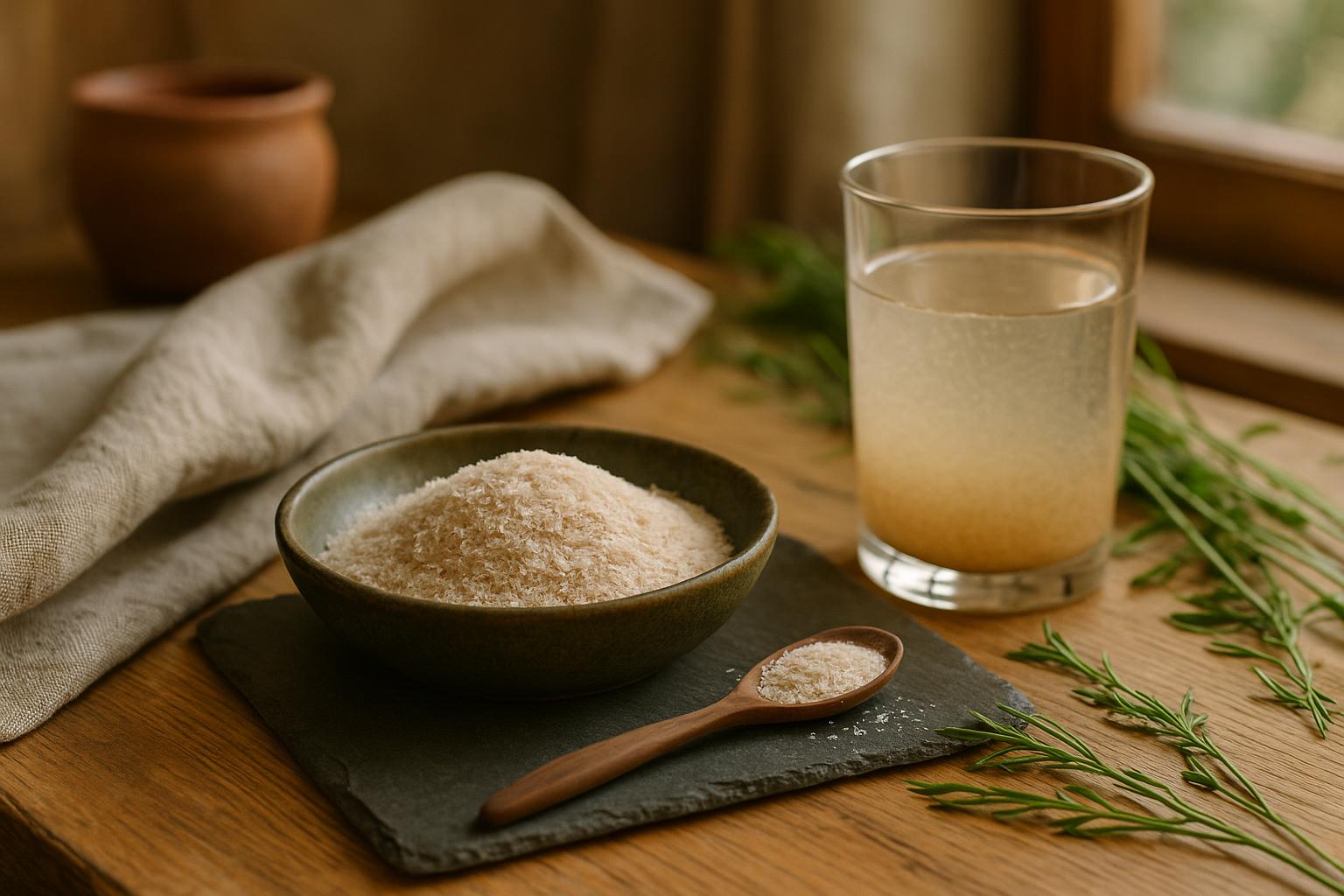
La fibre de psyllium c’est quoi au sens botanique ? C’est le tégument — l’enveloppe externe — de la graine de Plantago ovata, une plante herbacée cultivée principalement en Inde et en Iran. Cette enveloppe représente environ 30 % du poids de la graine.
Le terme « ispaghul » désigne la même plante dans la pharmacopée européenne. Les deux noms sont utilisés indifféremment dans la littérature scientifique et médicale.
La fibre de psyllium c’est quoi chimiquement ? Elle est composée à plus de 70 % d’arabinoxylanes, des polysaccharides qui absorbent jusqu’à 40 fois leur poids en eau pour former un gel visqueux dans le tube digestif.
2. Comment la fibre de psyllium agit-elle dans l’intestin ?
La fibre de psyllium c’est quoi en termes d’action physiologique ? Elle forme un gel muqueux qui lubrifie et ramollit le contenu intestinal, facilitant son transit sans stimuler chimiquement la paroi du côlon.
Ce mécanisme la distingue des laxatifs stimulants comme le séné. Elle agit de façon purement mécanique, ce qui la rend bien tolérée à long terme selon une étude publiée dans Alimentary Pharmacology and Therapeutics () [2].
En cas de diarrhée, ce même gel absorbe l’excès d’eau dans le côlon et consolide les selles. La fibre de psyllium c’est donc un régulateur bidirectionnel du transit intestinal.
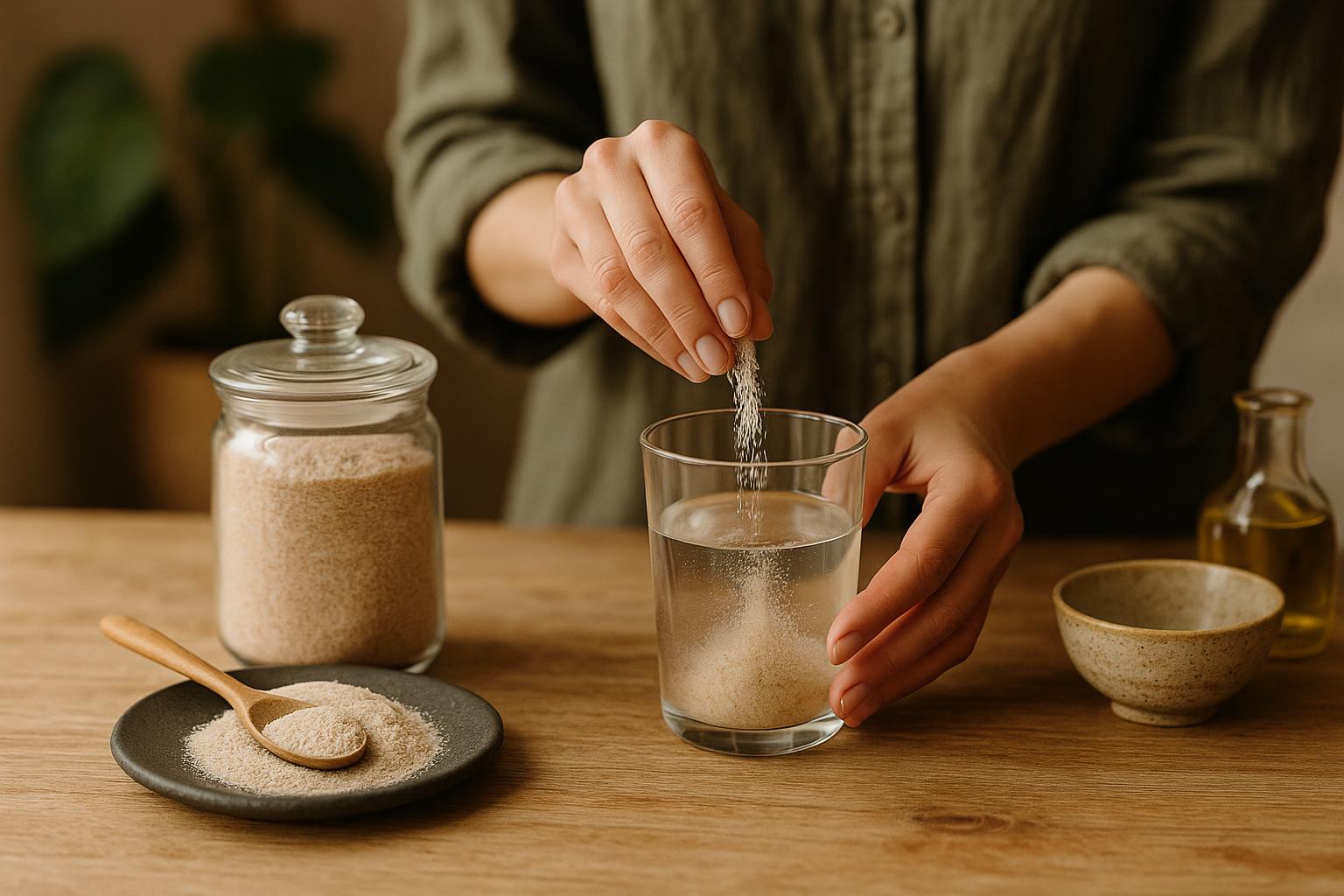
3. Fibre de psyllium c’est quoi comme nutriment : valeurs clés
La fibre de psyllium c’est quoi d’un point de vue nutritionnel ? C’est une fibre quasi pure, avec très peu de calories et pratiquement aucun sucre ni lipide. Voici ses caractéristiques nutritionnelles pour 10 g de poudre :
| Paramètre | Valeur pour 10 g | Référence |
|---|---|---|
| Fibres totales | ~8,5 g | ANSES, 2020 |
| Dont fibres solubles | ~7 g | EFSA, 2012 |
| Calories | ~20 kcal | Base CIQUAL |
| Glucides assimilables | < 0,5 g | Base CIQUAL |
| Capacité d’absorption eau | Jusqu’à 40× son poids | Journal of Nutrition, 2018 |
Ces chiffres expliquent pourquoi la fibre de psyllium c’est quoi de si intéressant pour les régimes pauvres en calories : elle procure une sensation de satiété durable sans apport calorique significatif. Pour en savoir plus sur la poudre de psyllium et ses usages, consultez notre guide dédié.
4. Fibre de psyllium c’est quoi pour la constipation : ce que dit la science
La fibre de psyllium c’est quoi pour les personnes constipées ? C’est l’un des laxatifs de lest les mieux documentés. Une méta-analyse publiée dans The American Journal of Clinical Nutrition () portant sur 21 essais cliniques a confirmé son efficacité pour augmenter la fréquence des selles et améliorer leur consistance [3].
L’ANSES recommande un apport quotidien de 25 à 30 g de fibres pour un adulte. Le psyllium peut contribuer à combler ce déficit courant dans les régimes occidentaux.
- Augmente le volume des selles de 40 à 100 % selon les études
- Réduit le temps de transit colique
- N’entraîne pas de dépendance contrairement aux laxatifs stimulants
- Efficace dès 7 jours de prise régulière
Pour comprendre comment prendre le psyllium pour la constipation, suivez les recommandations de dosage validées par les experts.
5. Fibre de psyllium c’est quoi pour le cholestérol ?
La fibre de psyllium c’est quoi dans le contexte cardiovasculaire ? C’est un agent hypocholestérolémiant reconnu. Le gel formé dans l’intestin grêle piège les acides biliaires, forçant le foie à puiser dans le cholestérol circulant pour en produire de nouveaux.
L’EFSA a accordé en une allégation de santé officielle : 10 g de téguments de psyllium par jour contribuent à maintenir un taux de cholestérol sanguin normal [1].
- Réduction du LDL de 5 à 10 % selon les études
- Effet dose-dépendant : plus la dose est régulière, plus l’effet est marqué
- Complémentaire aux statines selon certains cardiologues
- Sans effet négatif sur le HDL (bon cholestérol)
6. Fibre de psyllium c’est quoi pour la glycémie et le diabète ?
La fibre de psyllium c’est quoi pour les personnes diabétiques ou prédiabétiques ? C’est un modulateur naturel de la glycémie postprandiale. Le gel muqueux ralentit l’absorption des glucides dans l’intestin grêle, atténuant les pics de glycémie après les repas.
Une étude publiée dans Diabetes Care () a montré qu’une supplémentation de 10,2 g de psyllium par jour réduisait significativement la glycémie à jeun et l’HbA1c chez des patients diabétiques de type 2 [4].
De nombreux lecteurs nous signalent que l’intégration du psyllium dans leur routine matinale, avant le petit-déjeuner, leur a permis de mieux contrôler leurs fringales et leur glycémie postprandiale.
7. Fibre de psyllium c’est quoi comme prébiotique ?
La fibre de psyllium c’est quoi pour le microbiote intestinal ? C’est un prébiotique fonctionnel. Bien que partiellement fermentescible, elle nourrit sélectivement certaines souches bactériennes bénéfiques comme les Bifidobacterium et les Lactobacillus.
Cette fermentation partielle produit des AGCC (acides gras à chaîne courte), notamment du butyrate, qui protège la muqueuse intestinale et réduit l’inflammation locale.
- Stimule la croissance des bifidobactéries
- Produit du butyrate protecteur pour le côlon
- Réduit le pH colique (effet antimicrobien indirect)
- Compatible avec une supplémentation en probiotiques
8. Fibre de psyllium c’est quoi en poudre versus en gélules ?
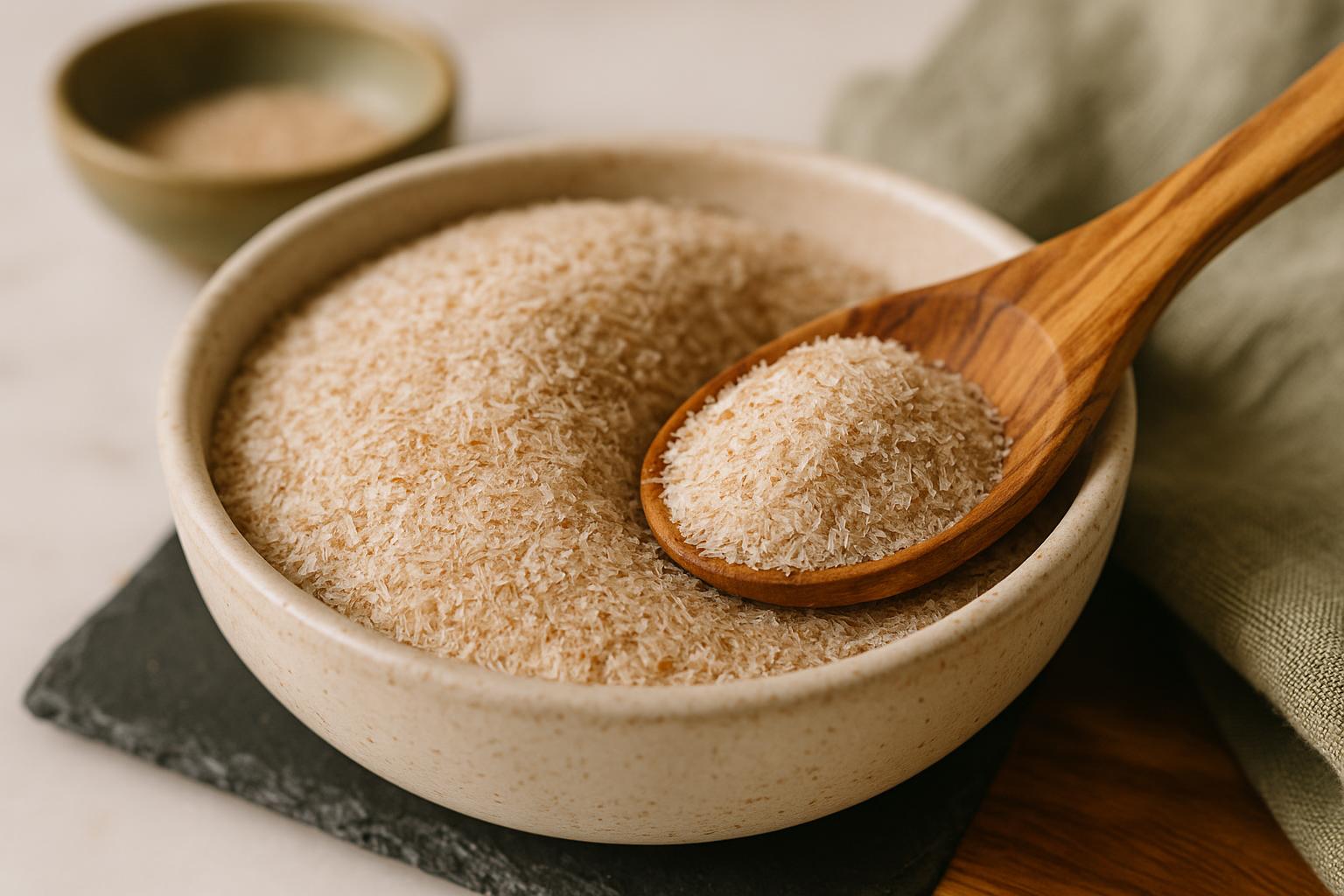
La fibre de psyllium c’est quoi sous ses différentes formes commerciales ? Elle se présente principalement en poudre de téguments, en coques entières ou en gélules. Chaque forme a ses avantages selon les besoins et les habitudes.
La poudre est la forme la plus concentrée et la plus étudiée. Les gélules sont pratiques mais nécessitent souvent d’en avaler plusieurs pour atteindre la dose efficace. Pour choisir entre ces deux options, notre article ispaghul ou psyllium : quelle différence vous donnera toutes les clés.
- Poudre : dissolution rapide, dose précise, meilleure absorption du gel
- Gélules : pratiques en déplacement, goût neutre, dosage fixe
- Coques entières : moins transformées, légèrement moins solubles
- Psyllium blond : forme la plus purifiée, la plus utilisée en clinique
9. Fibre de psyllium c’est quoi : dosage recommandé et mode d’emploi
La fibre de psyllium c’est quoi en termes de posologie ? Les doses validées par les études oscillent entre 5 et 15 g par jour, idéalement réparties en 1 à 3 prises avant les repas, diluées dans un grand verre d’eau (250 ml minimum).
Il est impératif de boire suffisamment d’eau avec le psyllium. Sans hydratation adéquate, le gel peut au contraire ralentir le transit et provoquer une obstruction intestinale, surtout chez les personnes âgées ou déshydratées.
- Dose initiale recommandée : 3 à 5 g par jour
- Dose thérapeutique validée : 10 g par jour
- Toujours diluer dans 250 ml d’eau minimum
- Augmenter progressivement sur 1 à 2 semaines
- Espacer la prise des médicaments d’au moins 2 heures
Pour un protocole détaillé, consultez notre guide sur à quoi sert le psyllium au quotidien.
10. Fibre de psyllium c’est quoi : effets indésirables et précautions
La fibre de psyllium c’est quoi en matière de risques ? Bien tolérée chez la majorité des adultes, elle peut provoquer des ballonnements, des gaz ou des crampes abdominales en début de cure, surtout si la dose est augmentée trop rapidement.
Des cas rares d’allergie respiratoire ont été signalés chez les personnes manipulant régulièrement de la poudre de psyllium en milieu professionnel. La voie orale reste très sûre selon le NCCIH () [5].
- Contre-indiqué en cas de sténose ou d’obstruction intestinale
- Déconseillé sans avis médical en cas de dysphagie
- Interactions possibles avec la metformine, la digoxine et certains anticoagulants
- Femmes enceintes : consulter un médecin avant usage
- Enfants de moins de 6 ans : déconseillé sans prescription
11. Fibre de psyllium c’est quoi dans l’alimentation et la cuisine ?
La fibre de psyllium c’est quoi comme ingrédient culinaire ? C’est un liant et épaississant naturel très apprécié dans la cuisine sans gluten. Elle remplace partiellement le gluten dans les pains et gâteaux en apportant de l’élasticité à la pâte.
Elle est aussi utilisée pour épaissir les smoothies, les soupes ou les sauces. Sa saveur est neutre, ce qui la rend facile à intégrer dans de nombreuses recettes. Pour en savoir plus sur les bienfaits du psyllium dans votre alimentation, découvrez nos conseils pratiques.
- Remplace le gluten dans les pains sans gluten (5 à 10 g pour 500 g de farine)
- Épaissit les smoothies protéinés
- Stabilise les préparations glacées
- Utilisée dans les barres de céréales riches en fibres
12. Fibre de psyllium c’est quoi comparée aux autres fibres ?
La fibre de psyllium c’est quoi par rapport à l’inuline, au son d’avoine ou aux graines de lin ? Sa principale différence réside dans sa capacité de gélification exceptionnelle et dans sa tolérance digestive supérieure à celle du son de blé.
Contrairement à l’inuline, très fermentescible et souvent source de gaz, la fibre de psyllium c’est une fibre à fermentation lente, mieux tolérée par les intestins sensibles. Elle est recommandée en première intention dans le syndrome de l’intestin irritable (SII) par plusieurs sociétés de gastroentérologie.
13. Fibre de psyllium c’est quoi pour la perte de poids ?
La fibre de psyllium c’est quoi dans le contexte d’un régime amaigrissant ? C’est un coupe-faim naturel. Le gel formé dans l’estomac ralentit la vidange gastrique, prolongeant la sensation de satiété et réduisant la prise alimentaire totale.
Une étude publiée dans Appetite () a montré que la consommation de psyllium avant les repas réduisait significativement la faim et l’apport calorique sur 24 heures chez des adultes en surpoids [4].
- Réduit la faim entre les repas
- Ralentit la vidange gastrique
- Diminue l’index glycémique du repas suivant
- Sans effet stimulant ni rebond
14. Ce qu’il faut retenir sur la fibre de psyllium c’est quoi
La fibre de psyllium c’est quoi en résumé ? C’est une fibre mucilagineuse soluble issue de Plantago ovata, validée scientifiquement pour réguler le transit, réduire le cholestérol LDL et stabiliser la glycémie, à partir de 10 g par jour avec une hydratation suffisante.
La fibre de psyllium c’est aussi un allié polyvalent : prébiotique, coupe-faim, ingrédient culinaire et laxatif de lest sans accoutumance. Commencez par 3 g par jour dilués dans un grand verre d’eau, augmentez progressivement et consultez votre médecin si vous prenez des médicaments.
- La fibre de psyllium c’est quoi : une fibre soluble mucilagineuse extraite des téguments de Plantago ovata (ispaghul).
- La fibre de psyllium c’est quoi pour le transit : un régulateur bidirectionnel efficace contre la constipation et la diarrhée.
- La fibre de psyllium c’est quoi pour le cholestérol : un agent hypocholestérolémiant validé par l’EFSA à 10 g/jour.
- La fibre de psyllium c’est quoi pour la glycémie : un ralentisseur d’absorption des glucides utile en cas de diabète de type 2.
- La fibre de psyllium c’est quoi en pratique : toujours diluer dans 250 ml d’eau minimum, commencer par 3 g/jour et espacer des médicaments de 2 heures.
Questions fréquentes sur fibre de psyllium c’est quoi
La fibre de psyllium c’est quoi exactement ?
La fibre de psyllium c’est quoi ? C’est le tégument — l’enveloppe externe — de la graine de Plantago ovata, une plante herbacée cultivée en Inde. Riche en arabinoxylanes, cette fibre soluble forme un gel au contact de l’eau, régulant le transit intestinal et piégeant le cholestérol et les sucres dans l’intestin.
Quelle est la différence entre psyllium et ispaghul ?
Psyllium et ispaghul désignent la même plante : Plantago ovata. « Ispaghul » est le terme utilisé dans la pharmacopée européenne, tandis que « psyllium » est plus courant dans le commerce et la littérature anglo-saxonne. Les deux produits ont des propriétés identiques.
La fibre de psyllium c’est quoi comme type de fibre ?
C’est une fibre soluble visqueuse, classée parmi les fibres mucilagineuses. Elle se distingue des fibres insolubles (son de blé) par sa capacité à former un gel épais dans l’intestin, ce qui la rend efficace à la fois contre la constipation et la diarrhée, sans irriter la muqueuse intestinale.
Combien de psyllium faut-il prendre par jour ?
La dose validée par l’EFSA pour l’effet sur le cholestérol est de 10 g par jour. Pour le transit, 5 à 10 g suffisent. Commencez toujours par 3 g par jour et augmentez progressivement sur 2 semaines. Chaque prise doit être accompagnée d’au moins 250 ml d’eau.
La fibre de psyllium c’est quoi pour les personnes diabétiques ?
La fibre de psyllium c’est quoi pour les diabétiques ? C’est un modulateur naturel de la glycémie. Elle ralentit l’absorption des glucides dans l’intestin grêle, réduisant les pics postprandiaux. Une étude de parue dans Diabetes Care a montré une réduction significative de l’HbA1c après 8 semaines de supplémentation à 10,2 g/jour.
Le psyllium peut-il remplacer les laxatifs chimiques ?
Oui, dans la plupart des cas de constipation fonctionnelle. Le psyllium est un laxatif de lest naturel, sans accoutumance et sans stimulation chimique de la paroi intestinale. Les sociétés de gastroentérologie le recommandent en première intention avant les laxatifs osmotiques ou stimulants.
La fibre de psyllium c’est quoi pour le microbiote ?
La fibre de psyllium c’est quoi pour la flore intestinale ? C’est un prébiotique partiel. Sa fermentation dans le côlon produit des acides gras à chaîne courte (butyrate) qui nourrissent les cellules du côlon et favorisent la croissance des bifidobactéries, améliorant ainsi l’équilibre du microbiote intestinal.
Peut-on prendre du psyllium tous les jours ?
Oui, le psyllium peut être consommé quotidiennement sur le long terme. Contrairement aux laxatifs stimulants, il ne crée pas de dépendance ni d’accoutumance. Des études de suivi sur 12 mois confirment son innocuité. Il est néanmoins conseillé de faire des pauses périodiques et de consulter un médecin en cas d’usage prolongé.
La fibre de psyllium c’est quoi pour maigrir ?
La fibre de psyllium c’est quoi pour la perte de poids ? C’est un coupe-faim naturel sans stimulant. Le gel formé dans l’estomac prolonge la satiété, réduit les fringales et diminue l’apport calorique total. Elle n’est pas un brûle-graisse, mais un outil de gestion de l’appétit validé par plusieurs études cliniques.
Y a-t-il des contre-indications au psyllium ?
Oui. Le psyllium est contre-indiqué en cas d’obstruction intestinale, de sténose œsophagienne ou de dysphagie sévère. Il doit être utilisé avec précaution chez les personnes prenant des médicaments (espacer de 2 heures minimum), les femmes enceintes et les enfants de moins de 6 ans. Consultez votre médecin en cas de doute.
La fibre de psyllium c’est quoi en cuisine ?
En cuisine, la fibre de psyllium c’est quoi ? C’est un liant naturel utilisé dans les recettes sans gluten. Elle apporte de l’élasticité aux pains et gâteaux, épaissit les smoothies et stabilise les sauces. On l’utilise généralement à raison de 5 à 10 g pour 500 g de farine dans les recettes de boulangerie sans gluten.
Quelle est la différence entre psyllium blond et psyllium noir ?
Le psyllium blond (Plantago ovata) contient environ 70 % de fibres mucilagineuses et est la forme la plus étudiée cliniquement. Le psyllium noir (Plantago psyllium) est moins concentré en mucilages et moins utilisé en thérapeutique. Le psyllium blond est systématiquement préféré dans les études scientifiques et les recommandations médicales.
Ce qu’il faut retenir
La fibre de psyllium c’est quoi en une phrase ? C’est la fibre soluble mucilagineuse la mieux documentée au monde pour le transit intestinal, le cholestérol et la glycémie, issue de Plantago ovata et validée par l’EFSA à 10 g par jour. La fibre de psyllium c’est aussi un ingrédient sûr, polyvalent et accessible, que vous pouvez intégrer dès demain dans votre routine santé.
Action concrète : Commencez par dissoudre 3 g de poudre de psyllium blond dans un grand verre d’eau (250 ml) chaque matin avant le petit-déjeuner. Augmentez à 5 g après une semaine si bien toléré. Consultez votre médecin si vous prenez des médicaments ou souffrez d’une pathologie digestive.
Sources et études
- Scientific Opinion on the substantiation of a health claim related to psyllium husk and maintenance of normal blood cholesterol concentrations — EFSA Journal,
- Psyllium fiber as a useful adjunct to dietary and drug therapy in the management of hypercholesterolaemia — Alimentary Pharmacology and Therapeutics,
- Dietary fiber and laxation: a systematic review and meta-analysis — The American Journal of Clinical Nutrition,
- Psyllium improved glycemic control in overweight and obese patients with type 2 diabetes mellitus — Diabetes Care,
- Psyllium — Health Information — NCCIH,
Cet article est fourni à titre informatif uniquement et ne constitue pas un avis médical. Consultez un professionnel de santé qualifié avant toute utilisation.