Poudre de psyllium c’est quoi ? 7 faits essentiels prouvés
⚠️ Avis médical : Les informations de cet article sont fournies à titre éducatif uniquement. Elles ne remplacent pas l’avis d’un médecin ou d’un professionnel de santé qualifié. Consultez votre médecin avant de modifier votre alimentation ou d’introduire un nouveau complément.
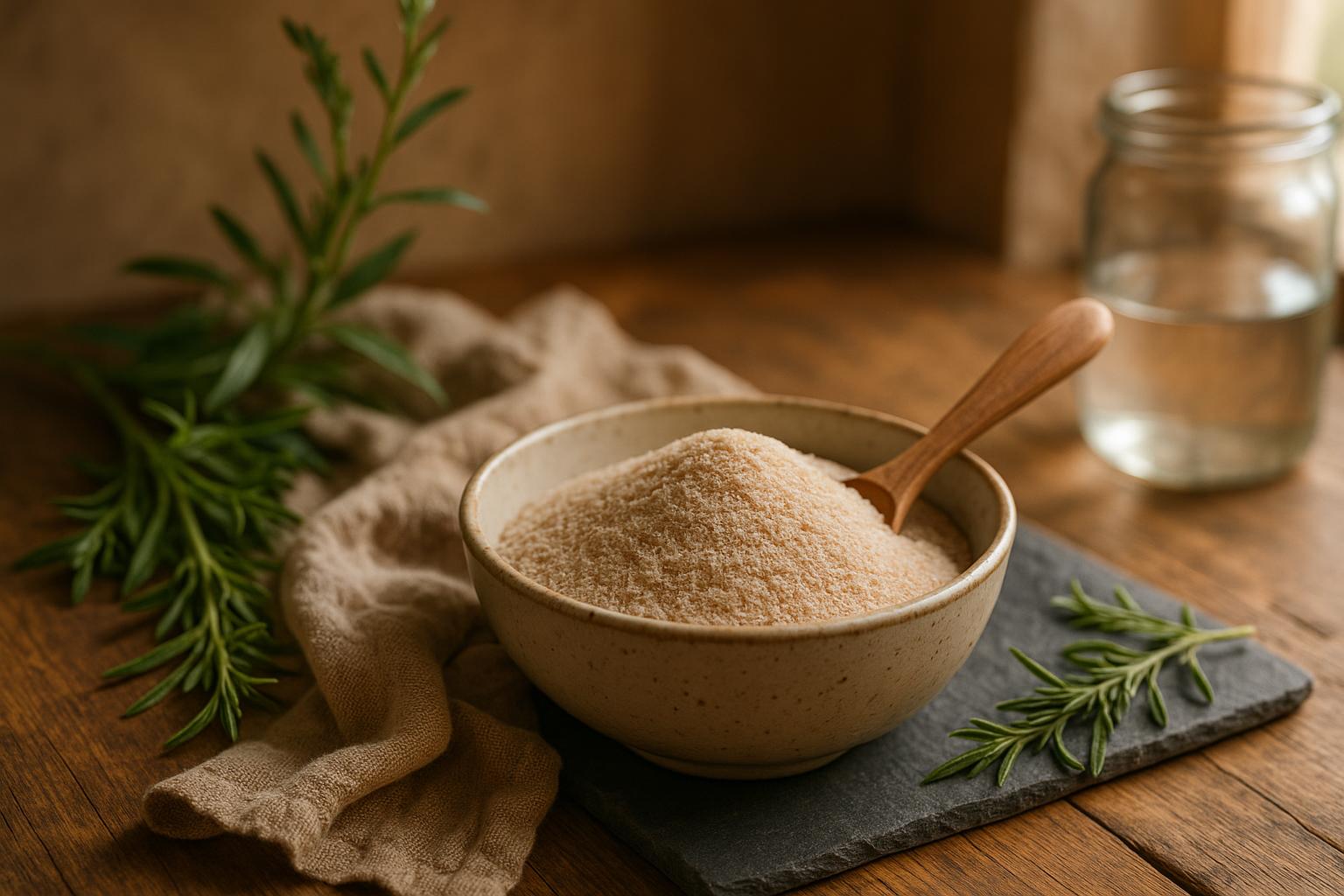
poudre de psyllium c’est quoi : c’est une fibre alimentaire soluble extraite des enveloppes de graines de Plantago ovata, une plante originaire d’Inde. Elle gonfle au contact de l’eau pour former un gel visqueux qui régule le transit intestinal. Selon une étude publiée sur PubMed, le psyllium réduit le cholestérol LDL de 5 à 10 % en quelques semaines.
- Régule le transit intestinal (constipation et diarrhée)
- Réduit le cholestérol LDL naturellement
- Stabilise la glycémie après les repas
- Favorise la satiété et aide à contrôler le poids
- Nourrit le microbiote intestinal par fermentation partielle
1. Quelle est l’origine exacte de la poudre de psyllium ?
La poudre de psyllium c’est quoi du point de vue botanique ? C’est le produit des téguments broyés de la plante Plantago ovata. Cette plante pousse principalement dans les régions arides de l’Inde, du Pakistan et de l’Iran. Elle est cultivée depuis des siècles pour ses propriétés médicinales reconnues.
Le terme « psyllium » vient du grec psyllia, qui signifie « puce ». Les graines ressemblent en effet à de petites puces brunes. On distingue deux variétés principales : le psyllium blond (Plantago ovata) et le psyllium noir (Plantago psyllium). Le psyllium blond est de loin le plus utilisé en nutrition.
La poudre commerciale provient du broyage fin des enveloppes, appelées téguments ou coques. Ces enveloppes contiennent jusqu’à 85 % de fibres solubles, une concentration exceptionnelle dans le règne végétal.
2. Composition : que contient réellement la poudre de psyllium ?
Comprendre la poudre de psyllium c’est quoi implique d’analyser sa composition. La poudre est composée majoritairement d’arabinoxylanes, des polysaccharides complexes qui forment un mucilage au contact de l’eau. Ce mucilage est le principe actif principal.
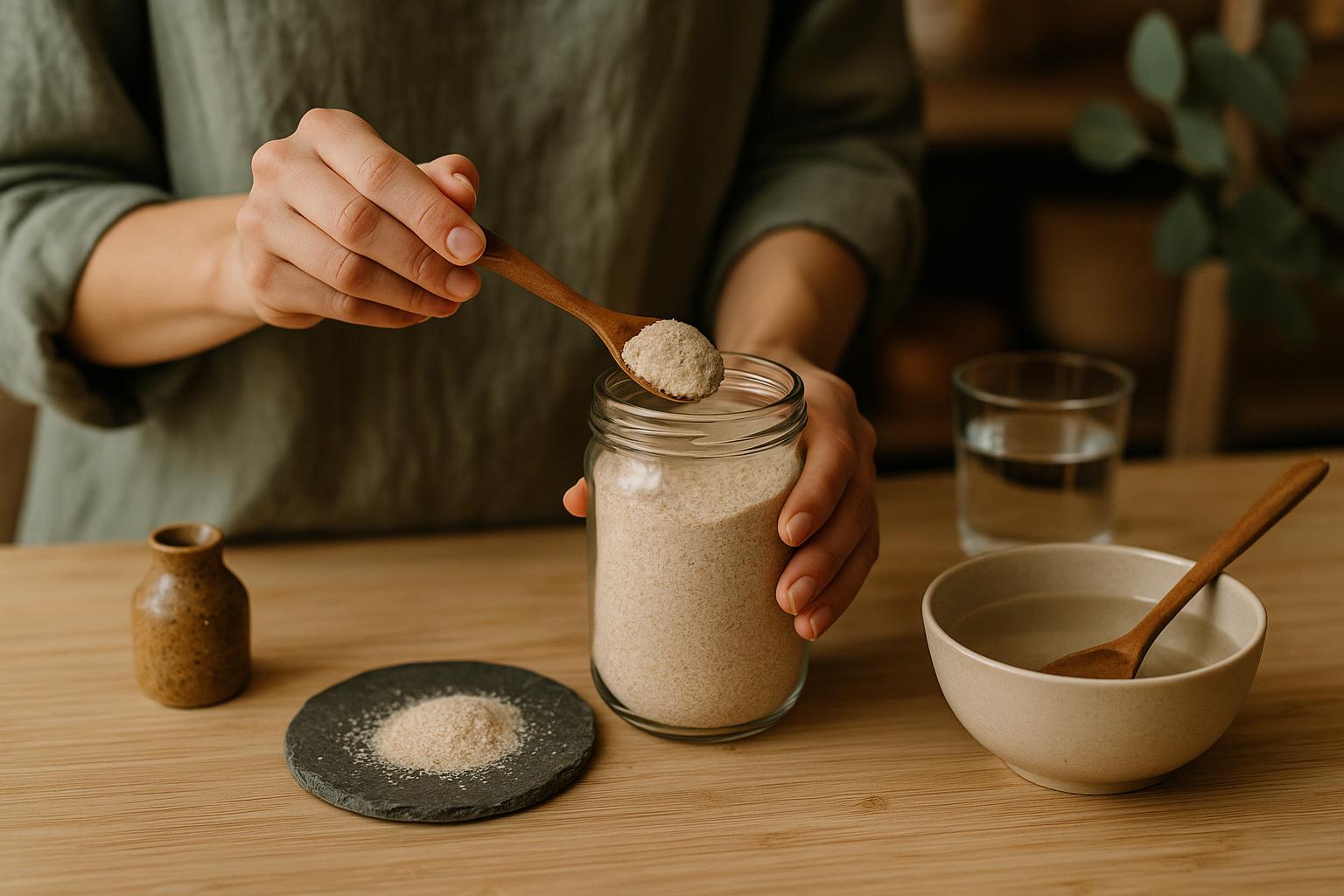
| Composant | Proportion | Rôle principal |
|---|---|---|
| Fibres solubles (arabinoxylanes) | 70-85 % | Formation du gel, régulation du transit |
| Fibres insolubles | 10-15 % | Accélération du transit, volume des selles |
| Protéines | 2-3 % | Structure cellulaire de l’enveloppe |
| Lipides | 1-2 % | Trace, sans effet significatif |
| Minéraux (calcium, magnésium) | < 1 % | Apport minéral mineur |
| Calories pour 5 g | ~17 kcal | Apport énergétique très faible |
La poudre de psyllium c’est quoi en termes caloriques ? Pratiquement rien. Cinq grammes apportent environ 17 kilocalories. C’est l’un des compléments les plus pauvres en calories disponibles. Pour les fibres de psyllium et leur rôle, cette composition est déterminante.
L’absence de gluten, de lactose et de sucres ajoutés rend la poudre compatible avec de nombreux régimes alimentaires spécifiques. Elle convient aux personnes véganes, sans gluten et diabétiques sous réserve d’un avis médical.
3. Comment la poudre de psyllium agit-elle dans l’intestin ?
La poudre de psyllium c’est quoi mécaniquement ? C’est un laxatif de lest. Au contact de l’eau, elle absorbe jusqu’à 50 fois son poids en liquide. Ce phénomène crée un gel épais et visqueux dans le tube digestif.
Ce gel remplit plusieurs fonctions simultanées. Il augmente le volume du bol fécal, ce qui stimule les contractions intestinales. Il lubrifie les parois du côlon, facilitant le passage des selles. Il ralentit aussi l’absorption des glucides et des lipides.
- Absorption d’eau : jusqu’à 50 fois le poids de la poudre
- Formation d’un gel visqueux en 2 à 3 minutes
- Transit accéléré en cas de constipation
- Transit ralenti en cas de diarrhée (effet bidirectionnel)
- Réduction de l’absorption du cholestérol alimentaire
- Ralentissement de l’absorption des sucres
L’effet bidirectionnel est l’une des caractéristiques les plus remarquables. La poudre de psyllium c’est quoi d’un point de vue thérapeutique ? C’est l’un des rares régulateurs naturels du transit qui agit aussi bien contre la constipation que contre la diarrhée. L’EFSA a validé cette double action dans son évaluation scientifique.
4. Quels sont les 7 bienfaits prouvés de la poudre de psyllium ?
La poudre de psyllium c’est quoi en termes d’effets sur la santé ? Voici les sept bénéfices validés par la recherche clinique. les bienfaits prouvés du psyllium couvrent plusieurs systèmes physiologiques.
- Régulation du transit intestinal : Efficacité prouvée contre la constipation chronique et le syndrome de l’intestin irritable.
- Réduction du cholestérol LDL : Une méta-analyse de 2018 confirme une baisse de 5 à 10 % du LDL avec 10 g/jour.
- Stabilisation de la glycémie : Le gel ralentit l’absorption des glucides, réduisant les pics glycémiques post-prandiaux.
- Soutien à la perte de poids : La sensation de satiété prolongée réduit l’apport calorique spontané.
- Santé du microbiote : Fermentation partielle par les bactéries bénéfiques du côlon.
- Réduction de la pression artérielle : Des études montrent une légère baisse tensionnelle chez les hypertendus.
- Protection de la muqueuse intestinale : Le gel forme une couche protectrice contre les irritants.
Ces bienfaits sont reconnus par le NCCIH américain dans ses fiches sur les fibres alimentaires. La poudre de psyllium c’est quoi sinon une fibre multifonctionnelle aux effets documentés.
5. Poudre de psyllium et cholestérol : ce que dit la science
La poudre de psyllium c’est quoi pour le cœur ? C’est l’un des compléments fibres les mieux documentés pour réduire le cholestérol. Le mécanisme est simple : le gel capte les acides biliaires dans l’intestin et les élimine dans les selles.
Le foie doit alors synthétiser de nouveaux acides biliaires à partir du cholestérol sanguin. Ce processus abaisse mécaniquement le taux de LDL circulant. La Harvard Medical School classe le psyllium parmi les fibres les plus efficaces pour la santé cardiovasculaire.
- Dose efficace : 10 à 15 g de psyllium par jour
- Réduction du LDL : 5 à 10 % en 4 à 8 semaines
- Réduction des triglycérides : légère mais significative
- Aucun effet négatif sur le HDL (bon cholestérol)
6. Psyllium et glycémie : un allié pour les diabétiques ?
La poudre de psyllium c’est quoi pour la gestion du diabète ? C’est un régulateur glycémique naturel. Le gel visqueux ralentit la vidange gastrique et l’absorption intestinale des glucides. Cela réduit les pics d’insuline après les repas.
Une étude publiée sur PubMed en 2020 montre qu’une supplémentation de 10 g/jour réduit l’HbA1c de 0,4 point chez les diabétiques de type 2. Cet effet est modeste mais cliniquement pertinent. Il s’ajoute aux traitements conventionnels sans interférence connue.
Les personnes diabétiques doivent consulter leur médecin avant d’introduire le psyllium. La réduction glycémique peut nécessiter un ajustement des doses d’insuline ou d’hypoglycémiants oraux.
7. Comment utiliser la poudre de psyllium au quotidien ?
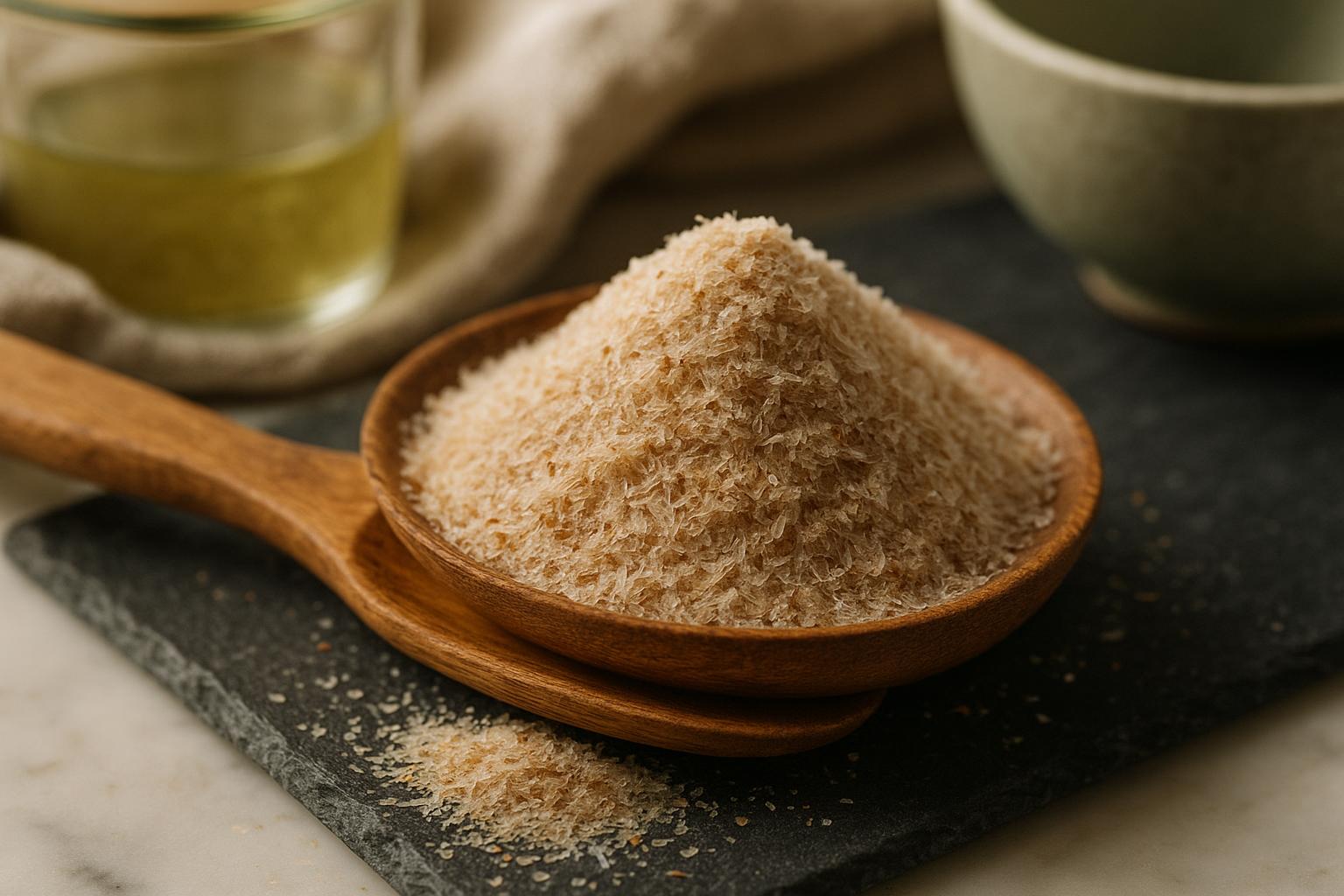
La poudre de psyllium c’est quoi en termes d’utilisation pratique ? C’est un complément polyvalent qui s’intègre facilement dans les habitudes alimentaires. comment consommer le psyllium efficacement est une question que beaucoup se posent.
- Dans un verre d’eau : Mélanger 5 à 10 g dans 250 ml d’eau et boire immédiatement.
- Dans un smoothie : Ajouter au dernier moment pour éviter une texture trop épaisse.
- Dans un yaourt : Saupoudrer et consommer sans attendre.
- En boulangerie : Remplacer partiellement la farine pour augmenter la teneur en fibres.
- Dans une soupe : Épaississant naturel sans altérer le goût.
La règle d’or : toujours accompagner le psyllium d’un grand verre d’eau. Sans hydratation suffisante, la poudre peut provoquer une obstruction intestinale. Boire au minimum 1,5 à 2 litres d’eau par jour lors d’une cure de psyllium.
8. Quelle dose de poudre de psyllium par jour ?
La poudre de psyllium c’est quoi en termes de dosage optimal ? Les études cliniques utilisent généralement des doses de 5 à 15 g par jour. L’ANSES recommande de ne pas dépasser 30 g de fibres totales par jour.
- Débutant : 3 à 5 g par jour (1 cuillère à café) pendant 1 semaine
- Dose standard : 5 à 10 g par jour répartis en 1 à 2 prises
- Dose thérapeutique (cholestérol) : 10 à 15 g par jour sous contrôle médical
- Moment optimal : 30 minutes avant les repas principaux
Augmenter la dose progressivement est essentiel. Une introduction trop rapide provoque des ballonnements, des gaz et des crampes abdominales. Le corps a besoin de 2 à 4 semaines pour s’adapter à un apport élevé en fibres.
9. Psyllium blond vs psyllium noir : quelle différence ?
La poudre de psyllium c’est quoi selon la variété ? Le psyllium blond (Plantago ovata) contient environ 85 % de fibres solubles dans ses téguments. Le psyllium noir (Plantago psyllium) en contient environ 60 %. Le psyllium blond est donc plus concentré et plus efficace. psyllium en gélule ou en poudre est aussi une question de forme galénique.
- Psyllium blond : 85 % fibres solubles, goût neutre, couleur beige claire
- Psyllium noir : 60 % fibres solubles, goût légèrement amer, couleur foncée
- Ispaghul : Autre nom du psyllium blond, utilisé en pharmacie
- Coques de psyllium : Enveloppes entières, moins finement broyées que la poudre
En pratique, choisissez toujours le psyllium blond biologique pour un usage nutritionnel. La certification biologique garantit l’absence de pesticides et de métaux lourds. Vérifiez que le produit contient au moins 70 % de fibres solubles sur l’étiquette.
10. Effets secondaires et précautions à connaître
La poudre de psyllium c’est quoi en termes de risques ? C’est un produit généralement bien toléré, mais certaines précautions s’imposent. Les effets secondaires les plus fréquents sont digestifs et temporaires.
- Ballonnements et gaz lors des premières semaines
- Crampes abdominales si la dose est augmentée trop vite
- Obstruction intestinale si consommé sans eau suffisante
- Réaction allergique rare (principalement chez les personnes sensibles aux graminées)
- Interaction avec certains médicaments (metformine, warfarine, digoxine)
Les personnes souffrant de maladies intestinales graves (maladie de Crohn, occlusion intestinale) doivent éviter le psyllium sans avis médical. La prise de médicaments doit être espacée d’au moins 2 heures par rapport au psyllium pour éviter toute interaction d’absorption.
11. Psyllium et microbiote : un prébiotique naturel ?
La poudre de psyllium c’est quoi pour le microbiote intestinal ? C’est un prébiotique partiel. Bien que moins fermentescible que l’inuline ou les FOS, le psyllium nourrit certaines bactéries bénéfiques du côlon. Des recherches montrent une augmentation des Bifidobacterium et des Lactobacillus après une supplémentation régulière.
Cette action prébiotique est modérée mais réelle. Elle contribue à l’équilibre du microbiote sans provoquer les excès de fermentation souvent associés aux fibres hautement fermentescibles. C’est un avantage pour les personnes souffrant de côlon irritable. ispaghul et psyllium, leurs différences méritent d’être connues pour faire le bon choix.
12. Où acheter de la poudre de psyllium de qualité ?
La poudre de psyllium c’est quoi en termes de marché ? C’est un produit disponible dans de nombreux circuits de distribution. La qualité varie cependant considérablement selon les sources.
- Pharmacies : Produits certifiés, souvent sous forme d’ispaghul (Psyllium Emdogel, Metamucil)
- Magasins bio : Poudre vrac biologique, rapport qualité/prix optimal
- Sites spécialisés : Large choix, vérifier les certifications (AB, Ecocert)
- Grandes surfaces : Disponibilité croissante en rayon diététique
Critères de sélection : certification biologique, teneur en fibres solubles supérieure à 70 %, absence d’additifs, traçabilité de l’origine (Inde de préférence). Évitez les produits sans indication de la teneur en fibres.
13. Poudre de psyllium en cuisine : 5 utilisations pratiques
La poudre de psyllium c’est quoi en cuisine ? C’est un ingrédient fonctionnel de plus en plus utilisé dans la cuisine santé et sans gluten. Sa capacité à absorber l’eau et à former un gel le rend précieux comme liant naturel.
- Pain sans gluten : Remplace le gluten pour donner de l’élasticité à la pâte
- Crackers et galettes : Améliore la tenue sans œuf
- Porridge : Épaissit naturellement et augmente la satiété
- Smoothies protéinés : Ajoute des fibres sans altérer le goût
- Sauces et soupes : Épaississant naturel sans gluten ni maïzena
En boulangerie sans gluten, 1 cuillère à soupe de psyllium remplace généralement 1 œuf comme liant. La texture obtenue est proche du pain traditionnel. C’est l’une des utilisations les plus populaires dans la communauté sans gluten.
14. Psyllium et perte de poids : réalité ou mythe ?
La poudre de psyllium c’est quoi pour la gestion du poids ? C’est un auxiliaire minceur validé par la science, mais pas un brûleur de graisses. Son action sur le poids passe par deux mécanismes principaux. à quoi sert le psyllium concrètement répond à cette question en détail.
Premier mécanisme : la satiété. Le gel formé dans l’estomac ralentit la vidange gastrique et prolonge la sensation de plénitude. Cela réduit l’apport calorique spontané lors des repas suivants. Deuxième mécanisme : la réduction de l’absorption des graisses alimentaires via la liaison aux acides biliaires.
- Réduction de l’apport calorique : 100 à 200 kcal/jour selon les études
- Perte de poids supplémentaire : 0,5 à 1 kg sur 12 semaines vs placebo
- Effet optimal : associé à un régime hypocalorique et à l’activité physique
- Aucun effet amaigrissant en l’absence de déficit calorique
- La poudre de psyllium c’est quoi en résumé : une fibre soluble issue de Plantago ovata, qui forme un gel intestinal régulateur.
- La poudre de psyllium c’est quoi pour la santé cardiovasculaire : un réducteur naturel du cholestérol LDL validé par l’EFSA et la FDA.
- La poudre de psyllium c’est quoi comme dosage sûr : 5 à 10 g par jour avec minimum 250 ml d’eau par prise.
- La poudre de psyllium c’est quoi en cuisine : un liant naturel sans gluten, idéal pour la boulangerie et les sauces.
- La poudre de psyllium c’est quoi comme précaution : toujours boire suffisamment d’eau et espacer la prise des médicaments de 2 heures.
Questions fréquentes sur poudre de psyllium c’est quoi
La poudre de psyllium c’est quoi exactement ?
La poudre de psyllium c’est quoi dans sa définition la plus simple : c’est la poudre obtenue par broyage des téguments (enveloppes) de graines de Plantago ovata. Elle contient jusqu’à 85 % de fibres solubles sous forme d’arabinoxylanes. Ces fibres forment un gel au contact de l’eau, ce qui lui confère ses propriétés digestives, cardiovasculaires et métaboliques documentées.
Quelle est la différence entre psyllium blond et psyllium noir ?
Le psyllium blond (Plantago ovata) contient environ 85 % de fibres solubles dans ses téguments. Le psyllium noir (Plantago psyllium) en contient environ 60 %. Le psyllium blond est donc plus concentré, plus efficace et plus utilisé en nutrition et en pharmacie. Son goût est neutre, ce qui facilite son intégration dans les aliments et les boissons.
La poudre de psyllium c’est quoi comme laxatif ?
C’est un laxatif de lest, différent des laxatifs stimulants ou osmotiques. Il n’irrite pas la muqueuse intestinale et ne crée pas de dépendance. Il augmente le volume et l’humidité des selles en absorbant l’eau. C’est pourquoi il est recommandé en première intention pour la constipation chronique par de nombreuses sociétés de gastroentérologie.
Combien de temps faut-il pour voir les effets du psyllium ?
Les effets sur le transit intestinal apparaissent généralement en 12 à 72 heures. Pour la réduction du cholestérol, il faut attendre 4 à 8 semaines de supplémentation régulière à raison de 10 à 15 g par jour. La stabilisation glycémique est visible dès la première semaine si le psyllium est pris avant les repas. La régularité de la prise est déterminante.
Peut-on prendre du psyllium tous les jours ?
Oui, le psyllium peut être consommé quotidiennement sur le long terme sans danger prouvé. Les études de sécurité les plus longues couvrent 6 mois de supplémentation continue sans effets indésirables significatifs. Il est recommandé de maintenir une hydratation suffisante (au moins 1,5 litre d’eau par jour) et d’augmenter la dose progressivement pour éviter les inconforts digestifs initiaux.
La poudre de psyllium c’est quoi pour les personnes diabétiques ?
Pour les personnes diabétiques, la poudre de psyllium c’est quoi sinon un régulateur glycémique naturel. Elle ralentit l’absorption des glucides, réduit les pics d’insuline post-prandiaux et peut abaisser l’HbA1c de 0,4 point sur 12 semaines. Cependant, une consultation médicale est indispensable car le psyllium peut modifier l’efficacité des hypoglycémiants oraux et de l’insuline.
Quels sont les effets secondaires possibles ?
Les effets secondaires les plus fréquents sont les ballonnements, les gaz et les crampes abdominales, surtout en début de supplémentation. Ils disparaissent généralement après 2 à 3 semaines. Des réactions allergiques rares ont été rapportées. Le risque d’obstruction intestinale existe si le psyllium est consommé sans eau suffisante. Les personnes sous traitement médicamenteux doivent espacer les prises d’au moins 2 heures.
Comment préparer une boisson au psyllium ?
Versez 5 à 10 g de poudre dans un grand verre de 250 à 300 ml d’eau froide ou tiède. Mélangez vigoureusement pendant 10 secondes. Buvez immédiatement, avant que le gel ne se forme complètement. Suivez d’un second verre d’eau. La prise idéale se fait 30 minutes avant un repas. Évitez de mélanger le psyllium dans un liquide chaud, qui accélère la gélification.
La poudre de psyllium c’est quoi pour la cuisine sans gluten ?
La poudre de psyllium c’est quoi en boulangerie sans gluten : c’est le liant naturel de référence. Elle remplace le gluten en donnant de l’élasticité et de la tenue aux pâtes. Une cuillère à soupe (environ 10 g) suffit pour 500 g de farine sans gluten. Elle améliore la texture du pain, des crackers et des gâteaux. Elle peut aussi remplacer un œuf comme agent liant dans certaines recettes.
Quelle quantité de psyllium pour réduire le cholestérol ?
Les études cliniques utilisent des doses de 10 à 15 g de psyllium par jour pour réduire le cholestérol LDL. Cette dose est répartie en 2 à 3 prises avant les repas. L’effet est visible après 4 à 8 semaines. La réduction du LDL est de 5 à 10 % en moyenne. Cet effet s’additionne à celui d’un régime pauvre en graisses saturées et ne remplace pas les statines chez les patients à haut risque cardiovasculaire.
Le psyllium est-il compatible avec un régime végétalien ?
Oui, le psyllium est 100 % végétal et convient parfaitement aux régimes végétaliens et végétariens. Il ne contient aucun produit d’origine animale. En cuisine végane, il est particulièrement précieux comme substitut d’œuf dans les recettes de boulangerie. Il apporte les fibres souvent insuffisantes dans certains régimes végétaliens pauvres en légumineuses et céréales complètes.
La poudre de psyllium c’est quoi comme complément pour le sport ?
La poudre de psyllium c’est quoi pour les sportifs ? C’est un complément fibres qui aide à maintenir un transit régulier malgré les contraintes de l’entraînement. Elle favorise la satiété et aide à contrôler le poids corporel. Elle n’améliore pas directement la performance sportive. Il est recommandé de ne pas en prendre dans les 2 heures précédant un entraînement intensif pour éviter les inconforts digestifs.
Ce qu’il faut retenir
La poudre de psyllium c’est quoi en définitive ? C’est la fibre alimentaire soluble la mieux documentée au monde, issue des téguments de Plantago ovata, avec des effets prouvés sur le transit, le cholestérol et la glycémie. La poudre de psyllium c’est quoi comme action concrète : elle forme un gel protecteur dans l’intestin qui régule le transit dans les deux sens, abaisse le LDL de 5 à 10 % et stabilise la glycémie post-prandiale.
Commencez par 3 à 5 g par jour dans un grand verre d’eau, 30 minutes avant le repas principal. Augmentez progressivement jusqu’à 10 g par jour selon votre tolérance. Maintenez une hydratation de 1,5 à 2 litres d’eau quotidiennement. Consultez votre médecin si vous prenez des médicaments ou si vous souffrez d’une pathologie digestive.
Sources et études
- Anderson JW et al. — Cholesterol-lowering effects of psyllium intake — PubMed (1998)
- EFSA — Scientific Opinion on dietary fibre and cholesterol reduction — EFSA Journal (2011)
- Harvard Health — Foods that lower cholesterol, including psyllium — Harvard Medical School
- NCCIH — Dietary supplements and fiber for weight management — NIH
- ANSES — Les fibres alimentaires : définitions, sources et recommandations — ANSES France
Cet article est fourni à titre informatif uniquement et ne constitue pas un avis médical. Consultez un professionnel de santé qualifié avant toute utilisation.