Quels sont les bienfaits du psyllium : 9 effets mesurés
⚕️ Avis médical : Cet article est rédigé à titre informatif uniquement. Il ne remplace pas l’avis d’un médecin ou d’un professionnel de santé qualifié. Consultez votre médecin avant de modifier votre alimentation ou d’ajouter un complément alimentaire.
Quels sont les bienfaits du psyllium : cette fibre végétale soluble améliore le transit intestinal, réduit le cholestérol LDL, stabilise la glycémie et favorise la satiété — le tout validé par des dizaines d’études cliniques. Une méta-analyse publiée sur PubMed recense plus de 300 essais contrôlés sur ses effets digestifs et métaboliques. Voici les 8 bénéfices les mieux documentés :
- Soulagement de la constipation et régulation du transit
- Réduction du cholestérol LDL jusqu’à 7 %
- Contrôle de la glycémie après les repas
- Amélioration du syndrome du côlon irritable
- Soutien à la perte de poids par effet coupe-faim
- Effet prébiotique sur le microbiote intestinal
- Réduction de la tension artérielle légère
- Protection de la muqueuse intestinale
1. Le psyllium régule le transit intestinal dans les deux sens
Quels sont les bienfaits du psyllium sur le transit ? Il agit comme un régulateur bidirectionnel unique. En cas de constipation, son gel hydraté ramollit les selles et facilite leur progression. En cas de diarrhée, il absorbe l’excès d’eau et donne de la consistance aux selles.
Une étude publiée dans le American Journal of Clinical Nutrition montre que 10 g de psyllium par jour augmentent la fréquence des selles de 1,4 fois par semaine chez les personnes constipées. L’effet est visible dès 24 à 72 heures. Contrairement aux laxatifs stimulants, le psyllium ne crée pas de dépendance.
- Dose efficace pour la constipation : 5 à 10 g par prise, 1 à 3 fois par jour
- Dose efficace pour la diarrhée : 3 à 5 g par prise avec beaucoup d’eau
- Résultats observés : 24 à 72 heures après la première prise
- Usage sûr sur le long terme selon l’ANSES
Pour comprendre comment prendre le psyllium contre la constipation, consultez notre guide pratique avec les dosages précis par situation.
2. Le psyllium réduit le cholestérol LDL de façon mesurable
Quels sont les bienfaits du psyllium sur le cholestérol ? Le gel formé par ses fibres solubles piège les acides biliaires dans l’intestin grêle. Le foie doit alors synthétiser de nouveaux acides biliaires à partir du cholestérol, ce qui abaisse le taux circulant de LDL.
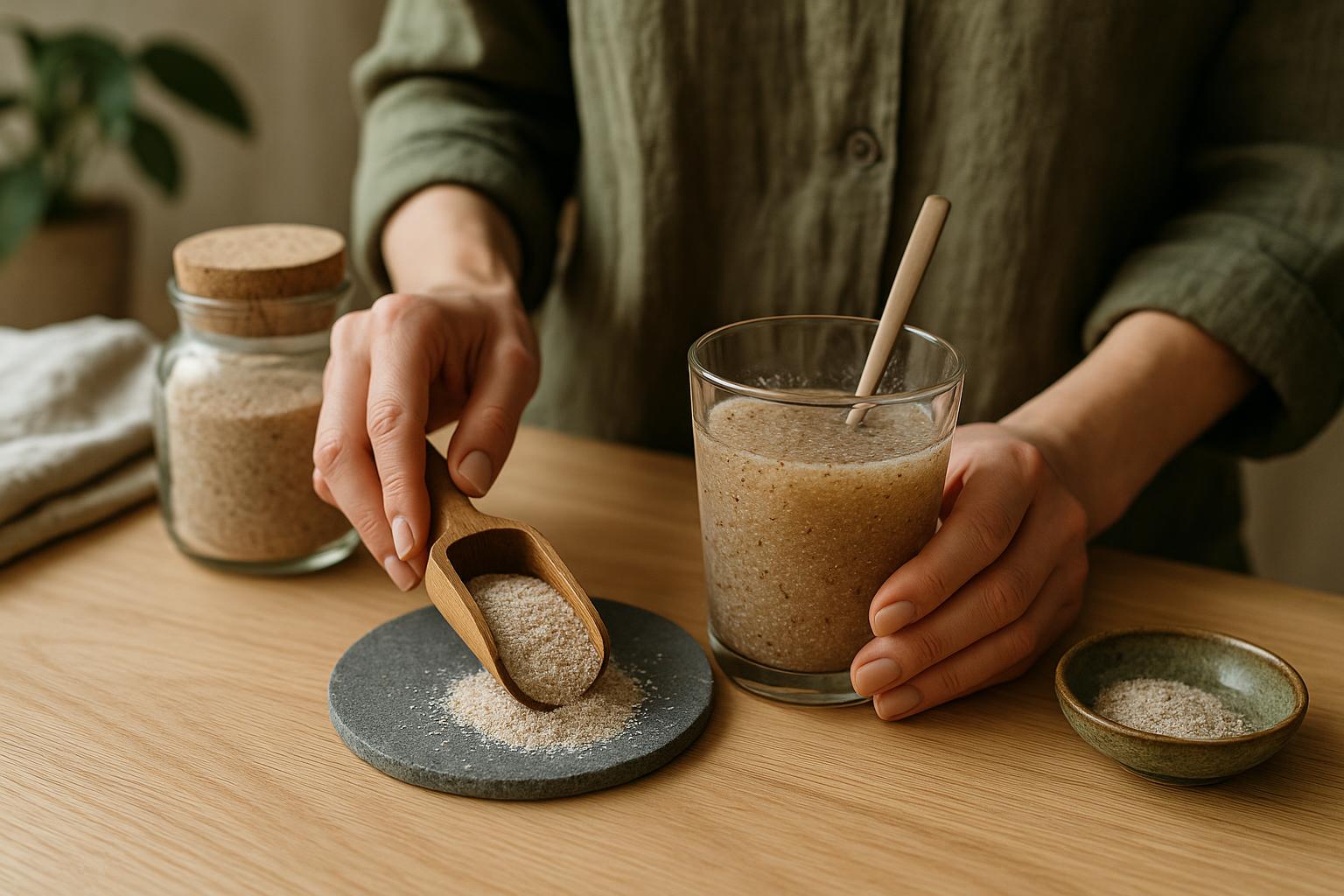
La FDA américaine reconnaît officiellement que 7 g de fibres solubles de psyllium par jour réduisent le risque cardiovasculaire. Une méta-analyse de 21 essais cliniques confirme une baisse moyenne du LDL de 5 à 7 % avec une consommation régulière. L’effet s’ajoute à celui des statines sans interaction médicamenteuse connue.
- Réduction du LDL : 5 à 7 % en moyenne
- Réduction du cholestérol total : 3 à 5 %
- Durée nécessaire pour observer l’effet : 4 à 8 semaines
- Dose recommandée : 7 g de fibres solubles par jour (environ 10 à 12 g de psyllium brut)
3. Le psyllium stabilise la glycémie après les repas
Quels sont les bienfaits du psyllium pour les personnes diabétiques ou prédiabétiques ? Son gel visqueux ralentit la vidange gastrique et l’absorption intestinale du glucose. Le pic glycémique postprandial est ainsi atténué.
Une étude randomisée contrôlée publiée sur PubMed montre une réduction de 11 % du pic glycémique après un repas riche en glucides lorsque 5 g de psyllium sont consommés avant le repas. L’hémoglobine glyquée (HbA1c) diminue également de 0,4 % sur 8 semaines chez les diabétiques de type 2.
- Réduction du pic glycémique postprandial : 11 % en moyenne
- Baisse de l’HbA1c : 0,4 % sur 8 semaines
- Meilleur moment de prise : 30 minutes avant les repas principaux
- Compatible avec la metformine (vérifier avec votre médecin)
4. Le psyllium soulage le syndrome du côlon irritable
Le syndrome du côlon irritable (SCI) touche 10 à 15 % de la population mondiale selon l’OMS. Quels sont les bienfaits du psyllium pour cette condition ? Ses fibres solubles normalisent le transit sans irriter la muqueuse, contrairement aux fibres insolubles comme le son de blé.
Une étude néerlandaise publiée dans le British Medical Journal a suivi 275 patients atteints de SCI pendant 12 semaines. Le groupe psyllium a rapporté une réduction de 90 points sur l’échelle des symptômes, contre 49 points pour le groupe placebo. Les douleurs abdominales et les ballonnements ont diminué significativement.
- Efficace pour les formes diarrhéiques et constipées du SCI
- Réduit les douleurs abdominales et les ballonnements
- Supérieur au son de blé pour les patients SCI selon le BMJ
- Dose étudiée : 10 g par jour en deux prises
Pour aller plus loin, découvrez à quoi sert le psyllium dans le cadre d’une approche globale des troubles digestifs fonctionnels.
5. Le psyllium soutient la perte de poids par effet coupe-faim
Quels sont les bienfaits du psyllium pour la gestion du poids ? En gonflant dans l’estomac, il augmente la viscosité du contenu gastrique et prolonge la sensation de satiété. Moins de faim signifie moins de calories consommées spontanément.
Une revue systématique de 14 essais cliniques montre que le psyllium réduit l’apport calorique spontané de 100 à 200 kcal par jour. Sur 12 semaines, les participants ont perdu en moyenne 1,3 kg de plus que le groupe placebo sans modifier leur alimentation. L’effet est modeste mais réel et sans effet secondaire métabolique.
| Bienfait | Réduction mesurée | Durée d’observation | Niveau de preuve |
|---|---|---|---|
| Constipation | +1,4 selle/semaine | 1 à 3 jours | Élevé (EFSA) |
| Cholestérol LDL | -5 à 7 % | 4 à 8 semaines | Élevé (FDA) |
| Glycémie postprandiale | -11 % | Immédiat (par repas) | Modéré à élevé |
| Symptômes SCI | -90 points/échelle | 12 semaines | Élevé (BMJ) |
| Poids corporel | -1,3 kg vs placebo | 12 semaines | Modéré |
| Tension artérielle | -2 à 3 mmHg systolique | 8 semaines | Modéré |
Si vous vous demandez si le psyllium fait maigrir, notre analyse détaillée des études sur le poids vous donnera une réponse nuancée et basée sur les preuves.
6. Le psyllium nourrit le microbiote intestinal
Quels sont les bienfaits du psyllium pour les bactéries intestinales ? Ses fibres fermentescibles servent de substrat aux bactéries bénéfiques comme Bifidobacterium et Lactobacillus. Cette fermentation produit des acides gras à chaîne courte (AGCC) comme le butyrate.
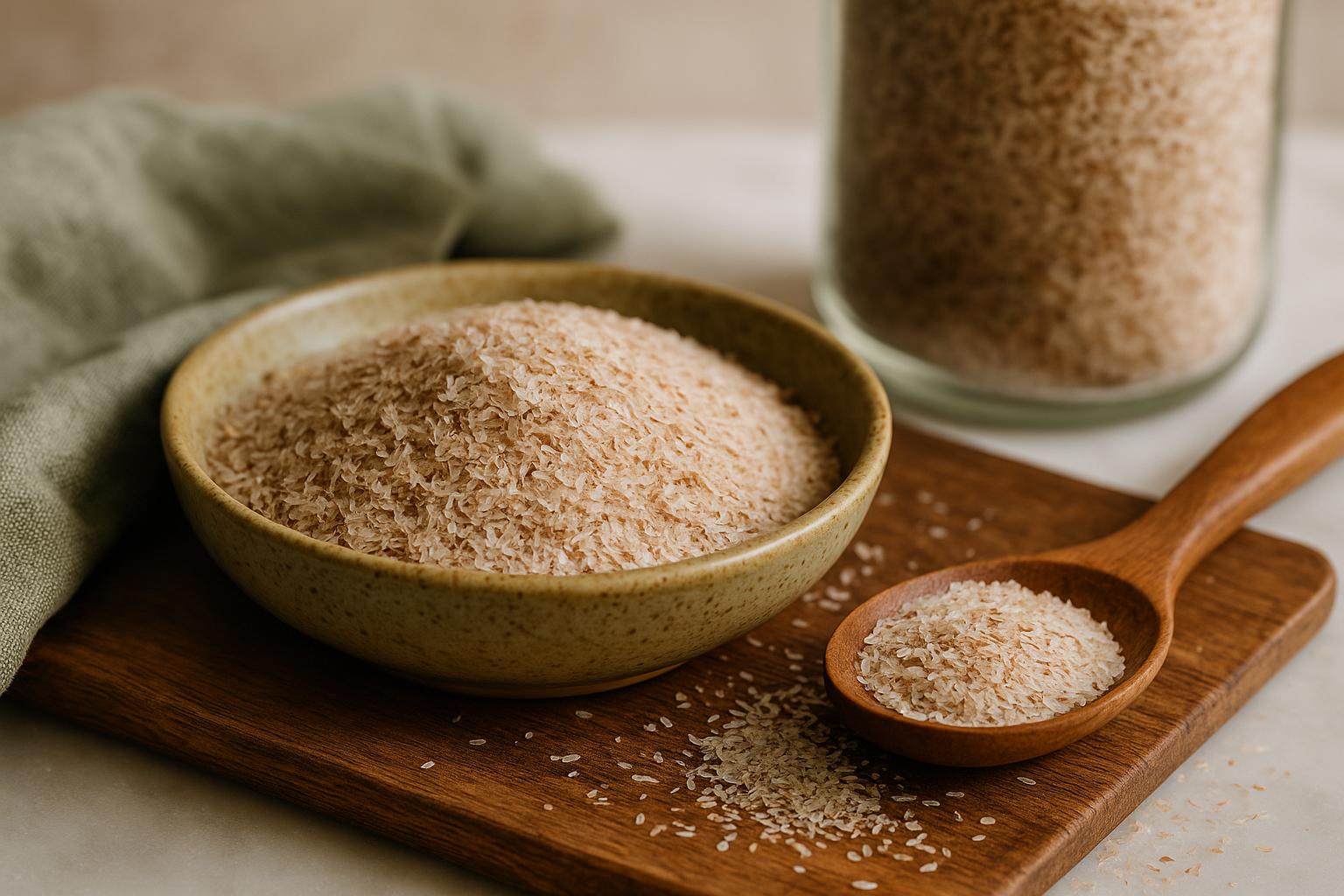
Le butyrate est le carburant principal des cellules du côlon. Il renforce la barrière intestinale, réduit l’inflammation locale et protège contre le cancer colorectal selon plusieurs études observationnelles. Le psyllium est donc un prébiotique naturel efficace.
- Augmente les populations de Bifidobacterium et Lactobacillus
- Stimule la production de butyrate, carburant des colonocytes
- Renforce la barrière intestinale et réduit la perméabilité
- Réduit les marqueurs inflammatoires intestinaux
- Compatible avec les probiotiques (effet synergique)
7. Le psyllium contribue à réduire la tension artérielle
Quels sont les bienfaits du psyllium sur la santé cardiovasculaire au-delà du cholestérol ? Une méta-analyse de 12 essais randomisés publiée dans le Journal of Hypertension montre une réduction de 2 à 3 mmHg de la pression systolique avec une supplémentation régulière.
Cet effet est attribué à plusieurs mécanismes : réduction de l’absorption du sodium, amélioration de la sensibilité à l’insuline et effet vasodilatateur indirect via les AGCC produits par fermentation. L’effet est plus marqué chez les personnes en surpoids ou prédiabétiques.
- Réduction de la pression systolique : 2 à 3 mmHg
- Effet plus marqué en cas de surpoids ou de prédiabète
- Mécanisme : réduction absorption sodium + effet AGCC
- Complément utile à une alimentation pauvre en sel
8. Le psyllium protège la muqueuse intestinale
Quels sont les bienfaits du psyllium pour la santé du côlon à long terme ? Le gel mucilagineux tapisse la paroi intestinale et la protège des irritants alimentaires et des agents pathogènes. Il réduit le temps de contact des substances toxiques avec la muqueuse en accélérant leur transit.
Des études sur des modèles animaux et des études observationnelles humaines suggèrent un rôle protecteur contre la diverticulite et les polypes coliques. L’EFSA reconnaît la contribution du psyllium au maintien du transit intestinal normal, ce qui constitue une allégation de santé officiellement approuvée.
- Forme un gel protecteur sur la paroi intestinale
- Réduit le temps de contact des toxines avec le côlon
- Rôle protecteur suggéré contre la diverticulite
- Allégation de santé EFSA approuvée pour le transit
Psyllium blond ou brun : quelle forme choisir ?
Quels sont les bienfaits du psyllium blond par rapport au psyllium brun ? Le psyllium blond (Plantago ovata) contient 70 à 80 % de fibres solubles contre 40 à 50 % pour le brun. Il est donc plus efficace pour tous les usages thérapeutiques décrits dans cet article.
- Psyllium blond : 70-80 % fibres solubles, goût neutre, recommandé pour usage médical
- Psyllium brun : 40-50 % fibres solubles, goût plus prononcé, usage alimentaire courant
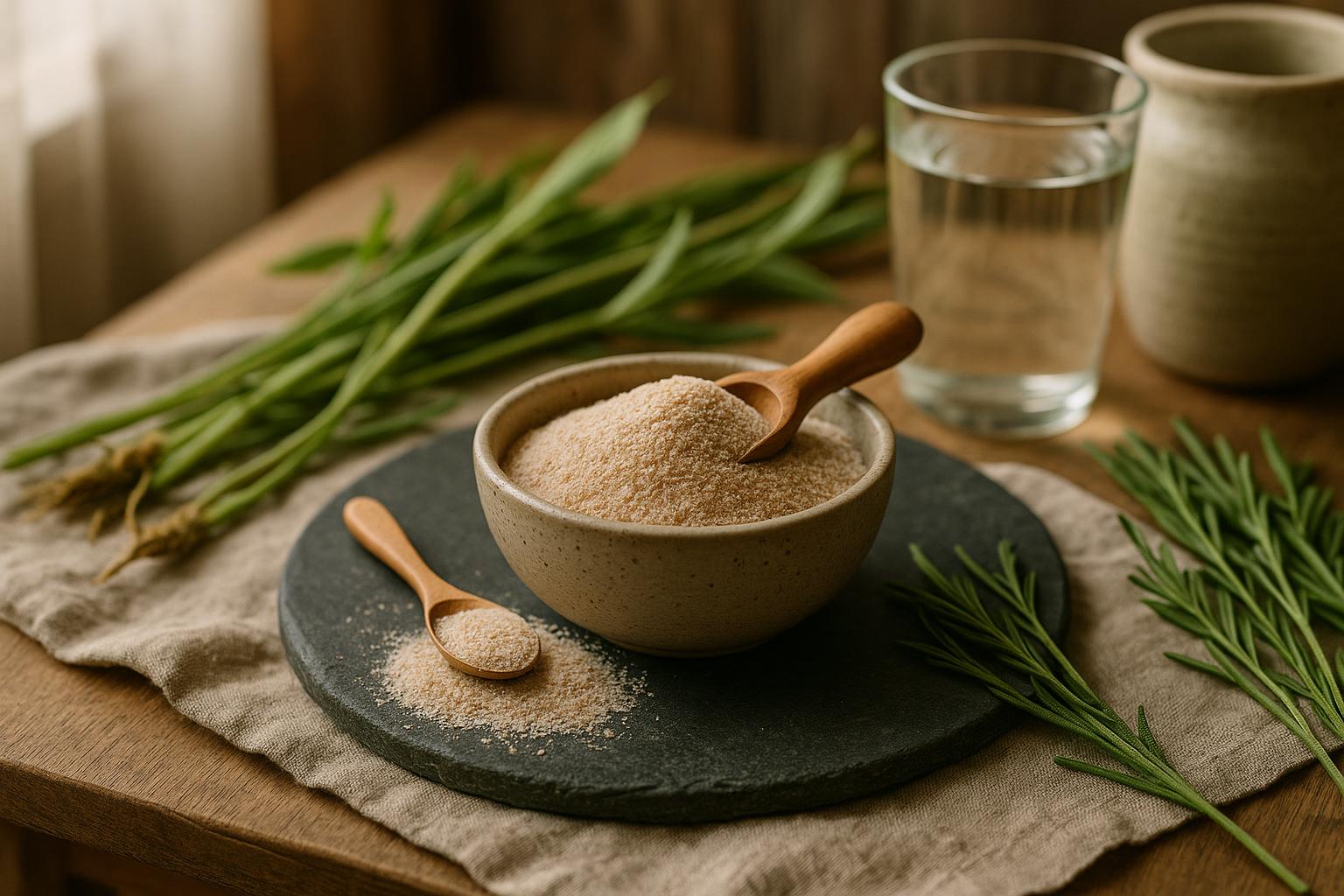
- Forme poudre : absorption plus rapide, idéale pour les boissons
- Forme gélule : pratique pour les voyages, dosage précis
- Forme entière (téguments) : la plus naturelle, à moudre soi-même
Pour approfondir, notre article sur l’ispaghul et le psyllium détaille les différences botaniques et les usages spécifiques de chaque variété.
Comment prendre le psyllium pour maximiser ses effets
Quels sont les bienfaits du psyllium si on le prend mal ? Nuls, ou presque. L’hydratation est la clé absolue. Sans eau suffisante, le psyllium peut former un bouchon dans l’œsophage ou l’intestin.
- Dose de départ : 3 à 5 g par jour (1 cuillère à café)
- Dose thérapeutique : 10 à 20 g par jour en 2 à 3 prises
- Eau obligatoire : 240 ml minimum par prise
- Meilleur moment : 30 minutes avant les repas ou au coucher
- Augmenter la dose progressivement sur 2 semaines
- Espacer de 2 heures la prise de médicaments
Pour un guide pas à pas, consultez notre article sur comment consommer du psyllium avec les protocoles adaptés à chaque objectif de santé.
Précautions et effets secondaires à connaître
Quels sont les bienfaits du psyllium et ses limites ? Comme toute fibre, il peut provoquer des ballonnements et des gaz en début de cure, surtout si la dose augmente trop vite. Ces effets disparaissent en général après 1 à 2 semaines.
- Effets fréquents : ballonnements, gaz, légère distension abdominale en début de cure
- Effets rares : réaction allergique (urticaire, difficultés respiratoires)
- Contre-indications : obstruction intestinale, difficulté à avaler, allergie au psyllium
- Interactions médicamenteuses : espacer de 2 heures les médicaments oraux (absorption réduite)
- Populations à risque : enfants de moins de 6 ans, femmes enceintes (consulter un médecin)
Pour en savoir plus sur les fibres de psyllium et leur composition, notre article explique en détail la structure moléculaire du mucilage et ses interactions avec l’organisme.
Ce que dit la science sur le psyllium en 2025
Quels sont les bienfaits du psyllium reconnus officiellement ? L’EFSA a approuvé deux allégations de santé : le maintien du transit intestinal normal et la contribution à la réduction du cholestérol sanguin. La FDA américaine reconnaît son rôle dans la réduction du risque cardiovasculaire depuis 1998.
L’ANSES française classe le psyllium comme complément alimentaire sûr aux doses recommandées. Une revue Cochrane de 2020 confirme son efficacité supérieure au placebo pour la constipation chronique avec un niveau de preuve élevé. La recherche continue d’explorer ses effets sur le microbiote et la prévention du diabète de type 2.
- Quels sont les bienfaits du psyllium sur la digestion ? Il régule le transit dans les deux sens : constipation et diarrhée, sans créer de dépendance.
- Quels sont les bienfaits du psyllium sur le cœur ? Il réduit le cholestérol LDL de 5 à 7 % et la tension artérielle de 2 à 3 mmHg avec une prise régulière.
- Quels sont les bienfaits du psyllium pour les diabétiques ? Il atténue le pic glycémique de 11 % et réduit l’HbA1c de 0,4 % sur 8 semaines.
- Quels sont les bienfaits du psyllium pour le microbiote ? Il agit comme prébiotique et stimule la production de butyrate, protecteur du côlon.
- Quels sont les bienfaits du psyllium pour le poids ? Il réduit la faim et l’apport calorique spontané, avec une perte de 1,3 kg supplémentaire sur 12 semaines.
Questions fréquentes sur quels sont les bienfaits du psyllium
Quels sont les bienfaits du psyllium pour la digestion ?
Le psyllium régule le transit intestinal dans les deux sens. Il ramollit les selles en cas de constipation et les solidifie en cas de diarrhée grâce à son gel mucilagineux. Il soulage aussi les symptômes du côlon irritable, réduit les ballonnements et protège la muqueuse intestinale. Les effets sont visibles en 24 à 72 heures selon les études cliniques.
Quels sont les bienfaits du psyllium sur le cholestérol ?
Le psyllium réduit le cholestérol LDL de 5 à 7 % en piégeant les acides biliaires dans l’intestin. Le foie compense en puisant dans les réserves de cholestérol circulant. La FDA reconnaît cet effet depuis 1998. Une dose de 7 g de fibres solubles par jour pendant 4 à 8 semaines est nécessaire pour observer des résultats mesurables.
Quels sont les bienfaits du psyllium blond spécifiquement ?
Le psyllium blond (Plantago ovata) contient 70 à 80 % de fibres solubles, contre 40 à 50 % pour le psyllium brun. Il est donc plus efficace pour réduire le cholestérol, stabiliser la glycémie et réguler le transit. Son goût neutre facilite aussi son intégration dans les boissons et les recettes. C’est la forme recommandée pour un usage thérapeutique.
Quels sont les bienfaits du psyllium pour la glycémie ?
Le psyllium ralentit la vidange gastrique et l’absorption intestinale du glucose. Il réduit le pic glycémique postprandial de 11 % en moyenne. Sur 8 semaines, l’hémoglobine glyquée (HbA1c) diminue de 0,4 % chez les diabétiques de type 2. La prise idéale est 30 minutes avant les repas riches en glucides, avec un grand verre d’eau.
Quels sont les bienfaits du psyllium pour perdre du poids ?
Le psyllium gonfle dans l’estomac et prolonge la satiété. Les études montrent une réduction spontanée de 100 à 200 kcal par jour et une perte de 1,3 kg supplémentaire sur 12 semaines par rapport au placebo. L’effet est modeste mais réel et sans effet secondaire métabolique. Il doit accompagner une alimentation équilibrée et non la remplacer.
Combien de psyllium faut-il prendre par jour ?
La dose de départ recommandée est de 3 à 5 g par jour (environ 1 cuillère à café de poudre). La dose thérapeutique est de 10 à 20 g par jour, répartis en 2 à 3 prises. Chaque prise doit être accompagnée d’au moins 240 ml d’eau. Augmentez la dose progressivement sur 2 semaines pour éviter les ballonnements initiaux.
Le psyllium a-t-il des effets secondaires ?
Les effets secondaires les plus fréquents sont les ballonnements et les gaz en début de cure. Ils disparaissent généralement après 1 à 2 semaines. Les réactions allergiques sont rares mais possibles. Le psyllium peut réduire l’absorption des médicaments oraux : espacez les prises de 2 heures minimum. Les personnes souffrant d’obstruction intestinale ne doivent pas en consommer.
Peut-on prendre du psyllium tous les jours ?
Oui, le psyllium peut être consommé quotidiennement sur le long terme. Contrairement aux laxatifs stimulants, il ne crée pas de dépendance et ne perturbe pas les réflexes intestinaux naturels. L’ANSES et l’EFSA le classent comme sûr aux doses recommandées. Une hydratation suffisante (au moins 2 litres d’eau par jour) est indispensable pour une utilisation prolongée.
Le psyllium est-il efficace contre le côlon irritable ?
Oui. Une étude publiée dans le British Medical Journal sur 275 patients montre que le psyllium réduit les symptômes du SCI de 90 points sur l’échelle standardisée, contre 49 points pour le placebo. Il est supérieur au son de blé pour cette indication car ses fibres solubles n’irritent pas la muqueuse. Une dose de 10 g par jour en deux prises est recommandée.
Quand faut-il prendre le psyllium pour de meilleurs résultats ?
Pour la glycémie et la satiété, prenez le psyllium 30 minutes avant les repas principaux. Pour la constipation, une prise au coucher avec un grand verre d’eau est souvent efficace. Pour le cholestérol, la régularité des prises importe plus que le moment de la journée. Évitez de prendre le psyllium en même temps que vos médicaments pour ne pas réduire leur absorption.
Le psyllium est-il un prébiotique ?
Oui. Les fibres solubles du psyllium fermentent partiellement dans le côlon et servent de substrat aux bactéries bénéfiques comme Bifidobacterium et Lactobacillus. Cette fermentation produit des acides gras à chaîne courte, notamment le butyrate, qui nourrit les cellules du côlon, renforce la barrière intestinale et réduit l’inflammation. Le psyllium est donc un prébiotique naturel efficace.
Quelle est la différence entre psyllium et ispaghul ?
Ispaghul et psyllium désignent la même plante : Plantago ovata. Le terme « ispaghul » est plus courant en pharmacie européenne, tandis que « psyllium » est utilisé en nutrition et dans les pays anglophones. Les téguments (coques) de la graine sont la partie la plus riche en fibres solubles. Les deux termes font référence au même produit avec les mêmes bienfaits.
Ce qu’il faut retenir
Quels sont les bienfaits du psyllium en résumé ? Cette fibre soluble naturelle est l’un des compléments les mieux documentés en médecine nutritionnelle, avec des effets prouvés sur le transit, le cholestérol, la glycémie, le microbiote et le poids. Quels sont les bienfaits du psyllium à long terme ? Utilisé régulièrement et correctement hydraté, il contribue à la santé cardiovasculaire, digestive et métabolique sans créer de dépendance ni d’effet secondaire grave.
Action concrète : Commencez par 3 g de psyllium blond en poudre dissous dans 250 ml d’eau, 30 minutes avant votre repas principal. Augmentez progressivement jusqu’à 10 g par jour sur 2 semaines. Maintenez une hydratation de 2 litres d’eau quotidiens pour maximiser les effets.
Sources et études
- PubMed — Base de données des essais cliniques sur le psyllium et les fibres solubles
- EFSA — Allégations de santé approuvées pour le psyllium (transit et cholestérol)
- ANSES — Fibres alimentaires : recommandations et sécurité d’emploi
- Harvard Health — Fibres solubles et santé cardiovasculaire : ce que dit la science
- NCCIH (NIH) — Psyllium : efficacité, sécurité et interactions médicamenteuses
Cet article est fourni à titre informatif uniquement et ne constitue pas un avis médical. Consultez un professionnel de santé qualifié avant toute utilisation.