Quel goût a le kimchi ? La réponse des experts
⚠️ Avis éditorial : Cet article est rédigé à titre informatif et ne remplace pas un avis médical ou diététique personnalisé. Consultez un professionnel de santé pour toute question relative à votre alimentation.
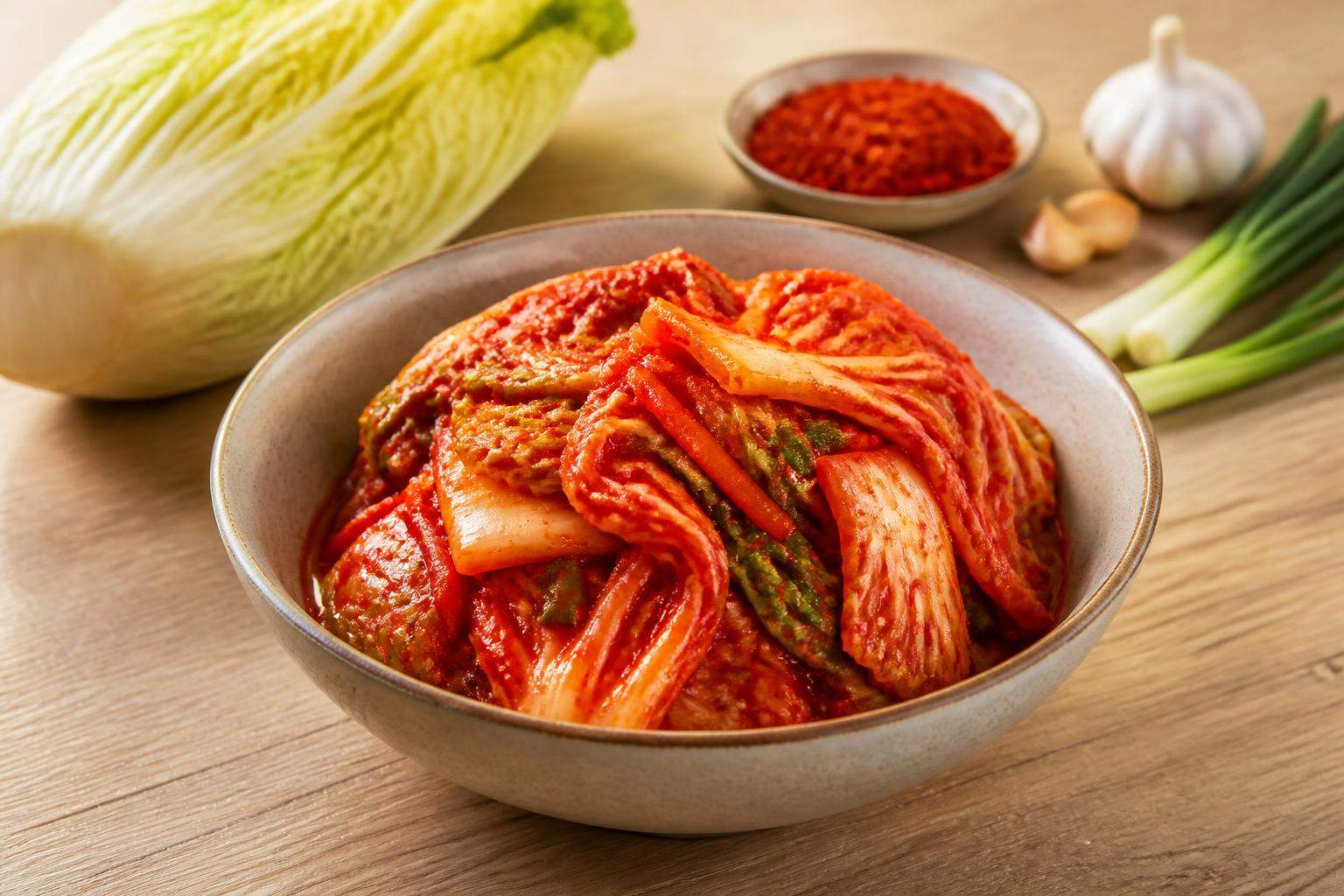
Quel gout a le kimchi : le kimchi offre un profil gustatif complexe et unique, à la fois acide, épicé, salé et umami, résultat direct d’une fermentation lactique naturelle qui transforme profondément les légumes crus.
Selon une étude publiée dans le Journal of Ethnic Foods () [1], le kimchi contient plus de 200 composés aromatiques volatils identifiés, ce qui en fait l’un des profils gustatifs les plus complexes de la gastronomie mondiale. Voici les 5 caractéristiques clés de son goût :
- Acidité vive : produite par l’acide lactique lors de la fermentation
- Chaleur épicée : apportée par le gochugaru (piment coréen en flocons)
- Profondeur umami : issue de la sauce de poisson, de la crevette fermentée ou du miso
- Salinité équilibrée : grâce au salage initial du chou napa
- Légère effervescence : perceptible dans les kimchis jeunes encore actifs
1. Le profil gustatif de base : ce que vous ressentez dès la première bouchée
Quel gout a le kimchi lors de la première dégustation ? Vous percevez d’abord une acidité franche, suivie immédiatement d’une chaleur épicée persistante. Ces deux sensations dominent l’expérience initiale.
Le chou napa (baechu), légume de base du kimchi classique, conserve un croquant agréable même après fermentation. Cette texture contrastante renforce la perception des saveurs.
Une légère effervescence peut être perçue sur la langue dans les kimchis jeunes, signe d’une fermentation encore active. C’est un marqueur de fraîcheur et de vivacité microbienne.
2. L’acidité : le cœur chimique du goût du kimchi
L’acidité du kimchi est produite par des bactéries lactiques, principalement Lactobacillus plantarum et Leuconostoc mesenteroides. Ces micro-organismes convertissent les sucres naturels en acide lactique.
Selon une recherche publiée dans le Journal of Microbiology and Biotechnology () [2], le pH du kimchi mature oscille entre 3,5 et 4,5, ce qui explique son acidité caractéristique. Cette acidité est plus douce que celle du vinaigre blanc.
Contrairement à ce que l’on pourrait croire, cette acidité n’est pas agressive. Elle est ronde, fermentée, et s’intègre harmonieusement aux autres saveurs. Pour en savoir plus sur les légumes fermentés en général, consultez notre guide sur les légumes lacto-fermentés.
3. Le piquant du gochugaru : une chaleur spécifique à connaître
Quel gout a le kimchi en matière de piquant ? Le piment utilisé est le gochugaru, un piment coréen séché et broyé dont le niveau de capsaïcine est modéré. Il apporte de la chaleur sans agresser le palais.
Le gochugaru se distingue du piment de Cayenne ou du chili mexicain par sa saveur fruitée et légèrement sucrée. Il colore le kimchi en rouge vif et lui confère une chaleur progressive, non immédiate.
La quantité de gochugaru varie selon les recettes et les régions de Corée. Certains kimchis du nord sont moins épicés, tandis que ceux du sud peuvent être très relevés. Pour les débutants, le kimchi du commerce est généralement dosé modérément.
4. L’umami : la saveur profonde qui distingue le kimchi
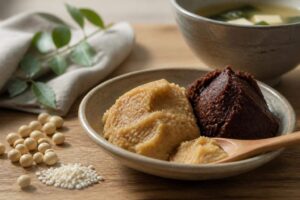
L’umami est la saveur qui rend le kimchi addictif. Il provient de plusieurs ingrédients fermentés ajoutés lors de la préparation : sauce de poisson (aekjeot), crevettes fermentées (saeujeot) ou pâte de soja.
Ces ingrédients sont riches en glutamate libre, le composé chimique responsable de la sensation umami. Une étude dans le Food Chemistry () [3] confirme que la fermentation amplifie la concentration en glutamate.
Pour les versions véganes, la sauce de poisson est remplacée par de la sauce soja ou de la pâte de miso. L’umami est légèrement différent mais toujours présent. Découvrez également notre article complet sur les bienfaits du kimchi pour comprendre pourquoi cette saveur complexe va de pair avec des effets santé documentés.
5. Comment le goût évolue avec la fermentation
Quel gout a le kimchi jeune versus kimchi vieilli ? La différence est significative et mérite d’être comprise avant d’acheter ou de préparer du kimchi.
| Stade de fermentation | Goût dominant | Texture | Utilisation idéale |
|---|---|---|---|
| Kimchi frais (0-3 jours) | Salé, légèrement piquant, peu acide | Très croquant | En accompagnement direct |
| Kimchi jeune (1-2 semaines) | Acide léger, piquant équilibré, umami naissant | Croquant | Idéal pour débuter |
| Kimchi mature (1-3 mois) | Acide prononcé, umami riche, piquant intégré | Légèrement attendri | Polyvalent, cuisine et cru |
| Kimchi vieilli (6+ mois) | Très acide, complexe, presque vineux | Mou, fondant | Cuissons : kimchi jjigae, riz sauté |
Le kimchi vieilli, appelé mukeunji en coréen, est particulièrement apprécié dans les soupes et les plats mijotés. Sa forte acidité se transforme à la cuisson en une saveur douce et profonde.
6. Les variantes de kimchi et leurs goûts spécifiques
Il existe plus de 200 types de kimchi en Corée. Chacun a un profil gustatif distinct selon les légumes et les assaisonnements utilisés.
- Baechu kimchi (chou napa) : le plus courant, acide, épicé, umami
- Kkakdugi (radis en cubes) : plus croquant, légèrement sucré, moins acide
- Oi sobagi (concombre farci) : frais, croquant, piquant léger
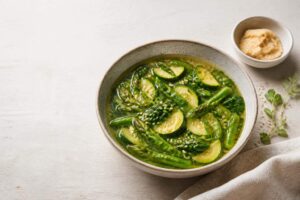
- Nabak kimchi (kimchi d’eau) : bouillon légèrement épicé, doux et rafraîchissant
- Baek kimchi (kimchi blanc) : sans piment, saveur douce, acidulée et florale
- Gat kimchi (moutarde coréenne) : légèrement amer, piquant, très aromatique
Pour les personnes sensibles au piquant, le baek kimchi (kimchi blanc) offre une excellente introduction. Il permet de découvrir la complexité fermentée sans la chaleur du piment.
7. Quel gout a le kimchi du commerce vs maison ?
Quel gout a le kimchi acheté en supermarché comparé à celui fait maison ? Les différences sont réelles et importantes à connaître avant d’acheter.
Le kimchi industriel est souvent pasteurisé, ce qui stoppe la fermentation. Son goût est plus stable mais moins complexe. L’effervescence naturelle est absente, et l’umami peut être remplacé par des exhausteurs de goût artificiels.
Le kimchi artisanal ou maison offre un profil gustatif vivant et évolutif. Il est plus acide, plus effervescent, et ses saveurs sont plus profondes. Notre guide sur comment faire du kimchi maison vous explique comment reproduire ce goût authentique chez vous.
8. Les composés aromatiques qui créent le goût du kimchi
La science a identifié les molécules précises responsables du goût du kimchi. Cette connaissance aide à comprendre pourquoi ce fermenté est si unique.
- Acide lactique : responsable de l’acidité douce et ronde
- Acide acétique : note légèrement vineuse en arrière-goût
- Allicine (ail) : chaleur et profondeur aromatique
- Composés soufrés (ail, oignon vert) : notes piquantes caractéristiques
- Capsaïcine (gochugaru) : sensation de chaleur progressive
- Glutamate libre : sensation umami persistante
- Esters volatils : notes fruitées légères en fond de bouche
Selon l’ANSES () [4], les aliments fermentés comme le kimchi présentent des profils biochimiques complexes qui les distinguent nettement des légumes crus ou cuits de manière conventionnelle.
9. Pourquoi certaines personnes n’aiment pas le goût du kimchi au début
De nombreux lecteurs nous signalent que leur première expérience avec le kimchi a été déroutante. C’est normal : le cerveau doit s’adapter à une combinaison de saveurs peu habituelle en Occident.
L’acidité fermentée est différente de celle du vinaigre. Le piquant du gochugaru est différent du piment jalapeño. L’umami de la sauce de poisson est différent de celui du fromage. Ces trois décalages simultanés peuvent surprendre.
Des études sur la néophobie alimentaire montrent que 3 à 5 expositions suffisent généralement à développer une appréciation positive. Commencer par de petites quantités en accompagnement d’un riz blanc est la méthode recommandée par les diététiciens coréens.
10. Comment le kimchi se compare aux autres fermentés en termes de goût
Pour situer quel gout a le kimchi dans l’univers des fermentés, voici une comparaison avec les aliments fermentés les plus connus en France.
- Choucroute : acidité similaire, mais sans piquant ni umami ; plus neutre
- Cornichons : acidité vineuse, mais sans chaleur ni profondeur umami
- Miso : umami puissant similaire, mais sans acidité ni piquant
- Kombucha : acidité légère et effervescente, mais sans piquant ni umami salé
- Yaourt : acidité lactique douce, mais sans piquant, umami ou complexité aromatique
Le kimchi est unique car il combine simultanément les quatre saveurs fondamentales (acide, salé, umami, épicé) dans un seul aliment. C’est cette superposition qui le rend si particulier. Pour explorer d’autres aliments probiotiques aux profils gustatifs variés, consultez notre guide sur les aliments probiotiques.
11. Quel gout a le kimchi cuit versus cru ?
La cuisson transforme profondément le goût du kimchi. Cru, il est vif, acide et piquant. Cuit, il devient doux, fondant et développe une richesse umami amplifiée.
Dans le kimchi jjigae (soupe de kimchi), la chaleur adoucit l’acidité et libère les arômes soufrés de l’ail et de l’oignon vert. Le résultat est une saveur profonde, légèrement sucrée et très réconfortante.
Dans le kimchi bokkeumbap (riz sauté au kimchi), la caramélisation des sucres résiduels du kimchi crée des notes grillées et légèrement caramélisées. C’est l’une des préparations les plus appréciées des non-initiés.
12. Les facteurs qui influencent le goût du kimchi que vous achetez
Quel gout a le kimchi dépend de nombreux facteurs que vous pouvez évaluer avant d’acheter ou de commander.
- La marque : les marques coréennes authentiques (Jongga, Bibigo) ont un profil plus complexe
- La date de fabrication : plus le kimchi est récent, moins il est acide
- Les ingrédients : présence de sauce de poisson = umami plus riche
- La conservation : kimchi réfrigéré non pasteurisé = fermentation active
- Le type de chou : chou napa vs radis vs concombre = textures et goûts différents
Lisez toujours l’étiquette. Un kimchi de qualité contient peu d’ingrédients : chou, sel, gochugaru, ail, gingembre, oignon vert, et une source d’umami. Méfiez-vous des additifs comme le glutamate monosodique artificiel ou le vinaigre ajouté.
13. Accords gustatifs : avec quoi manger le kimchi pour apprécier son goût ?
Le kimchi se marie parfaitement avec des aliments neutres ou riches qui équilibrent ses saveurs intenses. Voici les associations les plus efficaces pour les débutants.
- Riz blanc : neutralise l’acidité, met en valeur l’umami
- Tofu soyeux : douceur crémeuse qui contraste avec le piquant
- Œufs brouillés : richesse grasse qui arrondit l’acidité
- Porc grillé (samgyeopsal) : la matière grasse tempère la chaleur du piment
- Fromage à pâte molle : accord umami-umami très apprécié en fusion culinaire
- Avocats : texture crémeuse et goût neutre qui équilibrent le piquant
Pour explorer toutes les façons de cuisiner avec ce fermenté, notre article sur que faire avec du kimchi propose 15 idées pratiques et validées.
14. Ce qu’il faut retenir sur quel gout a le kimchi
Quel gout a le kimchi en une phrase ? C’est un fermenté acide, épicé, umami et légèrement salé, dont la complexité aromatique est scientifiquement documentée à plus de 200 composés volatils.
Le goût évolue avec le temps de fermentation, le type de légume et les ingrédients utilisés. Il n’est jamais identique d’un kimchi à l’autre, ce qui en fait un aliment vivant au sens propre du terme.
Action concrète : Commencez par un kimchi de marque coréenne authentique, consommez-en une cuillère à soupe avec du riz blanc lors de votre prochain repas. Répétez 3 à 5 fois avant de juger définitivement. Votre palais s’adaptera rapidement à ce profil gustatif unique.
- Quel gout a le kimchi : acide, épicé, umami et salé simultanément, avec plus de 200 composés aromatiques identifiés scientifiquement.
- Quel gout a le kimchi jeune : frais, peu acide, légèrement piquant et croquant — idéal pour les débutants.
- Quel gout a le kimchi vieilli : très acide, complexe, presque vineux — parfait pour la cuisine et les soupes.
- Quel gout a le kimchi cuit : plus doux, fondant, avec un umami amplifié et des notes légèrement caramélisées.
- Quel gout a le kimchi du commerce : souvent moins complexe que le kimchi artisanal, vérifiez l’absence de vinaigre ajouté et d’additifs.
Questions fréquentes sur quel gout a le kimchi
Quel gout a le kimchi pour quelqu’un qui n’a jamais goûté de fermenté ?
Quel gout a le kimchi pour un débutant absolu ? Imaginez une choucroute épicée avec une profondeur de goût proche du parmesan. L’acidité est ronde, le piquant est progressif, et l’umami crée une sensation de satisfaction durable en bouche.
Le kimchi est-il très piquant ?
Le niveau de piquant varie selon la quantité de gochugaru. La plupart des kimchis du commerce sont modérément épicés, comparables à une sauce piquante douce. Le kimchi blanc (baek kimchi) est totalement sans piment pour les personnes très sensibles.
Quel gout a le kimchi maison comparé au kimchi du supermarché ?
Quel gout a le kimchi fait maison ? Il est généralement plus acide, plus effervescent et plus complexe que le kimchi industriel pasteurisé. La fermentation active crée des nuances gustatives impossibles à reproduire industriellement.
Le kimchi sent-il mauvais ?
Le kimchi a une odeur forte et fermentée, dominée par l’ail, le gingembre et le piment. Cette odeur est caractéristique des aliments fermentés. Elle est perçue comme agréable par les habitués, mais peut surprendre les néophytes. Conservez-le dans un contenant hermétique au réfrigérateur.
Quel gout a le kimchi après cuisson ?
Quel gout a le kimchi une fois cuit ? La chaleur adoucit l’acidité et le piquant. L’umami se concentre et les saveurs deviennent plus rondes et réconfortantes. Le kimchi cuit est souvent plus accessible aux palais occidentaux non habitués.
Peut-on manger du kimchi sans aimer les aliments épicés ?
Oui. Le baek kimchi (kimchi blanc) ne contient pas de piment. Les kimchis de concombre ou de radis existent aussi en version peu épicée. Vous pouvez également rincer légèrement le kimchi standard pour réduire le piquant sans éliminer l’acidité et l’umami.
Le kimchi a-t-il un goût sucré ?
Certains kimchis contiennent une petite quantité de sucre ou de poire asiatique dans la marinade pour équilibrer l’acidité. Ce sucré est subtil et sert surtout à nourrir les bactéries lactiques pendant la fermentation. Il n’est pas perceptible comme un dessert.
Quel gout a le kimchi de radis (kkakdugi) ?
Quel gout a le kimchi de radis ? Le kkakdugi est plus croquant et légèrement plus sucré que le kimchi de chou. Son acidité est moins prononcée et son piquant plus direct. Beaucoup de personnes qui n’aiment pas le baechu kimchi apprécient le kkakdugi.
Comment savoir si le kimchi a mal tourné ?
Un kimchi trop fermenté devient excessivement acide et perd son croquant. Il peut développer une odeur de levure ou d’alcool. En revanche, un kimchi bien fermenté ne présente jamais de moisissures visibles. Si vous voyez des taches blanches ou noires, jetez-le.
Le goût du kimchi change-t-il selon la saison de fabrication ?
Oui. Le kimchi d’hiver (kimjang) est préparé avec des légumes de saison plus sucrés et fermente plus lentement à basse température. Il développe une acidité plus fine et une complexité aromatique supérieure. Le kimchi d’été fermente plus vite et est plus acide.
Quel gout a le kimchi végane ?
Quel gout a le kimchi sans sauce de poisson ? L’umami est légèrement moins profond mais toujours présent grâce à la sauce soja, au miso ou aux algues. Certains kimchis véganes utilisent de la poudre de champignon shiitaké pour compenser. Le résultat est très proche de l’original.
Le kimchi est-il adapté aux enfants ?
Le kimchi standard est trop épicé pour la plupart des jeunes enfants. Des versions adaptées existent avec moins de gochugaru. Les pédiatres coréens recommandent généralement d’introduire le kimchi après 3 ans, en commençant par le baek kimchi sans piment. Consultez votre pédiatre pour un avis personnalisé.
Ce qu’il faut retenir
Quel gout a le kimchi en définitive ? C’est l’un des profils gustatifs les plus complexes et les plus complets de la gastronomie mondiale : acide, épicé, umami, salé et légèrement effervescent, le tout dans un seul aliment vivant. Quel gout a le kimchi dépend aussi de son âge, de ses ingrédients et de sa préparation — mais sa signature reste toujours reconnaissable.
La science confirme cette complexité avec plus de 200 composés aromatiques identifiés. Votre palais peut nécessiter quelques expositions pour l’apprécier pleinement, mais les diététiciens s’accordent à dire que c’est l’un des fermentés les plus bénéfiques à intégrer dans une alimentation équilibrée. Pour comprendre l’ensemble de ce qu’est cet aliment, consultez notre article complet sur qu’est-ce que le kimchi.
Votre action dès aujourd’hui : Procurez-vous un kimchi de marque coréenne authentique non pasteurisé, consommez une cuillère à soupe avec du riz blanc lors de votre prochain repas, et répétez l’expérience 3 fois cette semaine. Votre microbiote et votre palais vous remercieront.
Sources et études
- Volatile Flavor Compounds of Kimchi : a Review — Journal of Ethnic Foods,
- Microbial Community and Metabolite Changes During Kimchi Fermentation — Journal of Microbiology and Biotechnology,
- Free Glutamate Content and Umami Taste in Fermented Foods — Food Chemistry,
- Les aliments fermentés : caractéristiques et intérêt nutritionnel — ANSES,
- Health Benefits of Kimchi as a Probiotic Food — Journal of Medicinal Food,
Cet article est fourni à titre informatif uniquement et ne constitue pas un avis médical. Consultez un professionnel de santé qualifié avant toute utilisation.