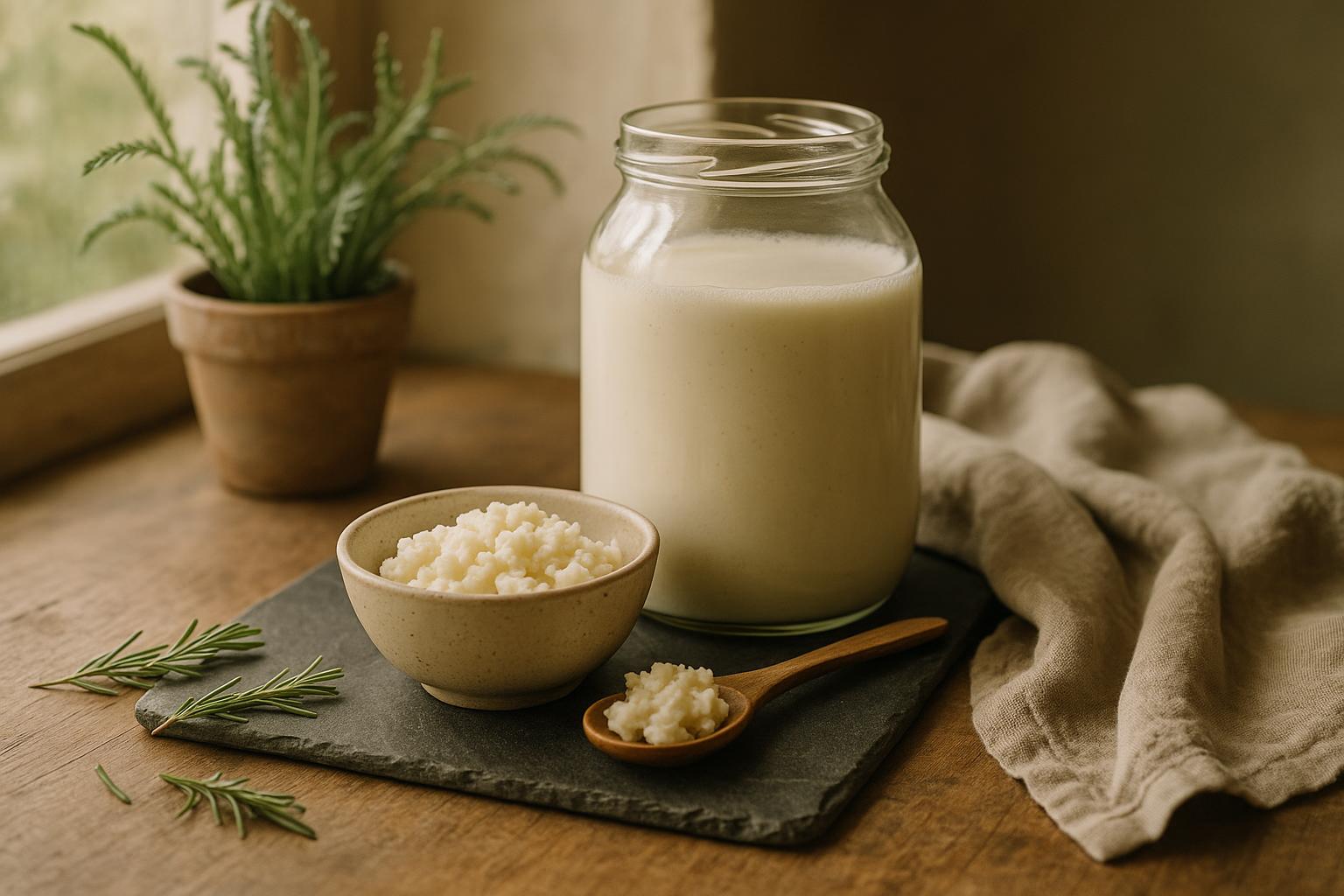
Where to find kefir: 7 places to easily buy it
This article is for informational purposes only and is not a substitute for professional medical advice. Consult a healthcare professional before making any changes to your diet.
Where to find kefir : You can get kefir in supermarkets, organic stores, specialty grocery stores, online shops, pharmacies, local markets or directly from individuals who share their grains.
- Available in the refrigerated section of most supermarkets
- Live kefir grains available for free through mutual aid networks
- Certified organic version available in specialist stores such as Biocoop or La Vie Claire
- Online purchase available with fast home delivery
- Artisanal kefir available at some farmers' markets and AMAPs (community-supported agriculture groups)
Where to find kefir is a question increasingly being asked by the French: according to a study by ANSES (the French Agency for Food, Environmental and Occupational Health & Safety), the consumption of fermented products has increased by 18% in five years. Where to find kefir depends primarily on what you're looking for: a ready-to-drink beverage, live grains to ferment at home, or a convenient dehydrated version for easy storage.
Where to find kefir in supermarkets
Supermarkets remain the most accessible place to find kefir on a daily basis. You'll generally find it in the refrigerated dairy section, alongside yogurts and fermented milks.
Here are the stores to look for first:
- E.Leclerc offers plain milk kefir and flavored versions, often in 500ml or 1-liter sizes. Some Leclerc Bio stores also carry dehydrated grains.
- Carrefour : the dairy products section includes milk kefir under national brand (Activia, Yoplait) and sometimes under own brand.
- Intermarché : good availability of natural milk kefir, with competitive prices.
- Auchan : offers kefir in classic and organic versions depending on the store.
- Lidl and Aldi : availability varies, but kefir regularly appears in seasonal promotions.
Finding kefir in supermarkets is easy, but the selection is limited: you'll mostly find kefir made with pasteurized milk, which is less rich in live bacteria than artisanal or homemade kefir. For live grains, you'll need to look elsewhere.
Where to find kefir in organic stores
Organic stores are an excellent option for finding high-quality kefir, especially in certified organic versions.
- Biocoop offers dehydrated fruit kefir grains (7g), ideal for starting a home fermentation. Available online on their website or in store.
- La Vie Claire : organic milk kefir in bottles and sometimes grains in sachets.
- Naturalia : wide range of organic milk kefir, often sourced from small French producers.
- Bio c' Bon : milk kefir and fermented drinks available in the refrigerated section.
- Independent organic grocery stores : some offer local artisanal kefir, sometimes unpasteurized, with a higher concentration of probiotics.
Finding organic kefir guarantees the absence of pesticides in the milk or fruit used for fermentation. This is an important criterion if you want to maximize the benefits for your gut microbiota, as highlighted by several studies published on PubMed on the effects of natural probiotics.
Where to find kefir online

Finding kefir online is probably the most practical solution if you live in an area poorly served by specialist shops.
The main platforms:
- Amazon.fr : wide selection of dried grains, kefir powder and starter kits. Fast delivery, verified customer reviews.
- Biocoop.fr : order online with in-store pickup or home delivery.
- Symbiose-kefir.fr : specialist website offering live grains, fermentation equipment and personalized advice.
- Etsy.fr : individuals sell live kefir grains there, often from family strains maintained for years.
- iHerb.com : Kefir powder and fermentation starters at competitive prices, with international delivery.
Be careful when buying online: always check that live grains are shipped in insulated packaging, especially in summer. For dehydrated grains, the shelf life is generally 12 to 18 months.
If you want to go further after finding your grains, check out our guide on how to make your own kefir in 7 steps to start your fermentation in the best conditions.
Where to find free kefir from individuals
One of the best answers to the question of where to find kefir is from individuals. Kefir grains multiply naturally with each fermentation, which encourages enthusiasts to give more regularly.
How to find them:
- Facebook groups : search for "kefir grains donation" or "kefir sharing" in your area. Thousands of members share their grains for free.
- Aufeminin / Marmiton forum : discussion threads dedicated to grain donation have existed for years.
- Le Bon Coin : free ads for grain donations regularly appear in the food category.
- Community-supported agriculture (CSA) and farmers' markets : some producers or members offer grains during weekly distributions.
- Fermentation associations : in large cities, fermentation workshops organize grain exchanges.
Finding free kefir through these networks has a major advantage: the grains obtained are live, active, and often come from strains that have been maintained for several years. The quality is often superior to dehydrated commercial versions.
Where to find kefir in pharmacies and drugstores
Finding kefir in pharmacies is a little-known but real option. Some pharmacies and drugstores offer:
- Freeze-dried kefir starters in sachets (such as Chr. Hansen or Yalacta)
- Dietary supplements made from fermented kefir
- Multi-strain probiotics including bacteria from kefir
These products are convenient for starting out without live grains, but they produce a less microbially complex kefir.ANSES ( , Environmental and Occupational Health & Safety) points out that the diversity of bacterial strains in traditional kefir is a key factor in its beneficial effects on digestive health.
Where to find kefir at markets and from producers
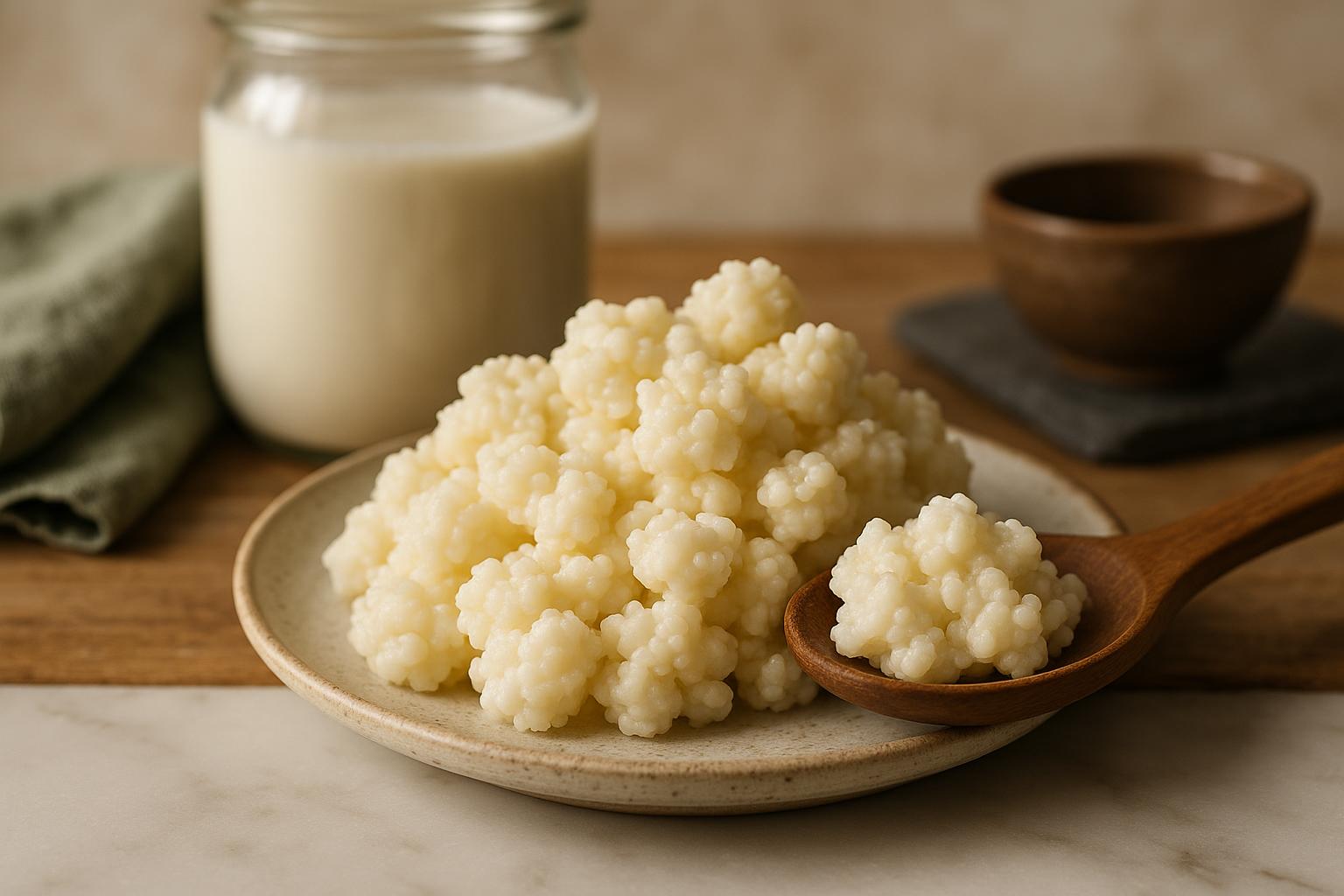
Farmers' markets and local producers are a valuable source for kefir unpasteurized artisanal
- Organic markets : some market gardeners and dairy producers offer raw milk kefir or live grains.
- Farms selling directly : goat and sheep farmers sometimes make artisanal kefir from their own milk.
- Artisanal cheese dairies : some cheese dairies offer milk kefir in their range of fermented products.
To find a producer near you, consult the La Ruche Qui Dit Oui platform or the website of the National Federation of Organic Agriculture.
Where can I find fruit kefir specifically
Fruit kefir differs from milk kefir: it ferments in sweetened water and produces a sparkling, lactose-free beverage. kefir fruit
Available options:
- Live grains : mainly via individuals (Facebook, Le Bon Coin) or specialized sites like Symbiose Kefir.
- Dehydrated grains : available at Biocoop, on Amazon or iHerb. Require a rehydration phase of 24 to 48 hours before use.
- Ready-to-drink beverage : rare in France, but some organic grocery stores and kombucha shops offer bottled fruit kefir.
To master the preparation once you have obtained your grains, our article on how to make fruit kefir guides you step by step through the recipe.
Finding ready-to-drink fruit kefir remains difficult in France. Most enthusiasts make their own from grains. This is also the method recommended by fermentation experts to obtain a product rich in live bacteria and beneficial yeasts, as confirmed by research published on PubMed.
Where to find milk kefir: the best brands
If you are looking for ready-to-drink milk kefir, here are the most readily available brands in France:
- Activia Kefir (Danone) : pasteurized version, available in most supermarkets. Easy to find, but less rich in cultures than homemade kefir.
- Yoplait Kefir : available in supermarkets, convenient bottle format.
- Malo Kefir : a Breton brand offering whole milk kefir, available in Brittany and in some organic stores.
- Organic retail brands : Biocoop, La Vie Claire and Naturalia offer their own organic milk kefirs under their own brand.
Finding quality milk kefir involves reading the labels: favour products mentioning "live cultures" or "active lactic acid bacteria" and avoid ultra-sweet versions which reduce the effectiveness of probiotics.
Comparison chart: where to find kefir according to your needs
Where to find kefir depends on your intended use. Here is a summary table to guide your choice:
| Source | Type of kefir | Price | Probiotic quality | Accessibility |
|---|---|---|---|---|
| Supermarket | Milk (pasteurized) | 1,50–3 € | Average | Very easy |
| Organic shop | Organic milk / dehydrated grains | 3–8 € | Good | Easy |
| Internet | Grains / powder / beverage | 5–20 € | Variable | Very easy |
| Individuals | Live grains (milk or fruit) | Free | Excellent | Moderate |
| Pharmacy | Freeze-dried starters | 5–15 € | Correct | Easy |
| Markets / Producers | Unpasteurized artisanal | 2–5 € | Excellent | Variable |
Where to find kefir: tips to avoid mistakes
Finding where to buy kefir is one thing, choosing the right product is another. Here are the essential criteria to check before buying:
- Live vs. dehydrated grains : Live grains produce a richer and more active kefir. Dehydrated grains are convenient but require reactivation.
- Pasteurized vs. unpasteurized kefir : Pasteurization destroys some of the live bacteria. Choose unpasteurized versions for maximum benefits.
- Organic certification : guarantees the absence of chemical residues in the fermentation substrate.
- Date of manufacture : the fresher the kefir, the higher its concentration of probiotics.
- Composition : a quality kefir should contain only milk (or water + sugar + dried fruit for fruit kefir) and starter cultures. Beware of additives.
Finding good quality kefir requires a bit of searching, but the effort is well worth it. Studies from Harvard Medical School confirm that regular consumption of probiotics from live cultures contributes to a balanced gut microbiota and strengthens the immune system.
To fully understand this product before buying it, read our article "What is kefir and what is it used for: a complete guide", which answers all your questions about its composition and benefits.
What budget should I plan for, or where can I find kefir?
Where to find kefir at the best price depends on the format chosen:
- Bottled milk kefir (500 ml) : between €1.50 and €3.50 in supermarkets, up to €5 for the organic version.
- Dehydrated grains (7 g) : between €4 and €10 depending on the brand and point of sale.
- Live grains at a private individual's home : free in most cases.
- Complete starter kit (grains + jar + instructions): between €15 and €30 on specialist websites.
- Homemade kefir at the market : between €2 and €5 per litre depending on the producer.
Finding free kefir remains the best long-term economic option: once you have obtained your grains, you can produce kefir indefinitely for almost no cost (milk or sugar + water + dried fruit).
- Where to find kefir in supermarkets: fresh dairy products section at Leclerc, Carrefour, Intermarché and Auchan, mainly in pasteurized version.
- Where to find organic kefir : Biocoop, La Vie Claire and Naturalia stores offer dehydrated grains and AB certified milk kefir.
- Where to find free kefir : join Facebook grain sharing groups or check Le Bon Coin for live grain donations near you.
- Where to find kefir online: Amazon, iHerb and specialist sites like Symbiose Kefir deliver dehydrated or live grains to your home.
- Where to find the best quality kefir : favour live grains obtained from individuals or local producers for unpasteurised kefir, rich in active bacteria.
Frequently asked questions about where to find kefir
Where can I find kefir in a regular supermarket?
You can find milk kefir in the fresh dairy section of most major supermarkets: Leclerc, Carrefour, Intermarché, Auchan, and Lidl. It is generally sold in 500ml to 1-liter bottles, either plain or flavored. Availability varies depending on the store and region.
Where can I find ready-to-drink fruit kefir?
Ready-to-drink fruit kefir is rare in France. A few organic grocery stores and shops specializing in fermentation carry it. The most common solution remains making your own drink from live or dehydrated grains obtained from organic stores, online, or from individuals.
Where can I find live kefir grains for free?
Facebook groups dedicated to sharing kefir grains are the best option. Search for "kefir grain donation" followed by your city. Le Bon Coin (a French classifieds website) also offers free classified ads. Fermentation associations and organic markets are also good sources for obtaining live grains at no cost.
Where can I find certified organic kefir?
Organic stores like Biocoop, La Vie Claire, Naturalia, and Bio c' Bon offer certified organic milk kefir. You can also order organic dehydrated grains from the Biocoop website or on Amazon. Always check for the AB or Ecocert logo on the packaging.
Where can I find kefir in a pharmacy?
Some pharmacies and drugstores offer freeze-dried kefir starters (ferment sachets) as dietary supplements. These products allow you to make kefir at home but produce a less complex result than live grains. Ask your pharmacist for advice on choosing the right product.
What is the difference between milk kefir and fruit kefir, and where can I find kefir?
Milk kefir ferments in animal milk and contains residual lactose. Fruit kefir ferments in sweetened water with dried fruit and is naturally lactose-free. kefir is easier to find (supermarkets), while fruit kefir is mainly obtained from individuals or specialized websites.
Can you find kefir in a local grocery store?
Some specialty food shops, Middle Eastern grocery stores, and organic neighborhood shops offer milk kefir, sometimes artisanal. Turkish and Middle Eastern grocery stores often sell "ayran" or kefir under local names. Ask the shopkeeper directly about the ingredients and whether it contains live cultures.
Where can I find dehydrated kefir to get started?
Dehydrated kefir grains are available at Biocoop (7g pack), on Amazon, on iHerb, and in some organic grocery stores. They can be stored for up to 18 months and rehydrate in 24 to 48 hours in sweetened water or milk. This is the ideal solution for getting started without a network of individuals.
Where can I find goat or sheep kefir?
Goat's or sheep's milk kefir is less common. It's mainly found from farm producers selling directly, at organic markets, and in some artisanal cheese shops. A few Naturalia and La Vie Claire stores also offer organic bottled versions. It's an excellent alternative for people sensitive to cow's milk.
Where can I find quality kefir for therapeutic use?
For health-oriented use, choose unpasteurized live grains obtained from individuals or local producers. The concentration of beneficial bacteria and yeasts is significantly higher than in industrially produced versions. Consult a healthcare professional to tailor your consumption to your specific needs.
Where can I find kefir online with fast delivery?
Amazon.fr offers dehydrated grains and starter kits with 24-48 hour delivery. Specialized websites like Symbiose Kéfir or Etsy.fr also deliver live grains, packaged in insulated containers. It's best to order at the beginning of the week to avoid packages being held up over the weekend.
Where can I find kefir suitable for children or people with lactose intolerance?
Fruit kefir is naturally lactose-free and suitable for children and people with lactose intolerance. Fermented milk kefir contains less lactose than regular milk because the bacteria consume a large portion of it during fermentation. You can find fruit kefir from individuals, specialized websites, or organic stores that sell dehydrated grains.
Key takeaways
Finding kefir is no longer a problem: there are many options available for every budget. From the refrigerated section of your supermarket to online sharing groups, and from organic shops to local producers, kefir is now available everywhere in France. The key is to choose the source that suits your needs: a ready-to-drink bottle for convenience, live grains for maximum quality, or dehydrated grains for a smooth start.
If you'd like to go further, our 5-step guide to making kefir will help you with your first fermentation. And to discover all the benefits of what you're consuming: the health benefits of kefir: 9 proven effects.
Studies and scientific sources
This article is provided for informational purposes only and does not constitute medical advice. Consult a qualified healthcare professional before use.