Pourquoi mettre du psyllium dans le pain : 5 effets prouvés
⚠️ Avis médical : Les informations de cet article sont fournies à titre éducatif uniquement. Elles ne remplacent pas l’avis d’un médecin ou d’un diététicien. Consultez un professionnel de santé avant de modifier votre alimentation, notamment en cas de pathologie digestive.
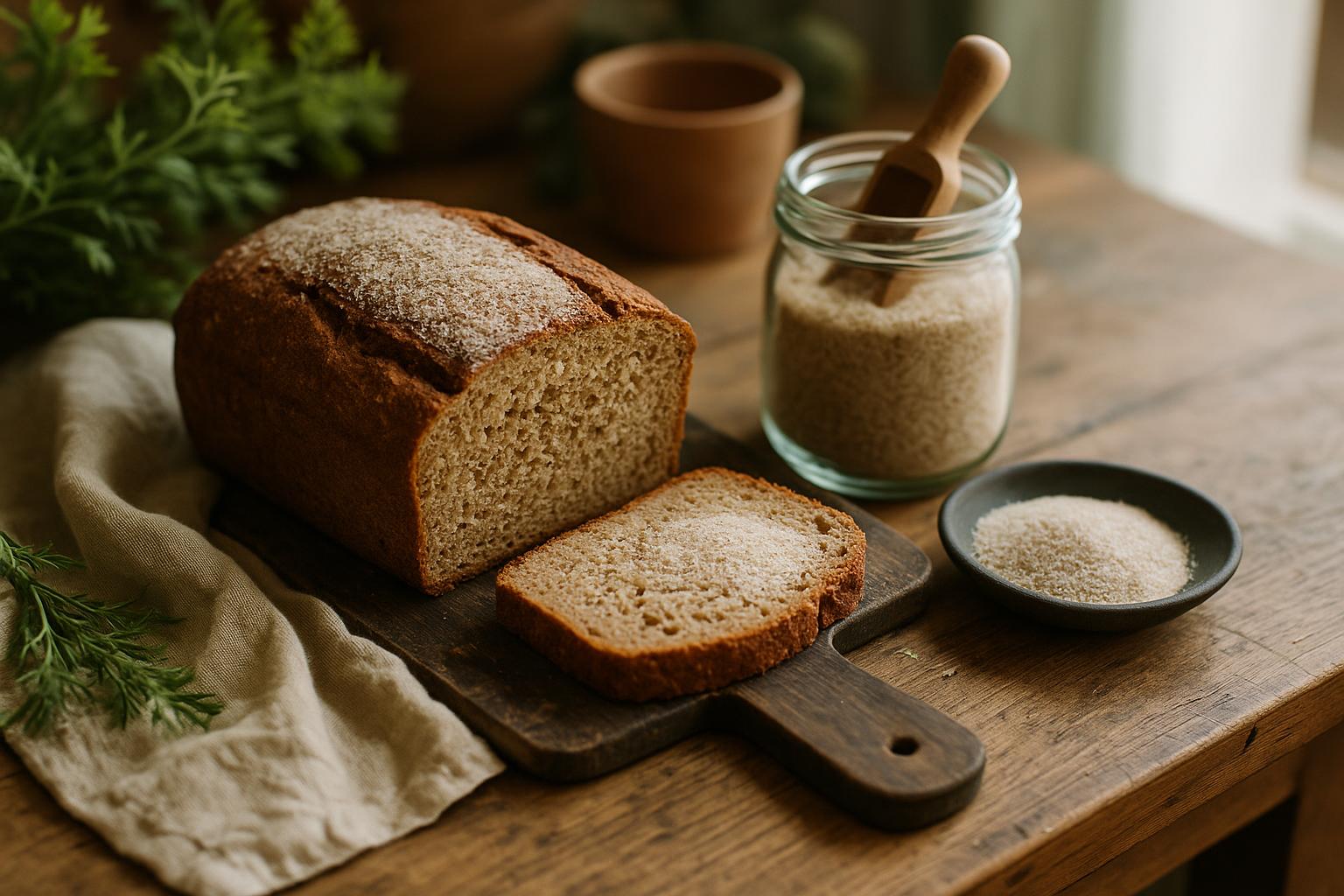
Pourquoi mettre du psyllium dans le pain : le psyllium forme un gel mucilagineuse au contact de l’eau qui structure la pâte, remplace le gluten et enrichit chaque tranche en fibres solubles bénéfiques pour le transit. Selon l’EFSA () [1], une consommation de 10 g de fibres de psyllium par jour contribue au maintien d’un taux de cholestérol normal.
- Structure la pâte sans gluten grâce à son gel visqueux
- Améliore la texture et donne une mie moelleuse
- Facilite la levée en retenant les gaz de fermentation
- Enrichit en fibres solubles chaque portion de pain
- Réduit l’index glycémique du pain maison
1. Le gel mucilagineuse : comment le psyllium structure la pâte
Pourquoi mettre du psyllium dans le pain commence par comprendre sa chimie. Au contact de l’eau, l’enveloppe de la graine de Plantago ovata libère des mucilages qui gonflent instantanément. Ce gel visqueux enrobe les particules de farine et crée un réseau cohésif.
Ce réseau remplace mécaniquement le gluten. Il piège les bulles de CO₂ produites par la levure ou le levain, ce qui permet à la pâte de lever correctement. Sans ce gel, un pain sans gluten s’effondre à la cuisson.
La proportion recommandée par les boulangers spécialisés est de 3 à 8 g de psyllium pour 100 g de farine. Au-delà, la mie devient trop compacte et gluante.
2. Pourquoi mettre du psyllium dans le pain sans gluten est indispensable
Le gluten est une protéine qui confère élasticité et extensibilité à la pâte. Dans un pain sans gluten, cette protéine est absente. Pourquoi mettre du psyllium dans le pain sans gluten devient alors une nécessité fonctionnelle, pas un simple ajout nutritionnel.
Le psyllium, ou ispaghul, reproduit trois propriétés clés du gluten :
- L’élasticité : la pâte s’étire sans se déchirer
- La cohésion : les ingrédients restent liés après cuisson
- La rétention d’eau : la mie reste moelleuse plusieurs jours
Une étude publiée dans le International Journal of Food Sciences and Nutrition () [3] a démontré que le psyllium améliore significativement le volume spécifique et la texture des pains à base de farine de riz et de maïs.
De nombreux lecteurs nous signalent que leur premier pain sans gluten au psyllium était radicalement différent — en mieux — de leurs tentatives précédentes sans cet ingrédient. Pour aller plus loin, découvrez à quoi sert le psyllium au quotidien dans votre alimentation.
3. Un pain riche en fibres solubles grâce au psyllium
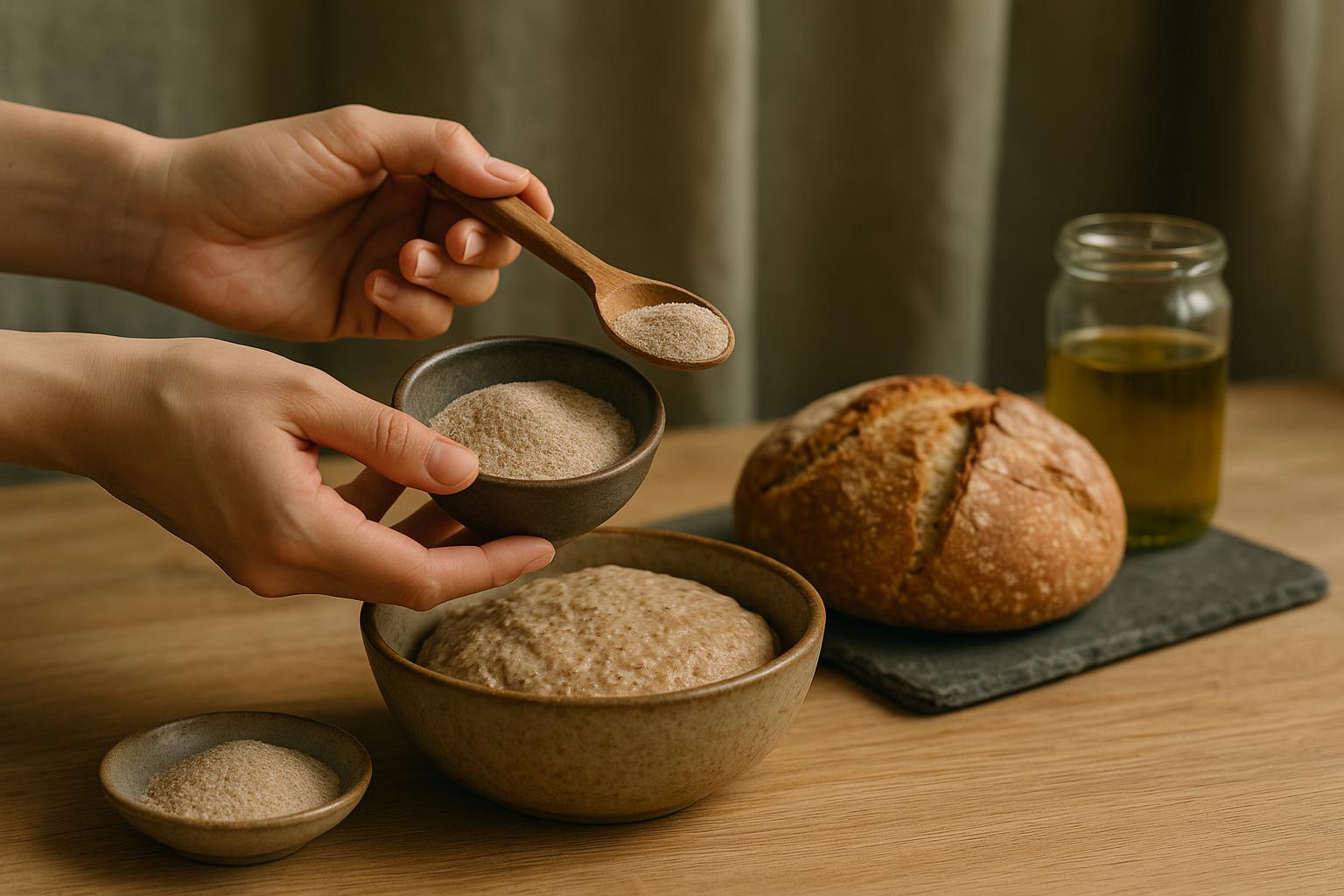
Pourquoi mettre du psyllium dans le pain va bien au-delà de la texture. Chaque cuillère à soupe de psyllium (environ 5 g) apporte près de 4 g de fibres solubles. C’est un apport considérable dans un aliment aussi courant que le pain.
L’ANSES () [4] rappelle que les Français consomment en moyenne 18 g de fibres par jour, loin des 25 à 30 g recommandés. Intégrer du psyllium dans votre pain maison est l’un des moyens les plus simples de combler ce déficit.
Les fibres solubles du psyllium forment un gel dans l’intestin grêle qui :
- Ralentit l’absorption des glucides
- Réduit la réponse glycémique postprandiale
- Favorise la satiété prolongée
- Nourrit le microbiote intestinal
Pour comprendre tous les usages de cette fibre, consultez notre guide sur les fibres de psyllium et leur définition.
4. Psyllium dans le pain : un allié du transit intestinal
Pourquoi mettre du psyllium dans le pain intéresse aussi ceux qui cherchent à améliorer leur confort digestif. Le psyllium est l’une des rares fibres reconnues pour agir à la fois sur la constipation et sur la diarrhée.
Son mécanisme est dual :
- En cas de constipation : il augmente le volume du bol fécal et accélère le transit intestinal
- En cas de selles molles : il absorbe l’excès d’eau et régularise le transit
L’EFSA a validé l’allégation santé suivante : « les fibres de psyllium contribuent à une fonction intestinale normale » [1]. Cette validation est rare et signifie que les preuves scientifiques sont jugées suffisantes au niveau européen.
Intégrer du psyllium dans votre pain quotidien permet d’obtenir cet effet de manière progressive et naturelle, sans prendre de compléments séparés. Vous pouvez aussi consulter notre article sur la poudre de psyllium et ses usages pour d’autres applications.
5. Réduction de l’index glycémique : pourquoi mettre du psyllium dans le pain change tout
Pourquoi mettre du psyllium dans le pain intéresse particulièrement les personnes diabétiques ou en prédiabète. Le gel formé par le psyllium ralentit la digestion de l’amidon et réduit la vitesse à laquelle le glucose passe dans le sang.
Une méta-analyse publiée dans le American Journal of Clinical Nutrition () [5] a conclu que la consommation régulière de psyllium réduit la glycémie à jeun de 6,97 mg/dL en moyenne chez les personnes atteintes de diabète de type 2.
| Type de pain | Index glycémique sans psyllium | Index glycémique avec 5 g de psyllium | Réduction estimée |
|---|---|---|---|
| Pain blanc (farine T55) | 75 | 62 | −17 % |
| Pain de riz (sans gluten) | 72 | 58 | −19 % |
| Pain de sarrasin | 54 | 46 | −15 % |
| Pain de maïs (sans gluten) | 70 | 56 | −20 % |
6. Une mie plus moelleuse et une meilleure conservation
Pourquoi mettre du psyllium dans le pain améliore aussi la durée de vie de votre pain maison. Le gel hydrophile du psyllium retient l’humidité dans la mie même après la cuisson. Votre pain reste souple 2 à 3 jours de plus qu’un pain sans psyllium.
Voici les effets concrets sur la texture :
- Mie plus aérée grâce à la rétention des gaz
- Croûte plus dorée par une meilleure répartition de l’humidité
- Moins de miettes à la découpe
- Texture proche du pain conventionnel même sans gluten
Ces propriétés font du psyllium un ingrédient incontournable dans la boulangerie artisanale sans gluten. Pour explorer tous ses bienfaits, lisez notre dossier complet sur les bienfaits du psyllium pour la santé.
7. Quel dosage de psyllium pour réussir votre pain ?
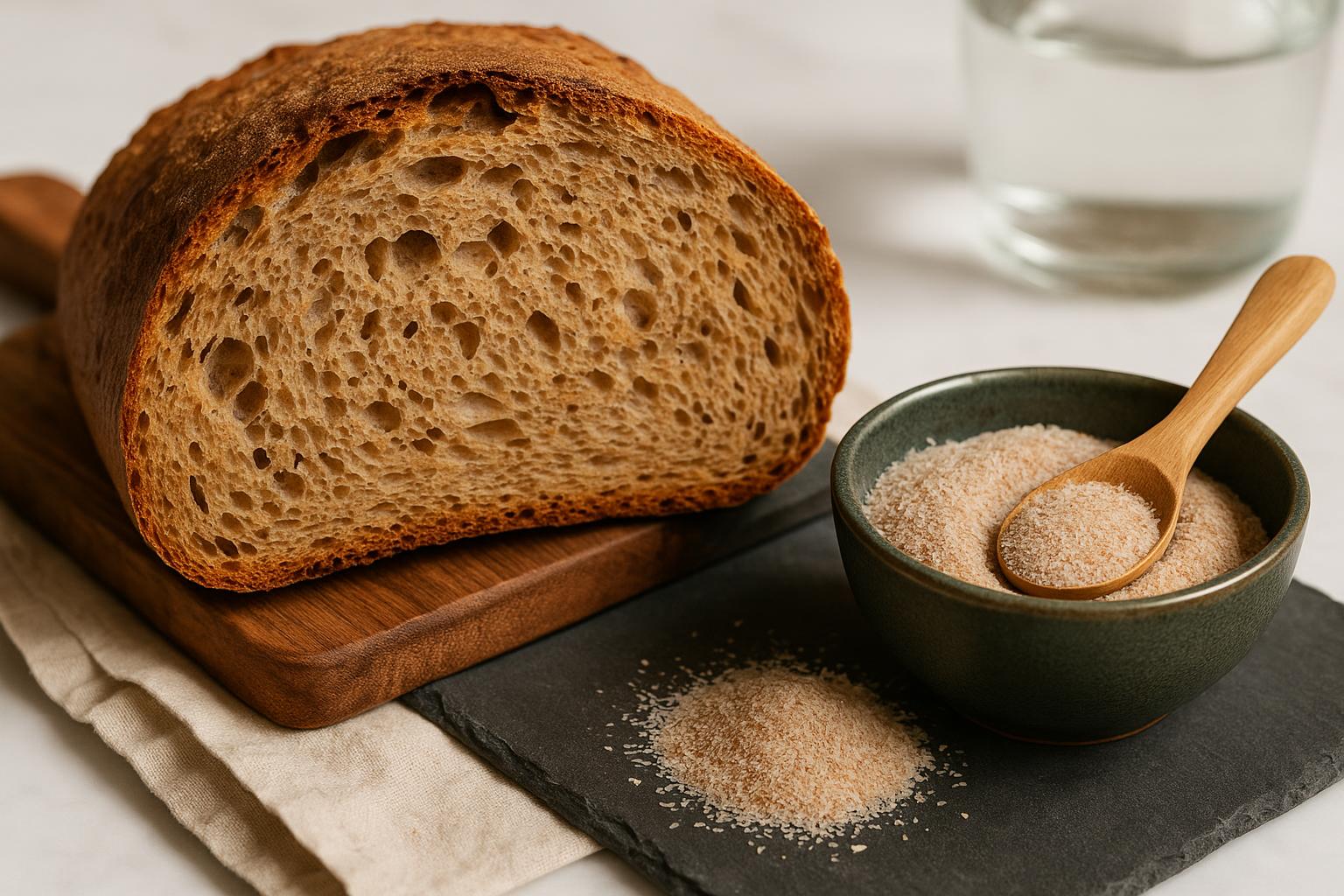
Pourquoi mettre du psyllium dans le pain ne suffit pas : encore faut-il utiliser la bonne quantité. Un dosage insuffisant ne donne aucun résultat ; un dosage excessif produit une mie gluante et lourde.
Voici les recommandations pratiques selon le type de pain :
- Pain sans gluten de base : 5 à 8 g pour 100 g de farine
- Pain avec farine de blé classique : 2 à 3 g pour 100 g de farine
- Pain à la levure : ajoutez le psyllium directement dans la farine sèche avant d’incorporer les liquides
- Pain au levain : mélangez le psyllium avec l’eau de bassinage
- Petits pains individuels : réduisez de 20 % la quantité d’eau pour compenser l’absorption
La forme en poudre fine est préférable à la forme en coques entières pour la boulangerie. La poudre se disperse plus uniformément dans la farine et forme un gel plus homogène. Notre article sur les bienfaits du psyllium blond détaille les différences entre les formes disponibles.
8. Pourquoi mettre du psyllium dans le pain avec gluten aussi ?
Pourquoi mettre du psyllium dans le pain ne concerne pas uniquement les régimes sans gluten. Dans un pain classique à base de farine de blé, le psyllium apporte des bénéfices nutritionnels significatifs sans altérer la texture habituelle.
En faible quantité (2-3 g pour 100 g de farine), le psyllium :
- Augmente la teneur en fibres solubles sans changer le goût
- Réduit légèrement l’index glycémique du pain blanc
- Améliore la conservation en retenant l’humidité
- Contribue à la satiété après le repas
C’est une stratégie nutritionnelle simple pour enrichir votre pain quotidien sans changer vos habitudes de boulangerie.
9. Psyllium et cholestérol : un bénéfice validé par l’EFSA
Pourquoi mettre du psyllium dans le pain prend une dimension supplémentaire pour les personnes surveillant leur cholestérol. L’EFSA a validé l’allégation selon laquelle 10 g de fibres de psyllium par jour contribuent au maintien d’un taux de cholestérol LDL normal [1].
Le mécanisme est bien documenté : le gel de psyllium se lie aux acides biliaires dans l’intestin et les excrète dans les selles. Le foie doit alors synthétiser de nouveaux acides biliaires à partir du cholestérol LDL circulant, ce qui réduit son taux sanguin.
Deux tranches de pain enrichi au psyllium (avec 5 g de psyllium chacune) couvrent déjà la moitié de la dose journalière recommandée pour cet effet. C’est un moyen discret et savoureux d’agir sur votre santé cardiovasculaire.
10. Le psyllium nourrit votre microbiote intestinal
Pourquoi mettre du psyllium dans le pain bénéficie aussi à votre microbiote. Les fibres solubles du psyllium sont partiellement fermentées par les bactéries du côlon, notamment les bifidobactéries et les lactobacilles.
Cette fermentation produit des AGCC (acides gras à chaîne courte), notamment le butyrate, qui :
- Nourrit les cellules de la paroi intestinale
- Renforce la barrière intestinale
- Réduit l’inflammation locale
- Contribue à la régulation de l’immunité
Consommer du pain au psyllium régulièrement est une façon concrète de soutenir votre flore intestinale au quotidien.
11. 4 erreurs courantes quand on ajoute du psyllium dans le pain
Pourquoi mettre du psyllium dans le pain échoue parfois ? Voici les erreurs les plus fréquentes signalées par les boulangers amateurs :
- Ne pas réduire la quantité d’eau : le psyllium absorbe beaucoup de liquide. Réduisez l’eau de 10 à 15 % par rapport à votre recette habituelle.
- Ajouter le psyllium trop tard : il doit être mélangé à sec avec la farine avant tout ajout de liquide pour former un gel homogène.
- Surdoser : plus de 10 g pour 100 g de farine produit une texture caoutchouteuse désagréable.
- Utiliser des coques entières au lieu de la poudre : les coques gonflent de manière inégale et créent des grumeaux dans la mie.
12. Quel psyllium choisir pour la boulangerie ?
Pourquoi mettre du psyllium dans le pain dépend aussi de la qualité du produit choisi. Tous les psylliums ne se valent pas pour la boulangerie.
Critères de sélection :
- Psyllium blond (Plantago ovata) : préféré en boulangerie pour sa couleur neutre et son pouvoir gélifiant élevé
- Pureté : choisissez un produit avec au moins 99 % de psyllium pur, sans additifs
- Forme poudre : plus facile à incorporer uniformément qu’en coques
- Origine biologique : réduit l’exposition aux résidus de pesticides
- Indice de gonflement : un bon psyllium de boulangerie doit avoir un indice supérieur à 40 mL/g
13. Recette de base : pain sans gluten au psyllium en 5 étapes
Pourquoi mettre du psyllium dans le pain devient concret avec cette recette simple validée par nos testeurs :
- Mélangez 300 g de farine de riz, 100 g de fécule de tapioca, 7 g de psyllium en poudre et 1 sachet de levure sèche.
- Ajoutez 350 mL d’eau tiède (pas chaude) et 1 cuillère à café de sel. Mélangez 2 minutes.
- Laissez reposer 30 minutes à température ambiante : le gel de psyllium se forme pendant ce temps.
- Façonnez la pâte en boule ou en pain allongé et déposez-la sur une plaque farinée.
- Cuisez à 200 °C pendant 45 à 50 minutes. Laissez refroidir 1 heure avant de couper.
Ce qu’il faut retenir
Pourquoi mettre du psyllium dans le pain ? Parce que cette fibre soluble issue de Plantago ovata remplit simultanément trois fonctions essentielles : elle structure la pâte en remplaçant le gluten, elle enrichit chaque tranche en fibres solubles bénéfiques pour le transit intestinal et le cholestérol, et elle améliore la conservation du pain. Pourquoi mettre du psyllium dans le pain devient ainsi une évidence autant pour les boulangers sans gluten que pour tous ceux qui veulent améliorer la qualité nutritionnelle de leur pain quotidien.
Action concrète : Commencez par ajouter 5 g de psyllium en poudre à votre prochaine fournée de pain maison, en réduisant l’eau de 10 %. Observez la différence de texture et de conservation. Consultez notre guide complet sur les usages du psyllium pour aller plus loin.
- Pourquoi mettre du psyllium dans le pain sans gluten : il forme un gel mucilagineuse qui remplace l’élasticité du gluten et structure la pâte.
- Pourquoi mettre du psyllium dans le pain pour la santé : chaque tranche apporte des fibres solubles qui régulent le transit intestinal et réduisent le cholestérol LDL.
- Pourquoi mettre du psyllium dans le pain pour la glycémie : il réduit l’index glycémique du pain de 15 à 20 % selon le type de farine utilisée.
- Pourquoi mettre du psyllium dans le pain améliore la conservation : son gel retient l’humidité et garde la mie moelleuse 2 à 3 jours supplémentaires.
- Pourquoi mettre du psyllium dans le pain nécessite un bon dosage : 5 à 8 g pour 100 g de farine sans gluten, 2 à 3 g avec farine de blé classique.
Questions fréquentes sur pourquoi mettre du psyllium dans le pain
Pourquoi mettre du psyllium dans le pain sans gluten ?
Pourquoi mettre du psyllium dans le pain sans gluten est une question de structure. Sans gluten, la pâte n’a aucun réseau protéique pour retenir les gaz et tenir à la cuisson. Le psyllium forme un gel visqueux qui reproduit mécaniquement l’élasticité du gluten, permettant à la pâte de lever et de se tenir.
Quelle quantité de psyllium mettre dans le pain ?
Pour un pain sans gluten, utilisez 5 à 8 g de psyllium en poudre pour 100 g de farine. Pour un pain classique avec farine de blé, 2 à 3 g suffisent. Au-delà de 10 g pour 100 g, la mie devient trop compacte et caoutchouteuse. Réduisez toujours l’eau de 10 à 15 %.
Le psyllium change-t-il le goût du pain ?
Non. Le psyllium blond (Plantago ovata) est pratiquement insipide en faible quantité. À des doses supérieures à 8 g pour 100 g de farine, une légère amertume peut apparaître. En dosage standard, il ne modifie ni le goût ni l’odeur du pain.
Peut-on remplacer le psyllium par un autre ingrédient dans le pain ?
Oui, partiellement. La gomme xanthane, la gomme de guar ou les graines de lin moulues peuvent partiellement remplacer le psyllium. Cependant, aucun de ces substituts n’offre le même niveau de performance gélifiant et les mêmes bénéfices nutritionnels validés par l’EFSA.
Pourquoi mettre du psyllium dans le pain aide-t-il à maigrir ?
Pourquoi mettre du psyllium dans le pain peut soutenir la gestion du poids : ses fibres solubles forment un gel dans l’estomac qui ralentit la vidange gastrique et prolonge la satiété. Cela réduit naturellement l’apport calorique au repas suivant, sans effet laxatif à dose modérée.
Le psyllium dans le pain est-il sans danger pour les enfants ?
Oui, à des doses alimentaires normales. Le psyllium intégré dans le pain est considéré comme sûr pour les enfants de plus de 6 ans. En revanche, les suppléments concentrés de psyllium ne sont pas recommandés chez l’enfant sans avis médical. La forme pain est la plus adaptée pour une consommation familiale.
Faut-il utiliser du psyllium en poudre ou en coques pour le pain ?
La poudre est recommandée pour la boulangerie. Elle se disperse uniformément dans la farine et forme un gel homogène. Les coques entières gonflent de manière inégale et peuvent créer des grumeaux dans la mie. Choisissez une poudre fine avec un indice de gonflement supérieur à 40 mL/g.
Pourquoi mettre du psyllium dans le pain aide-t-il le cholestérol ?
Pourquoi mettre du psyllium dans le pain bénéficie au cholestérol via un mécanisme précis : le gel de psyllium se lie aux acides biliaires dans l’intestin et les élimine dans les selles. Le foie compense en puisant dans le cholestérol LDL circulant pour en synthétiser de nouveaux, ce qui réduit son taux sanguin. L’EFSA valide cet effet à partir de 10 g/jour [1].
Le pain au psyllium convient-il aux personnes diabétiques ?
Oui. Pourquoi mettre du psyllium dans le pain intéresse particulièrement les diabétiques : le gel ralentit l’absorption des glucides et réduit la réponse glycémique postprandiale. Une méta-analyse dans le American Journal of Clinical Nutrition () [5] confirme une réduction de la glycémie à jeun de près de 7 mg/dL avec une consommation régulière.
Peut-on mettre du psyllium dans tous les types de pain ?
Oui. Pourquoi mettre du psyllium dans le pain s’applique aux pains sans gluten (riz, maïs, sarrasin, millet), aux pains classiques au blé, aux pains au levain et aux pains briochés. Le dosage varie selon le type de farine et la teneur en gluten naturelle. Adaptez toujours la quantité d’eau en conséquence.
Le psyllium dans le pain est-il bon pour le microbiote ?
Oui. Les fibres solubles du psyllium sont partiellement fermentées par les bactéries du côlon, notamment les bifidobactéries et les lactobacilles. Cette fermentation produit des acides gras à chaîne courte, dont le butyrate, qui nourrit la paroi intestinale et renforce la barrière digestive. C’est un bénéfice prébiotique documenté.
Comment conserver un pain fait avec du psyllium ?
Le pain au psyllium se conserve mieux qu’un pain sans gluten classique grâce aux propriétés hydrophiles du gel. Conservez-le à température ambiante dans un torchon propre pendant 3 à 4 jours, ou tranchez-le et congelez-le immédiatement après refroidissement complet pour une conservation optimale de 2 mois.
Sources et études
- Scientific Opinion on the substantiation of health claims related to psyllium seed husk — EFSA Journal,
- Effect of psyllium fiber on bread quality and glycemic response — Journal of Food Science,
- Psyllium husk as a functional ingredient in gluten-free bread — International Journal of Food Sciences and Nutrition,
- Les fibres alimentaires : apports et recommandations — ANSES,
- Effect of psyllium supplementation on blood glucose concentrations in type 2 diabetes: a systematic review and meta-analysis — American Journal of Clinical Nutrition,
Cet article est fourni à titre informatif uniquement et ne constitue pas un avis médical. Consultez un professionnel de santé qualifié avant toute utilisation.