Le kombucha contient-il de la caféine ? 7 faits prouvés
Le kombucha contient-il de la caféine : oui, entre 10 et 25 mg par portion de 240 ml.
C’est environ quatre fois moins qu’une tasse de café filtre (95 mg). La fermentation réduit la caféine du thé de départ d’environ un tiers, selon une étude publiée dans le Journal of Food Science.
- Quantité modérée : le kombucha caféine reste bien en dessous du seuil journalier recommandé.
- Origine naturelle : la caféine vient du thé noir ou vert utilisé comme base.
- Fermentation réductrice : le SCOBY consomme une partie de la caféine pendant la fermentation.
- Variabilité selon les marques : certains kombuchas contiennent jusqu’à 35 mg, d’autres moins de 5 mg.
- Alternatives disponibles : les kombuchas à base de tisane offrent une version sans caféine.
Le kombucha contient-il de la caféine : d’où vient-elle ?
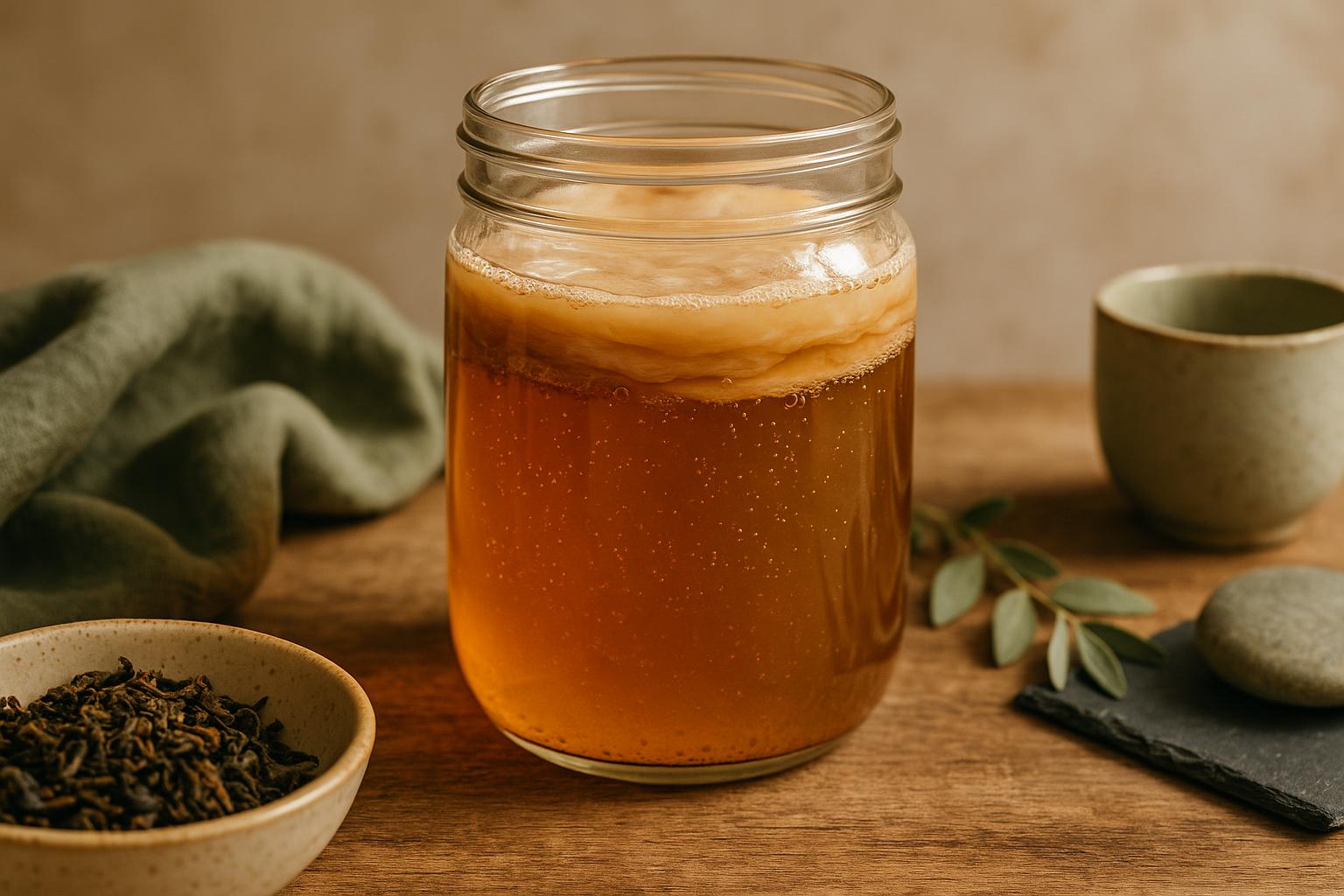
La caféine du kombucha provient exclusivement du thé utilisé comme base.
Le thé noir, le thé vert et le thé blanc contiennent tous de la caféine naturelle. Sans thé, pas de caféine dans le kombucha.
- Thé noir : base la plus courante, contient 47 mg de caféine par 240 ml avant fermentation.
- Thé vert : base alternative, contient 28 mg de caféine par 240 ml avant fermentation.
- Thé blanc : base plus rare, contient 15 à 20 mg de caféine par 240 ml avant fermentation.
- Tisane : base sans caféine, donne un kombucha décaféiné naturellement.
Le choix du thé détermine directement la teneur finale en caféine kombucha. Pour en savoir plus sur les ingrédients de base, la composition du thé de départ est le facteur numéro un.
Le kombucha contient-il de la caféine après fermentation : que se passe-t-il ?
La fermentation réduit la caféine, mais ne l’élimine pas totalement.
Le SCOBY (colonie symbiotique de bactéries et levures) consomme certains composés du thé pendant la fermentation. Une étude préliminaire de Mun Kombucha indique une réduction d’environ un tiers de la caféine initiale.
- Durée de fermentation : plus elle est longue, plus la réduction de caféine est importante.
- Température : une fermentation plus chaude accélère l’activité microbienne et la dégradation de la caféine.
- Ratio thé/eau : un thé plus concentré donne un kombucha plus riche en caféine kombucha.
- Deuxième fermentation : n’affecte pas significativement la teneur en caféine.
Attention : certains utilisateurs pensent que la fermentation élimine toute la caféine. C’est faux. La réduction est réelle mais partielle.

Le kombucha contient-il de la caféine : les chiffres exacts par marque
La teneur en caféine kombucha varie fortement selon les marques et les recettes.
Voici les données disponibles pour les produits les plus consommés en France et à l’international. Ces valeurs sont issues des étiquettes nutritionnelles et d’analyses indépendantes.
| Produit (240 ml) | Caféine (mg) | Base de thé |
|---|---|---|
| GT’s Kombucha Original | 8 à 14 mg | Thé noir + vert |
| Synergy Kombucha | 8 à 14 mg | Thé noir + vert |
| Health-Ade Kombucha | 10 à 15 mg | Thé noir |
| Mun Kombucha | 12 à 20 mg | Thé noir |
| Kombucha maison (thé noir) | 15 à 25 mg | Thé noir |
| Kombucha maison (thé vert) | 8 à 15 mg | Thé vert |
| Kombucha tisane (sans caféine) | 0 à 2 mg | Tisane |
| Café filtre (référence) | 80 à 100 mg | N/A |
| Thé noir infusé (référence) | 40 à 70 mg | N/A |
Pour la marque Synergy en particulier, consultez notre analyse détaillée de la quantité de caféine avec les données précises par saveur.
Le kombucha contient-il de la caféine : comparaison avec d’autres boissons
Le kombucha est l’une des boissons les moins caféinées parmi les alternatives au café.
Cette comparaison aide à situer la caféine kombucha dans votre consommation quotidienne totale. L’ANSES recommande un maximum de 400 mg de caféine par jour pour un adulte en bonne santé.
- Café expresso (30 ml) : 60 à 80 mg de caféine
- Café filtre (240 ml) : 80 à 100 mg de caféine
- Thé noir (240 ml) : 40 à 70 mg de caféine
- Thé vert (240 ml) : 20 à 45 mg de caféine
- Kombucha standard (240 ml) : 10 à 25 mg de caféine
- Cola (355 ml) : 34 à 46 mg de caféine
- Boisson énergisante (250 ml) : 80 à 150 mg de caféine
- Kombucha tisane (240 ml) : 0 à 2 mg de caféine
Le kombucha contient-il de la caféine en quantité préoccupante ? Non, pour la majorité des adultes. Même deux portions par jour restent bien en dessous du seuil de 400 mg.
Kombucha caféine et sommeil : faut-il s’inquiéter ?
La faible teneur en caféine du kombucha le rend compatible avec une consommation en soirée pour la plupart des personnes.
Cependant, les personnes très sensibles à la caféine peuvent ressentir des effets même avec 10 mg. La sensibilité à la caféine est génétique et varie selon les individus, selon une étude de PubMed (2013).
- Sensibilité normale : un kombucha le soir ne perturbe pas le sommeil.
- Sensibilité élevée : préférez un kombucha à base de tisane après 16h.
- Insomnies chroniques : évitez toute source de caféine après 14h, kombucha inclus.
Pour savoir quand boire votre kombucha selon votre profil, le moment de la journée est aussi important que la quantité consommée.
Le kombucha contient-il de la caféine : risques pendant la grossesse ?
La grossesse impose une limite stricte de 200 mg de caféine par jour, selon l’OMS.
Avec 10 à 25 mg par portion, le kombucha caféine reste en dessous de ce seuil. Mais la grossesse pose d’autres questions au-delà de la seule caféine : alcool résiduel, bactéries non pasteurisées, acidité.
- Caféine : teneur faible, compatible avec les recommandations OMS en quantité modérée.
- Alcool résiduel : le kombucha contient 0,5 à 3 % d’alcool, ce qui pose un problème distinct.
- Bactéries vivantes : les produits non pasteurisés sont déconseillés pendant la grossesse.
- Recommandation : consultez votre médecin avant de consommer du kombucha enceinte.
La caféine kombucha n’est donc pas le seul critère à évaluer pendant la grossesse. L’alcool et les bactéries méritent une attention égale.
Kombucha et caféine chez les enfants : ce que dit la science
Les enfants sont plus sensibles à la caféine que les adultes.
L’EFSA (Autorité européenne de sécurité des aliments) recommande de limiter la caféine à 3 mg par kg de poids corporel par jour chez l’enfant. Pour un enfant de 30 kg, cela représente 90 mg maximum.
- Moins de 12 ans : le kombucha n’est pas recommandé, caféine et alcool résiduel confondus.
- 12 à 18 ans : une portion occasionnelle de kombucha caféine reste dans les limites tolérables.
- Kombucha décaféiné : une alternative à base de tisane peut convenir aux adolescents.
Le kombucha contient-il de la caféine en quantité dangereuse pour les enfants ? Non, mais d’autres composants (alcool, acidité) justifient la prudence.
Kombucha caféine et sport : un pré-entraînement naturel ?
La caféine améliore la performance sportive, même en faible dose.
Une méta-analyse publiée sur PubMed (2017) confirme qu’une dose de 3 mg/kg de poids corporel améliore l’endurance. Avec 10 à 25 mg par portion, le kombucha caféine offre un effet léger mais réel.
- Effet stimulant léger : utile pour les entraînements modérés ou le yoga.
- Pas suffisant : pour les sports intensifs, la dose de caféine reste trop faible.
- Probiotiques en bonus : le kombucha apporte aussi des bactéries bénéfiques pour la récupération.
- Hydratation : le kombucha hydrate, contrairement au café qui a un léger effet diurétique.
Comment réduire la caféine dans votre kombucha maison
Vous pouvez contrôler la teneur en caféine kombucha si vous le préparez vous-même.
Trois techniques simples permettent de réduire significativement la caféine dans votre kombucha maison. Ces méthodes sont validées par les brasseurs expérimentés et les études disponibles sur la fermentation du thé.
- Choisir le thé vert : il contient deux fois moins de caféine que le thé noir.
- Décaféiner le thé : infusez le thé 30 secondes, jetez cette eau, puis infusez normalement. Cette technique élimine 80 % de la caféine.
- Utiliser une tisane : hibiscus, gingembre ou rooibos donnent un kombucha décaféiné naturel.
- Allonger la fermentation : une fermentation de 14 jours réduit davantage la caféine qu’une fermentation de 7 jours.
- Diluer avec de l’eau pétillante : lors de la deuxième fermentation, une dilution réduit la concentration finale.
Pour maîtriser toutes les étapes, découvrez quelle quantité de kombucha boire par jour selon vos objectifs de consommation de caféine.
Le kombucha contient-il de la caféine : comment choisir en magasin
L’étiquette nutritionnelle est votre meilleur outil pour évaluer la caféine kombucha.
En France, l’affichage de la caféine n’est pas obligatoire pour les boissons en dessous de 150 mg/L. Certaines marques l’indiquent volontairement. Voici comment vous orienter sans cette information.
- Vérifiez la base de thé : thé noir = plus de caféine, thé vert = moins, tisane = zéro.
- Lisez la liste des ingrédients : le thé en premier ingrédient signale une teneur plus élevée.
- Cherchez la mention « sans caféine » : certaines marques la mettent en avant explicitement.
- Méfiez-vous des saveurs café ou matcha : elles peuvent contenir plus de caféine kombucha que la version nature.
- Contactez le fabricant : la plupart des marques communiquent leur teneur sur demande.
Pour les personnes qui doivent surveiller leur consommation, certains profils ne devraient pas consommer de kombucha sans avis médical préalable.
Le kombucha contient-il de la caféine : démêler le vrai du faux
Plusieurs idées reçues circulent sur la caféine dans le kombucha.
Reddit et les forums de brassage maison véhiculent parfois des informations contradictoires. Voici ce que la science dit réellement sur la caféine kombucha.
- MYTHE : la fermentation élimine toute la caféine. FAUX. Elle en réduit environ un tiers, pas la totalité.
- MYTHE : le kombucha est sans caféine. FAUX. Sauf s’il est fait avec une tisane.
- MYTHE : le kombucha contient autant de caféine que le thé. FAUX. Il en contient deux à trois fois moins.
- MYTHE : la deuxième fermentation élimine la caféine. FAUX. Elle n’a pas d’effet significatif sur la caféine.
- VRAI : les kombuchas à base de tisane sont réellement sans caféine. C’est confirmé par les analyses.
La confusion vient souvent du fait que la fermentation transforme le thé de manière visible (goût, couleur, effervescence). Mais la caféine, elle, résiste mieux à ce processus que d’autres composés.
Kombucha caféine : les bénéfices combinés de la caféine et des probiotiques
Le kombucha combine deux atouts rares : une légère stimulation caféinée et des probiotiques vivants.
Aucune autre boisson courante ne réunit ces deux propriétés. La caféine kombucha stimule la vigilance. Les probiotiques soutiennent le microbiote intestinal. Selon Harvard Health, les aliments fermentés améliorent la diversité du microbiote.
- Énergie douce : la caféine faible évite les pics et les chutes d’énergie du café.
- Digestion : les probiotiques soutiennent la flore intestinale.
- Antioxydants : le thé de base apporte des polyphénols protecteurs.
- Acides organiques : l’acide acétique et l’acide glucuronique ont des propriétés détoxifiantes potentielles.
Le kombucha contient-il de la caféine utile ? Oui, à condition de le consommer au bon moment et en bonne quantité. Pour optimiser vos apports, l’ANSES recommande de ne pas dépasser 400 mg de caféine totale par jour.
- Le kombucha contient-il de la caféine ? Oui, entre 10 et 25 mg par portion de 240 ml, soit quatre fois moins qu’un café filtre.
- Le kombucha contient-il de la caféine après fermentation ? Oui, la fermentation réduit la caféine d’environ un tiers mais ne l’élimine pas.
- Le kombucha contient-il de la caféine en quantité dangereuse ? Non, même deux portions par jour restent bien en dessous du seuil recommandé de 400 mg.
- Le kombucha contient-il de la caféine si fait avec une tisane ? Non, un kombucha à base de tisane (hibiscus, rooibos) est naturellement sans caféine.
- Le kombucha contient-il de la caféine problématique pour la grossesse ? La caféine seule reste dans les limites, mais l’alcool résiduel et les bactéries non pasteurisées imposent la prudence.
Questions fréquentes sur Le kombucha contient-il de la caféine
Le kombucha contient-il de la caféine en quantité significative ?
Le kombucha contient-il de la caféine en quantité significative ? Non. Une portion standard de 240 ml apporte 10 à 25 mg de caféine. C’est environ quatre fois moins qu’un café filtre. Pour la plupart des adultes, cette quantité n’a pas d’effet stimulant notable.
Combien de mg de caféine dans un verre de kombucha ?
Un verre de 240 ml de kombucha contient en moyenne 10 à 25 mg de caféine. Les kombuchas à base de thé noir sont en haut de cette fourchette. Ceux à base de thé vert se situent plutôt entre 8 et 15 mg. Les versions à base de tisane contiennent moins de 2 mg.
Le kombucha a-t-il autant de caféine que le thé ?
Non. Le kombucha contient deux à trois fois moins de caféine que le thé dont il est issu. La fermentation par le SCOBY dégrade environ un tiers de la caféine initiale. Un thé noir infusé contient 40 à 70 mg de caféine, contre 10 à 25 mg pour le kombucha équivalent.
Peut-on boire du kombucha le soir sans perturber le sommeil ?
Pour la plupart des personnes, oui. La faible teneur en caféine kombucha (10 à 25 mg) ne perturbe pas le sommeil des personnes à sensibilité normale. Les personnes très sensibles à la caféine devraient préférer un kombucha à base de tisane après 16h.
Le kombucha contient-il de la caféine pendant la grossesse : est-ce risqué ?
La caféine kombucha seule reste dans les limites recommandées par l’OMS (200 mg/jour). Cependant, le kombucha pose d’autres questions pendant la grossesse : alcool résiduel (0,5 à 3 %) et bactéries non pasteurisées. Consultez votre médecin avant d’en consommer enceinte.
Existe-t-il un kombucha sans caféine ?
Oui. Les kombuchas préparés avec des tisanes (hibiscus, rooibos, gingembre) ne contiennent pas de caféine. Certaines marques proposent explicitement des versions décaféinées. Vérifiez la base de thé dans la liste des ingrédients pour vous assurer de l’absence de caféine kombucha.
La fermentation élimine-t-elle toute la caféine du thé ?
Non. C’est l’un des mythes les plus répandus sur la caféine kombucha. La fermentation réduit la caféine d’environ un tiers. Elle ne l’élimine pas. Un kombucha à base de thé noir contiendra toujours de la caféine, même après une longue fermentation de 14 jours.
Le kombucha contient-il de la caféine comme le café ?
Non. Le kombucha contient-il de la caféine comparable au café ? Absolument pas. Un café filtre apporte 80 à 100 mg de caféine. Le kombucha en apporte 10 à 25 mg. C’est quatre à huit fois moins. Le kombucha est une alternative beaucoup plus douce pour les personnes qui réduisent leur consommation de café.
Les enfants peuvent-ils boire du kombucha malgré la caféine ?
Les enfants de moins de 12 ans ne devraient pas consommer de kombucha, et pas seulement à cause de la caféine kombucha. L’alcool résiduel (0,5 à 3 %) et les bactéries vivantes posent également problème. Pour les adolescents, une consommation occasionnelle et modérée reste dans les limites tolérables selon l’EFSA.
Comment savoir si mon kombucha contient de la caféine ?
Vérifiez la liste des ingrédients. Si le kombucha contient du thé noir, du thé vert ou du thé blanc, il contient de la caféine. Si la base est une tisane (hibiscus, rooibos, menthe), il est sans caféine. Certaines marques indiquent volontairement la teneur en mg sur l’étiquette.
Le kombucha Synergy contient-il beaucoup de caféine ?
Le kombucha Synergy contient environ 8 à 14 mg de caféine par portion de 240 ml. C’est dans la moyenne basse des kombuchas commerciaux. La marque utilise un mélange de thé noir et de thé vert, ce qui modère la teneur en caféine kombucha par rapport aux versions 100 % thé noir.
Le kombucha contient-il de la caféine si je le fais moi-même ?
Oui, si vous utilisez du thé. Un kombucha maison à base de thé noir contient généralement 15 à 25 mg de caféine par portion. Vous pouvez réduire cette teneur en utilisant du thé vert, en décaféinant le thé avant fermentation, ou en optant pour une tisane comme base.
La caféine du kombucha est-elle absorbée différemment par l’organisme ?
Les recherches sur ce point sont limitées. La caféine kombucha est chimiquement identique à celle du café ou du thé. Cependant, les acides organiques et les probiotiques présents dans le kombucha pourraient modifier légèrement son absorption. Aucune étude clinique ne confirme encore une différence significative d’absorption.
Ce qu’il faut retenir
Le kombucha contient-il de la caféine ? Oui, entre 10 et 25 mg par portion, soit bien moins qu’un café ou un thé. La fermentation réduit la caféine sans l’éliminer. Le kombucha contient-il de la caféine en quantité problématique pour la santé ? Non, pour la grande majorité des adultes.
Choisissez un kombucha à base de tisane si vous souhaitez éviter toute caféine. Vérifiez l’étiquette et consultez un professionnel de santé si vous avez des besoins spécifiques liés à la grossesse ou à des pathologies.
Sources et études
- PubMed — Sensibilité individuelle à la caféine et génétique (2013)
- PubMed — Caféine et performance sportive, méta-analyse (2017)
- Harvard Health — Aliments fermentés et santé intestinale
- EFSA — Évaluation de la sécurité de la caféine
- ANSES — Recommandations sur la consommation de caféine en France
Cet article est fourni à titre informatif uniquement et ne constitue pas un avis médical. Consultez un professionnel de santé qualifié avant toute utilisation.