What is kombucha made of? 7 essential ingredients
This article is for informational purposes only and does not replace professional medical advice. Consult your doctor before making any changes to your diet.
What is kombucha made of? This fermented drink is made of four basic ingredients: tea (green or black), sugar, water and a SCOBY, a symbiotic culture of bacteria and yeast that transforms everything into a living and sparkling drink.
- A natural source of probiotics beneficial for gut flora
- A low-alcohol beverage produced through controlled fermentation
- A nutritional profile rich in organic acids, B vitamins and antioxidants
- A healthy alternative to industrial sodas, with less residual sugar
- A product that can be adapted thanks to an infinite number of natural aromatic variations
What is kombucha made of? The answer is more complex than it seems. Beyond the four basic ingredients, fermentation generates dozens of bioactive compounds. According to a study published on PubMed, kombucha contains more than 200 identifiable compounds, including organic acids, polyphenols, and digestive enzymes. Its global popularity continues to grow: the global kombucha market was estimated at $3.8 billion in 2023.
What is kombucha made of? The 4 basic ingredients
The original kombucha recipe rests on four inseparable pillars. Each ingredient plays a specific role in the fermentation process. Without any one of them, the beverage cannot form properly.
1. Tea — Tea is the nutritional foundation of kombucha. It provides the polyphenols, tannins, and minerals that feed the microorganisms in the SCOBY. Black tea is the most traditional, but green, oolong, or white tea also work. The tannins in tea are essential: they nourish the acetic acid bacteria and maintain the SCOBY's health in the long term.
2. Sugar — Refined white sugar is the yeast's energy source. The yeast consumes it and transforms it into alcohol, then into organic acids. Contrary to popular belief, the vast majority of the sugar is consumed during fermentation. The final kombucha generally contains between 2 and 8 grams of residual sugar per 100 ml, depending on the fermentation time.
3. Water — Filtered or dechlorinated water is essential. The chlorine in tap water can inhibit the microorganisms in the SCOBY and compromise fermentation. Spring water or filtered water is therefore recommended for obtaining quality kombucha.
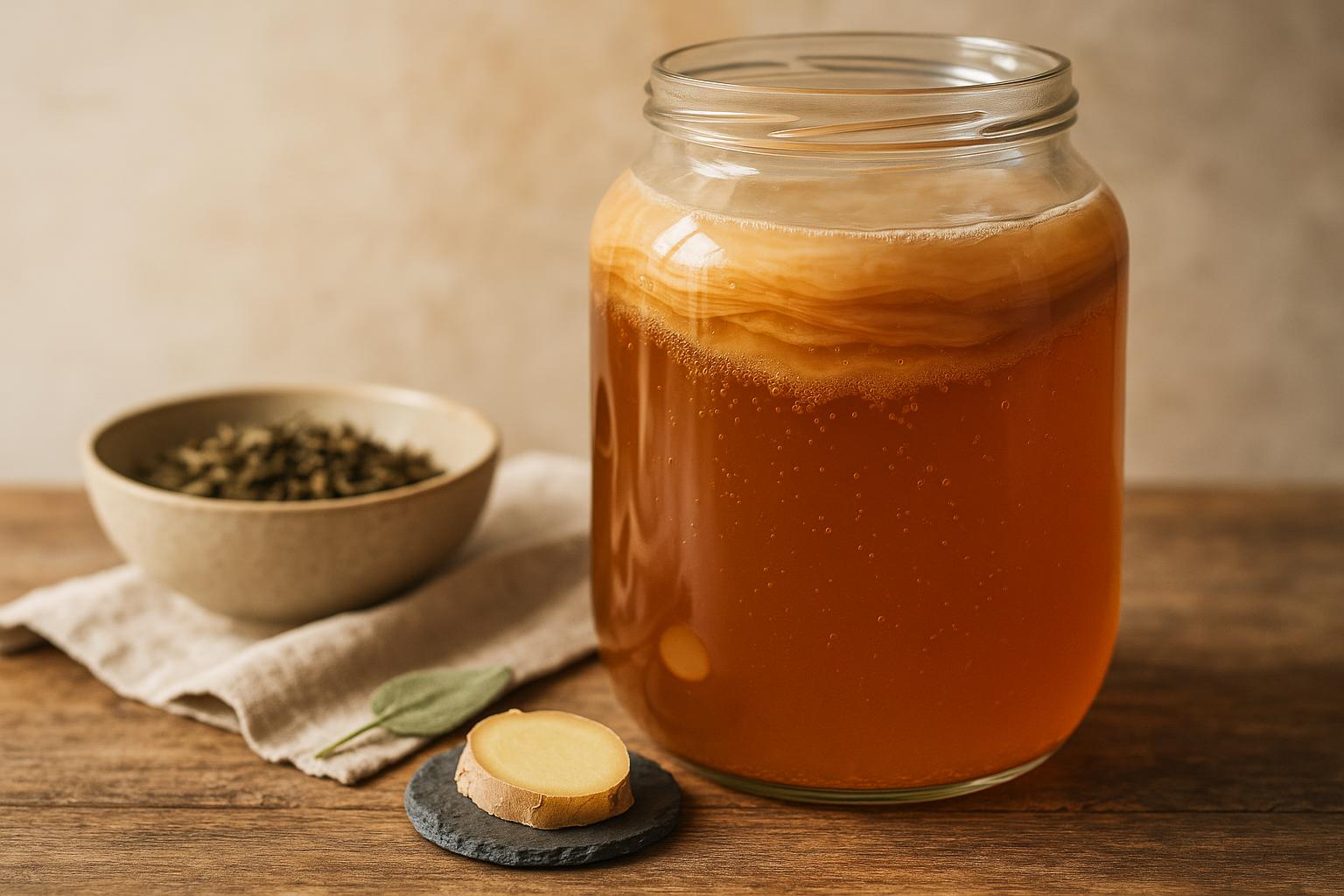
4. The SCOBY — The SCOBY (Symbiotic Culture Of Bacteria and Yeast) is the living heart of kombucha. This gelatinous puck contains colonies of bacteria and yeast that orchestrate the entire fermentation process. To learn more about its precise role, see our dedicated article: What is the purpose of a kombucha SCOBY?
What is kombucha made of? A closer look at the SCOBY
The SCOBY is often described as the "mother" of kombucha. It is a matrix of bacterial cellulose in which acetic acid bacteria (such as Acetobacter xylinum) and yeasts (such as Zygosaccharomyces bailii) live in symbiosis. This cohabitation is at the heart of what makes kombucha.
Yeast transforms sugar into alcohol and CO2. Acetic acid bacteria then convert this alcohol into acetic acid and other organic acids. This dual process is what gives kombucha its slightly acidic taste and gentle, natural effervescence.
A healthy SCOBY is thick, beige to brown in color, and floats on the surface of the liquid. It reproduces with each fermentation by forming a new disc (called a "baby SCOBY") beneath the original mother. If you'd like to get a SCOBY, our guide on where to find a kombucha mother will give you all the available options.
What is kombucha made of? Its composition after fermentation
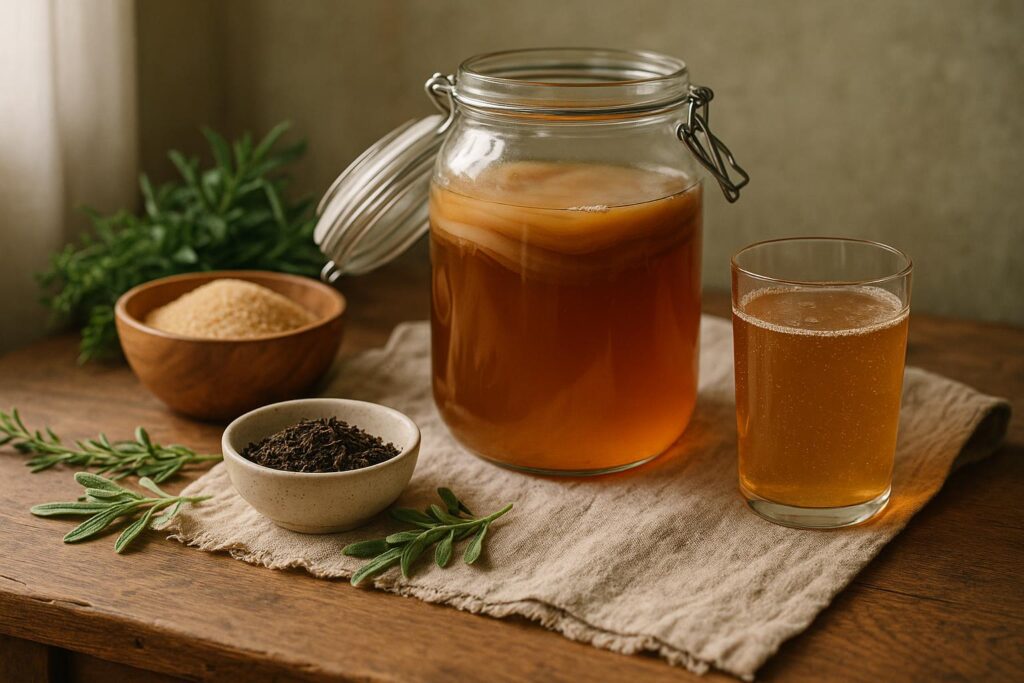
What is kombucha made of once fermentation is complete? The list of compounds present is much longer than the four initial ingredients. Fermentation is a complex biochemical process that generates a multitude of active molecules.
Here are the main compounds present in fermented kombucha:
- Acetic acid : the same acid as in vinegar, with recognized antimicrobial properties.
- Gluconic acid : promotes liver detoxification according to several studies
- Glucuronic acid : supports liver detoxification functions
- Lactic acid : produced by lactic acid bacteria, beneficial for the intestinal flora
- B vitamins : B1, B2, B6 and B12 in varying amounts depending on the tea used
- Vitamin C : a natural antioxidant derived from tea polyphenols
- Digestive enzymes : proteases and amylases that facilitate digestion
- Live probiotics : bacterial strains beneficial to the microbiota
- Polyphenols : antioxidants inherited from tea, partially preserved after fermentation
- Ethanol : residual alcohol, generally between 0.5% and 3% depending on the fermentation time
- Natural CO2 : responsible for the drink's slight effervescence
What type of tea is used in the composition of kombucha?
The choice of tea directly influences the taste and nutritional profile of kombucha. Black tea remains the most commonly used base in traditional recipes, particularly in China and Russia where the beverage has been consumed for centuries. It contributes strong tannins and a robust flavor.
Green tea, being milder, produces a lighter, slightly grassy kombucha with a higher catechin profile. Catechins are powerful antioxidants whose cardiovascular health benefits are documented by Harvard Health. Oolong tea, a blend of green and black, offers an interesting balance.
Some brewers experiment with flavored teas, herbal teas, or blends. However, be careful: the essential oils present in some herbal teas can harm the SCOBY. Unflavored tea remains the safest base for successful fermentation.
What is kombucha made of? The crucial role of sugar
What is sugar-free kombucha made of? Quite simply: nothing. Sugar is the essential fuel for fermentation. Without it, the yeast has nothing to transform, and the biochemical process stops before it even begins.
Refined white sugar (sucrose) is the most commonly used because it is easily digested by the yeast in the SCOBY. Other sugars can be used: whole cane sugar, honey (with caution), or coconut sugar. Each slightly alters the taste and fermentation rate.
The standard amount is approximately 70 to 100 grams of sugar per liter of tea. After 7 to 14 days of fermentation at room temperature (between 22 and 28°C), most of the sugar is consumed. The residual sugar level depends directly on the fermentation time: the longer the fermentation, the less sugar remains in the final beverage.
What is kombucha made of? Probiotics and live bacteria
Probiotics are one of the main reasons kombucha is generating so much interest. These live microorganisms, present in the fermented beverage, contribute to a balanced gut microbiota. The National Center for Complementary and Integrative Health (NCCIH) recognizes the value of ongoing research on probiotics and digestive health.
The main bacterial strains identified in kombucha belong to the genera Acetobacter, Gluconobacter, and Lactobacillus. These bacteria produce organic acids that create an environment hostile to pathogens and favorable to a balanced gut flora.
It is important to note that the concentration of probiotics varies depending on the brewing method, fermentation time, and storage conditions. Commercially pasteurized kombucha contains few or no live probiotics, unlike unpasteurized raw kombucha.
Organic acids: what gives kombucha its sour taste
The characteristic acidity of kombucha comes from its organic acids. Acetic acid is the most abundant—it's what gives it a slightly apple cider vinegar-like quality. Gluconic acid and glucuronic acid are also present in significant quantities.
Glucuronic acid deserves special attention. It plays a role in hepatic conjugation, a natural liver detoxification process. Several preliminary studies, available on PubMed, suggest that this acid could support liver function, although further clinical research is needed.
Lactic acid, produced by the lactic acid bacteria present in some SCOBYs, also contributes to the acidity and probiotic properties of the drink. This same acid is found in yogurt, kefir, and sauerkraut.
What is kombucha made of? The question of residual alcohol
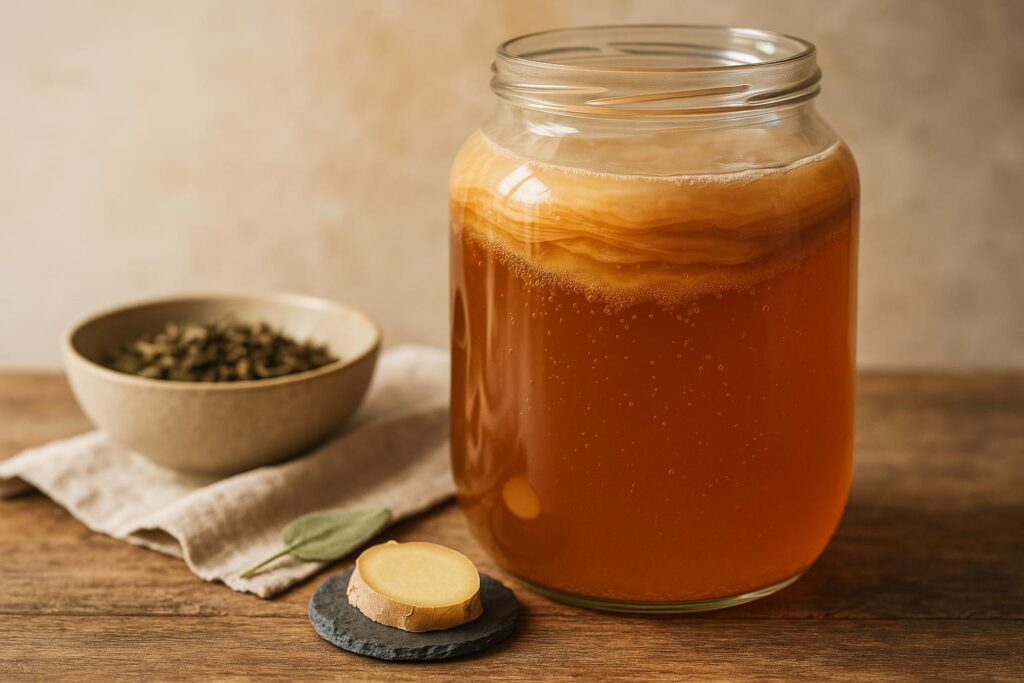
What is the alcohol content of kombucha? It's a legitimate question. Fermentation inevitably produces ethanol as a byproduct of yeast activity. In standard kombucha, the alcohol content is generally between 0.5% and 1.5% for commercially produced kombucha, and can reach 2% to 3% for homemade kombucha that has fermented for a longer period or undergoes a second fermentation.
In France, a beverage is considered alcoholic if it contains more than 1.2% alcohol. Most commercially available kombucha stays below this threshold. If you are sensitive to alcohol or are making kombucha for children, be sure to monitor the fermentation time and choose products certified as "alcohol-free" or with a very low alcohol content.
Vitamins and minerals present in kombucha
Beyond organic acids and probiotics, kombucha contains micronutrients derived from tea and produced by microorganisms during fermentation. B vitamins are among the most notable.
Vitamin B12, often mentioned, is indeed present in some kombuchas, but in varying amounts and generally insufficient to meet daily requirements. Vitamins B1 (thiamine), B2 (riboflavin), and B6 are more regularly detected. Vitamin C is also present, derived in part from the polyphenols in the tea.
The minerals present include zinc, manganese, iron, and copper, in varying trace amounts depending on the type of tea used. These quantities remain modest, and kombucha should not be considered a primary source of minerals in a daily diet.
What is flavored kombucha made of? The ingredients of the second fermentation
What is flavored kombucha made of? The second fermentation is the step that enriches the drink with flavors and increases its carbonation. After the first fermentation (7 to 14 days), the base kombucha is bottled with flavoring ingredients.
The most common ingredients for the second fermentation:
- Fresh ginger : the most popular flavoring, with recognized anti-inflammatory properties.
- Lemon and citrus fruits : provide freshness and extra vitamin C
- Red berries : raspberries, blueberries, cherries — rich in antioxidants
- Hibiscus : for an intense red color and a slightly tangy floral taste
- Lavender : for a more floral and soothing aromatic profile
- Turmeric and black pepper : for their combined anti-inflammatory properties
These ingredients ferment again in a sealed bottle for 2 to 4 days, producing additional CO2 and infusing their aromas into the beverage. The result is a more effervescent and complexly flavored kombucha. To master this technique, check out our complete guide on how to make homemade kombucha.
What is the difference between commercially produced kombucha and homemade kombucha?
What is the difference between industrially produced kombucha and artisanal kombucha? The differences are significant. Commercially available kombucha is often pasteurized for food safety and shelf-life reasons. This pasteurization destroys the vast majority of live probiotics, considerably reducing the beverage's microbiological value.
Commercially produced kombucha may also contain artificial flavorings, sweeteners, added sugar after fermentation to correct acidity, and preservatives. Read labels carefully and look for terms like "raw," "unpasteurized," or "live" to benefit from active probiotics.
Homemade kombucha, prepared with care, retains all its bioactive compounds. It's more economical and allows you to control exactly what goes into your drink. The trade-off: it requires impeccable hygiene and regular monitoring of the fermentation process. To know when to drink it, our article on when to drink kombucha will give you the best advice.
- What is kombucha made of? Four basic ingredients: tea (green or black), sugar, filtered water and SCOBY (symbiotic culture of bacteria and yeast).
- What is kombucha made of after fermentation? Organic acids (acetic, gluconic, lactic), live probiotics, B vitamins, enzymes and natural CO2.
- What is flavored kombucha made of? The same basic ingredients, enriched in a second fermentation with fruits, spices or plants (ginger, citrus, hibiscus).
- What is commercial kombucha made of? Often pasteurized with added flavorings — check for the label “raw” or “unpasteurized” to benefit from the active probiotics.
- What is the alcohol content of kombucha? Residual ethanol between 0.5% and 3% depending on the fermentation time, something to watch out for if you are sensitive to alcohol.
Frequently asked questions about What is kombucha made of?
What is kombucha made of at its base?
Kombucha is made from four essential ingredients: tea (preferably black or green), white sugar, filtered water, and a SCOBY. The latter is a live culture of bacteria and yeast that transforms sweetened tea into a slightly acidic and fizzy fermented beverage through a natural fermentation process.
What is the SCOBY in kombucha?
The SCOBY (Symbiotic Culture Of Bacteria and Yeast) is a gelatinous matrix of bacterial cellulose that houses colonies of bacteria and yeast. It orchestrates the fermentation of kombucha. It consumes sugar, produces organic acids, probiotics, and CO2. It reproduces with each brewing cycle, forming a new disc.
Does kombucha contain sugar?
Yes, kombucha contains residual sugar after fermentation, but in a much smaller quantity than initially added. Depending on the fermentation time, between 2 and 8 grams of sugar remain per 100 ml. The longer the fermentation, the less residual sugar there is, but the more acidic the drink.
Is kombucha alcoholic?
Kombucha contains residual alcohol, naturally produced by the yeast during fermentation. The level generally varies between 0.5% and 1.5% for commercial versions, and can reach 2% to 3% for homemade kombucha. Commercial versions generally remain below the legal limit of 1.2% alcohol in France.
What probiotics are found in kombucha?
Kombucha primarily contains bacteria from the genera Acetobacter, Gluconobacter , and Lactobacillus. These strains produce organic acids beneficial to gut flora. Note: pasteurized kombucha no longer contains live probiotics. Opt for raw, unpasteurized versions to benefit from these active microorganisms.
Can you make kombucha without tea?
Technically, some brewers use herbal teas instead of traditional tea. However, the tannins present in black or green tea are essential for the long-term health of the SCOBY. Herbal teas alone can gradually weaken the SCOBY. It is recommended to use at least 50% real tea in your brew to maintain a healthy SCOBY.
What is the difference between kombucha and kefir?
Kombucha is made from sweetened tea fermented by a SCOBY (Symbiotic Culture Of Bacteria and Yeast), while kefir is made from milk (or sweetened water for water kefir) fermented by kefir grains. Both are probiotic drinks, but their bases, cultures, and nutritional profiles are distinct. Kombucha is naturally lactose-free.
What is commercially available flavored kombucha made of?
Commercially available flavored kombucha is made from the classic base (tea, sugar, water, SCOBY) enriched with natural or artificial flavorings, fruit juice, plant extracts, or spices. Some brands add sugar after fermentation to correct acidity. Read labels carefully and choose products with short, natural ingredient lists.
Does kombucha contain caffeine?
Yes, kombucha contains caffeine from the tea used as a base. However, the amount is less than in a cup of tea because some of the caffeine is metabolized during fermentation. A kombucha made with black tea contains approximately 10 to 25 mg of caffeine per 240 ml, compared to 40 to 70 mg in an equivalent cup of black tea.
What is the nutritional composition of kombucha?
A standard kombucha (100 ml) contains approximately: 20 to 40 kcal, 2 to 8 g of residual sugars, traces of B vitamins (B1, B2, B6, B12), vitamin C, organic acids (acetic, gluconic, lactic), antioxidant polyphenols, and live probiotics (in unpasteurized versions). These values vary depending on the recipe and fermentation time.
Is kombucha gluten-free?
Yes, kombucha is naturally gluten-free in its basic composition. The tea, sugar, water, and SCOBY do not contain gluten. However, if flavoring ingredients containing gluten are added during the secondary fermentation, the beverage could be contaminated. Always check the label of commercial versions if you have celiac disease or are gluten sensitive.
How long does it take to make kombucha?
The first fermentation lasts between 7 and 14 days at room temperature (22-28°C). A second fermentation in the bottle, to add aroma and effervescence, takes an additional 2 to 4 days. In total, allow approximately 10 to 18 days to obtain homemade kombucha ready to drink. The exact time depends on the temperature, the SCOBY, and the desired flavor.
Key points to remember about the composition of kombucha
What is kombucha made of? The answer lies in four simple ingredients—tea, sugar, water, and a SCOBY—but it conceals a remarkably rich biochemistry. Fermentation transforms these basic elements into a living beverage, packed with organic acids, probiotics, vitamins, and antioxidants with documented nutritional properties.
Whether you choose to make it yourself or buy it in a store, understanding what kombucha is made of allows you to make informed choices. Opt for raw and unpasteurized versions to benefit from the active probiotics, read the labels to avoid unnecessary additives, and adjust the fermentation time to your taste and acidity tolerance. This ancient beverage, consumed for over 2,000 years, still has much to offer those who take the time to understand it.
Studies and scientific sources
- Jayabalan R. et al. (2014) — A Review on Kombucha Tea: Microbiology, Composition, Fermentation, Beneficial Effects, Toxicity, and Tea Fungus — PubMed
- Villarreal-Soto SA et al. (2018) — Understanding Kombucha Tea Fermentation: A Review — PubMed
- Harvard Health Publishing — Fermented foods for better gut health
- National Center for Complementary and Integrative Health — Probiotics: What You Need To Know
- ANSES — Fermented foods and their impact on digestive health
This article is provided for informational purposes only and does not constitute medical advice. Consult a qualified healthcare professional before use.