Microbiota dietary supplement: 7 proven facts
Medical Disclaimer: The information in this article is for educational purposes only. It is not a substitute for professional medical advice. Consult your doctor before starting any supplementation.
Microbiome dietary supplements : choosing the right product can transform your digestion, immunity, and daily energy. According to a meta-analysis published on PubMed, probiotics reduce the duration of infectious diarrhea by an average of 25%. Here's what the science really says.
- Rebalances the gut flora disrupted by antibiotics
- Strengthens the intestinal barrier and reduces permeability
- Supports the immune system in a measurable way
- Improves bowel movements and reduces chronic bloating
- May positively influence the gut-brain axis
1. What exactly is the gut microbiota?
The gut microbiota refers to all the microorganisms living in your digestive tract. It comprises approximately 100 trillion bacteria, viruses, and fungi. This ecosystem can weigh up to 2 kilograms in an adult.
These microorganisms perform vital functions. They synthesize vitamins, break down dietary fiber, and regulate inflammation. An imbalance, called dysbiosis, is associated with many chronic diseases.
A gut microbiota supplement is specifically designed to correct this dysbiosis. It provides beneficial bacteria in sufficient quantities to temporarily colonize the gut and restore balance. To understand the gut flora and probiotics, it is helpful to know the basic mechanisms.
2. Probiotics, prebiotics, postbiotics: the key differences
These three terms refer to distinct components of a dietary microbiota supplement. Confusing them leads to ineffective purchases. Here is the precise scientific distinction.
| Term | Definition | Examples | Main role |
|---|---|---|---|
| Probiotics | Beneficial living microorganisms | Lactobacillus, Bifidobacterium | Temporary colonization of the intestine |
| Prebiotics | Indigestible dietary fibers | Inulin, FOS, GOS | Feeding the good bacteria |
| Postbiotics | Metabolites produced by bacteria | Short-chain fatty acids | Direct effects on the intestinal mucosa |
| Symbiotics | Probiotic + prebiotic combination | Multicomponent formulas | Enhanced synergy of action |
A symbiotic dietary microbiota supplement is generally more effective than a product containing only probiotics. The prebiotic-probiotic combination improves the survival of the strains in the digestive tract.

3. The 5 most effective strains for the microbiota
Not all strains are created equal. The effects of a dietary microbiota supplement depend directly on the strains selected. Here are those with the strongest level of clinical evidence.
- Lactobacillus rhamnosus GG : the most studied strain in the world, effective against diarrhea and atopic eczema
- Bifidobacterium longum : reduces stress and improves sleep quality according to several controlled trials
- Lactobacillus acidophilus NCFM : relieves irritable bowel syndrome and reduces bloating
- Saccharomyces boulardii : a probiotic yeast particularly resistant to antibiotics
- Bifidobacterium infantis 35624 : reduces intestinal inflammation and improves transit
According to theEuropean Food Safety Authority (EFSA), health claims for probiotics must be supported by strain-specific clinical data. Always check the exact strain on the label of your probiotic supplement.
4. When should I take a gut microbiota dietary supplement?
The timing of intake directly influences the product's effectiveness. A dietary microbiota supplement must survive gastric acidity to reach the living intestine. Several situations justify targeted supplementation.
- During a course of antibiotics: take the probiotic 2 hours after the antibiotic to avoid inactivation
- After gastroenteritis: the gut flora is depleted; a 4-week course of treatment accelerates recovery
- In cases of irritable bowel syndrome: daily intake for 8 to 12 weeks is recommended
- Before a trip: start 1 week before departure to prevent traveler's diarrhea
- During periods of intense stress: the gut-brain axis is directly affected by cortisol
- After a period of dietary imbalance: alcohol, ultra-processed foods, prolonged fasting
ANSESrecommends consulting a healthcare professional before any prolonged supplementation with microbiota dietary supplements, particularly in immunocompromised individuals.
5. Dosage and CFU: how to read a probiotic label
Colony Forming Units (CFUs) measure the number of live bacteria in a dose. An effective dietary microbiota supplement must contain a minimum viable count to produce a therapeutic effect.
- 1 to 5 billion CFU: maintenance dose for an already balanced gut flora
- 10 to 25 billion CFU: standard therapeutic dose recommended by most studies
- 50 to 100 billion CFU: high doses for specific cases (post-antibiotics, IBD)
- Above 100 billion CFU: reserved for supervised medical protocols
Check that the UFC guarantee is indicated on the expiration date, not the manufacturing date. Many products lose 50 to 90% of their live bacteria before you consume them. A good microbiota supplement guarantees viability until the end of its expiration date.
6. Fermented foods vs. supplements: which to choose?
Fermented foods are a natural source of probiotics. Kefir, yogurt, sauerkraut, and miso provide beneficial bacteria. But are they sufficient to replace a dietary gut microbiota supplement?
The answer depends on your situation. For general maintenance, fermented foods may be sufficient. To correct established dysbiosis, a targeted, dosed microbiota supplement is more appropriate. You can discover the best natural probiotic foods to complement your dietary approach.
- Kefir contains 30 to 50 different strains, but at varying concentrations
- A standard yogurt provides approximately 100 million CFU per serving
- A high-quality dietary microbiota supplement guarantees 10 to 50 billion CFU per dose
- Fermented foods also provide prebiotics and associated nutrients
- Combining both approaches is often the most effective
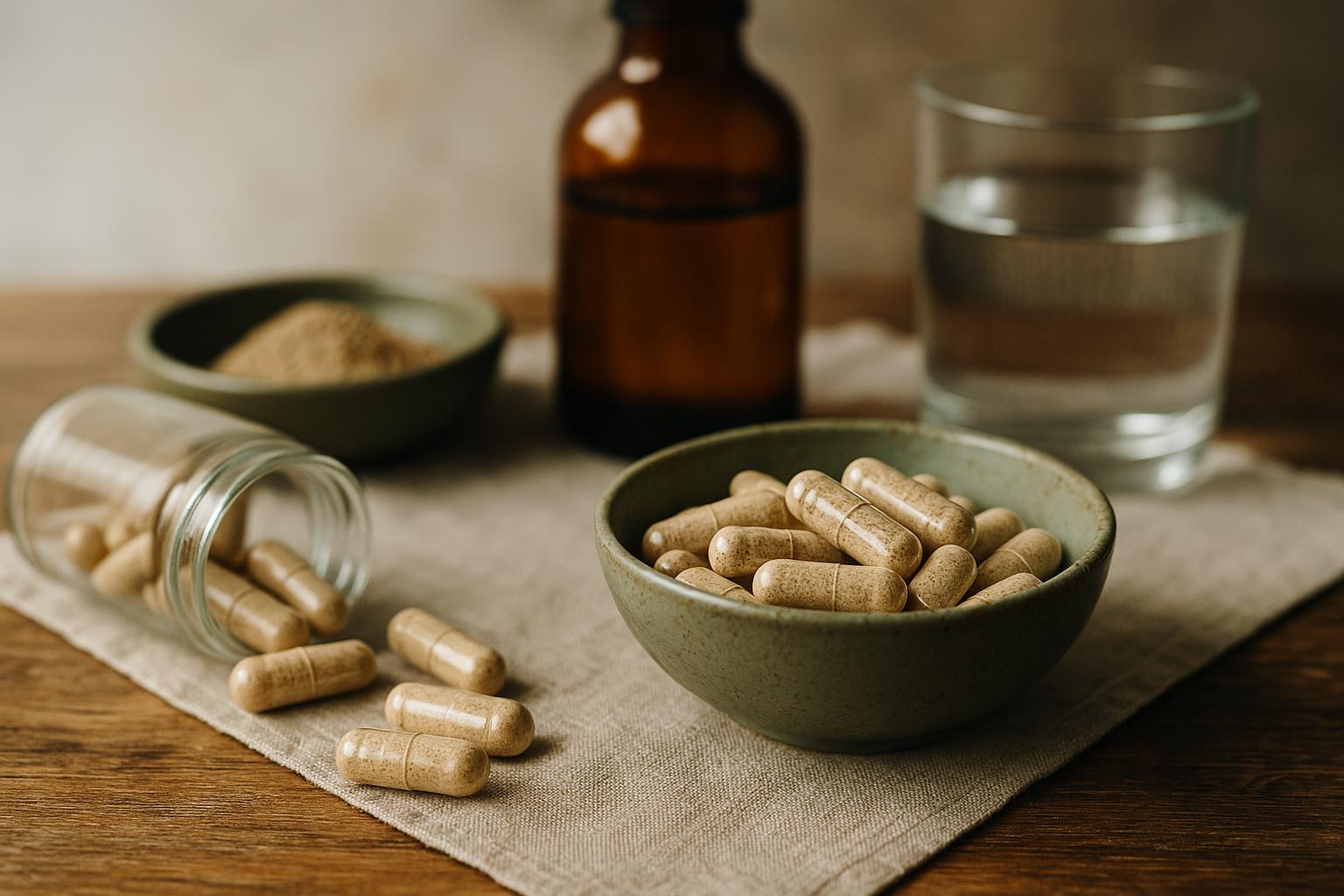
7. Dietary supplements and gut microbiota and digestion: the evidence
Digestion is the area where the scientific evidence is strongest. A well-formulated dietary microbiota supplement acts on several digestive mechanisms simultaneously.
Clinical trials show measurable improvements. A 2023 meta-analysis of 82 randomized controlled trials confirms the effectiveness of probiotics on irritable bowel syndrome. To learn more about this topic, see our analysis of probiotics and their effects on digestion.
- Reduction in bloating: improvement in 60 to 70% of patients after 4 weeks
- Regular bowel movements: accelerated transit in constipated individuals
- Intestinal permeability: strengthening of the tight junction between enterocytes
- Production of digestive enzymes: some strains stimulate the production of lactase
8. The impact of the microbiota on immunity
Approximately 70% of immune cells reside in the gut. A healthy gut microbiota, therefore, directly influences the body's defenses. This connection is one of the most important discoveries in immunology this decade.
Gut bacteria communicate with immune cells via precise molecular signals. They regulate the production of pro-inflammatory and anti-inflammatory cytokines. A dietary gut microbiota rich in Lactobacillus and Bifidobacterium promotes a balanced immune response.
According to theWorld Health Organization, probiotics are recognized as immune support agents in certain vulnerable populations, including infants and the elderly.
9. Gut-brain axis: the surprising role of the microbiota
The vagus nerve directly connects the gut to the brain. The gut microbiota produces 95% of the body's serotonin. Therefore, a dietary microbiota supplement can influence mood, anxiety, and even memory.
Studies published on PubMed show that certain strains of Lactobacillus reduce symptoms of mild to moderate anxiety. This field, called psychobiology, is rapidly expanding. A dietary microbiota supplement targeting the gut-brain axis represents a promising therapeutic avenue.
- Bifidobacterium longum NCC3001 reduces anxiety scores in clinical studies
- Lactobacillus helveticus R0052 improves sleep quality
- The production of GABA by certain bacteria has a measurable calming effect
10. How to choose a quality microbiota dietary supplement
The probiotic market is saturated with ineffective products. Here are the objective criteria for identifying a truly effective gut microbiota dietary supplement.
- Identified strains: the full name must be included (genus, species, strain number)
- UFC guaranteed at expiration: not just at the time of manufacture
- Gastric protection: gastro-resistant capsules or advanced freeze-drying
- Clinical studies: at least one published study on the strains used
- No unnecessary excipients: avoid products with titanium dioxide or magnesium stearate
- Proper storage: some products require refrigeration.
- Third-party certification: NSF, USP or European equivalent
A high-quality dietary microbiota supplement combines several complementary strains with prebiotics. This synergy significantly improves bacterial survival rates. To learn more about probiotic supplements, you can consult our guide on probiotic dietary supplements.
11. Side effects and precautions for use
A dietary microbiota supplement is generally well tolerated. Mild side effects may appear at the beginning of the course. These usually disappear after 3 to 7 days.
- Transient bloating: common during the first 2 weeks, a sign of bacterial reactivation
- Intestinal gas: normal and temporary, reduce the dose if bothersome
- Mild abdominal pain: disappears as the microbiota adapts
- Absolute contraindications: severe immunosuppression, central venous catheter, recent intestinal surgery
HarvardHealth Publishing recommends particular caution in immunocompromised patients. In these cases, a dietary microbiota supplement should only be taken under direct medical supervision.
12. Duration of a treatment: how long does it take to see results?
The optimal duration of a course of gut microbiota supplements depends on the objective. Clinical studies provide precise guidelines according to the targeted pathologies.
- Prevention of traveler's diarrhea: 1 week before departure + duration of stay
- Post-antibiotics: minimum 4 weeks after the end of treatment
- Irritable bowel syndrome: 8 to 12 weeks for significant effects
- General maintenance: treatments of 1 to 3 months, 2 to 3 times a year
- Winter immune support: October to March, ongoing
13. Diet and microbiota: the essential foundation
No amount of gut microbiota supplements can compensate for an unbalanced diet. Dietary fiber is the fuel for beneficial bacteria. Without it, even the best strains cannot survive.
Consume at least 25 to 30 grams of fiber per day. Vary your sources: legumes, whole grains, fruits, and vegetables. Lacto-fermented vegetables are also a valuable source of live bacteria and natural prebiotics.
Ultra-processed foods, alcohol, and artificial sweeteners directly disrupt the gut microbiota. A gut microbiota supplement will always be more effective within the context of a Mediterranean diet rich in plant-based foods.
Key takeaways
A high-quality gut microbiota supplement can transform your digestive, immune, and even mental health when chosen and used correctly. Opt for products with identified strains, guaranteed CFUs at expiration, and proven gastric protection. A gut microbiota supplement is not a substitute for a balanced diet, but a powerful tool for correcting established dysbiosis.
Concrete action: Start with an 8-week course with a product containing at least Lactobacillus rhamnosus GG and Bifidobacterium longum, at a dose of 10 billion CFU per day, taken in the morning on an empty stomach or with the first meal.
- An effective dietary microbiota supplement contains identified live strains with a minimum of 10 billion CFU guaranteed at expiration.
- The best gut microbiota supplements combine probiotics and prebiotics to maximize bacterial survival in the gut.
- A dietary microbiota supplement acts on digestion, immunity and the gut-brain axis according to clinically proven mechanisms.
- Choosing a suitable dietary microbiota supplement for your situation (post-antibiotics, IBS, immune support) is essential to achieving measurable results.
- A dietary microbiota supplement is contraindicated in immunocompromised individuals without prior medical advice.
Frequently asked questions about gut microbiota dietary supplements
What is a dietary microbiota supplement?
A gut microbiota supplement is a product containing live microorganisms (probiotics), prebiotic fibers, or both. Its purpose is to rebalance the gut flora, strengthen the digestive barrier, and support the immune system. It is available in capsule, sachet, tablet, or liquid form.
When should you take a gut microbiota dietary supplement?
The main indications are: during and after a course of antibiotics, in cases of irritable bowel syndrome, after gastroenteritis, before travel where there is a risk of diarrhea, and during periods of intense stress. A preventative course in autumn and winter can also effectively support the immune system.
How long does a course of gut microbiota supplements last?
The duration varies depending on the objective. For post-antibiotic diarrhea, a minimum of 4 weeks is recommended. For irritable bowel syndrome, 8 to 12 weeks are necessary for significant effects. A maintenance course generally lasts 1 to 3 months, renewable 2 to 3 times a year.
How many CFU should an effective dietary microbiota supplement contain?
A therapeutic dietary microbiota supplement must contain a minimum of 10 billion CFU (Colony Forming Units) per dose. Maintenance doses can range from 1 to 5 billion. Verify that the guarantee is indicated on the expiration date and not the manufacturing date, as bacteria gradually die off.
Are the side effects of a gut microbiota dietary supplement dangerous?
Side effects are generally mild and temporary: bloating, gas, and slight abdominal pain during the first 7 days. They disappear as the gut flora adjusts. If they persist beyond 2 weeks, consult a doctor. Serious contraindications include immunocompromised individuals.
Can you take a gut microbiota dietary supplement while taking antibiotics?
Yes, but with a 2-hour interval between doses. Antibiotics kill bacteria indiscriminately, including probiotics. By spacing out the doses, you preserve some of the beneficial strains. Continue supplementation for at least 4 weeks after finishing the antibiotic course.
Do fermented foods replace a dietary microbiota supplement?
Not in all cases. Fermented foods like kefir or sauerkraut provide natural probiotics in varying concentrations. For established dysbiosis or a diagnosed digestive disorder, a targeted, dosed dietary microbiota supplement offers superior and reproducible efficacy thanks to identified and guaranteed strains.
What is the best strain in a dietary microbiota supplement?
There is no universally superior strain. Lactobacillus rhamnosus GG is the most studied for diarrhea and eczema. Bifidobacterium longum is preferred for stress and sleep. Saccharomyces boulardii is ideal during antibiotic treatment. The choice always depends on your specific health goal.
Does a dietary microbiota supplement help with weight loss?
Some studies suggest a link between gut microbiota and body weight. Strains like Lactobacillus gasseri have shown a slight reduction in abdominal fat in clinical trials. However, a gut microbiota supplement alone is not a weight-loss tool. It can support a balanced diet and improve fat metabolism.
How to maintain a healthy gut microbiota through dietary supplements?
Storage depends on the formulation. Some products require refrigeration between 2 and 8 degrees Celsius. Others, freeze-dried and encapsulated, are stable at room temperature. Always follow the manufacturer's instructions. Heat, humidity, and light are the main enemies of bacterial viability.
Is a dietary microbiota supplement suitable for children?
Yes, some formulations are specifically designed for children. Lactobacillus rhamnosus GG and Bifidobacterium infantis are well-documented in pediatrics. Dosages are age-appropriate. Always consult a pediatrician before giving a gut microbiota supplement to a child under 3 years old.
Are there any absolute contraindications to using a microbiota dietary supplement?
Yes. People with severe immunosuppression (chemotherapy, advanced HIV, transplant recipients), a central venous catheter, or recent bowel surgery should not take probiotic supplements without strict medical supervision. Rare cases of probiotic-induced sepsis have been reported in these vulnerable populations.
Sources and studies
- PubMed — Database of clinical studies on probiotics and the gut microbiota
- World Health Organization — Recommendations on probiotics and food safety
- Harvard Health Publishing — The gut microbiome: a key to your overall health
- EFSA — Scientific evaluation of health claims for probiotics in Europe
- ANSES — Opinion on the safety of food supplements containing probiotics
This article is provided for informational purposes only and does not constitute medical advice. Consult a qualified healthcare professional before use.