Soy miso: benefits, types and how to use it
⚠️ Medical advice: The information in this article is for educational purposes only. It is not a substitute for professional medical advice. Consult your doctor before making any changes to your diet, especially if you have kidney disease, high blood pressure, or a soy allergy.
Soy miso is a traditional Japanese fermented paste made by fermenting soybeans with salt and a fungus called koji, known for its richness in probiotics, essential amino acids, and antioxidants. A study published in the Journal of Nutritional Science and Vitaminology () [1] indicates that regular consumption of soy miso is associated with a reduced risk of cardiovascular disease in Asian populations.
- Source of live probiotics that promote a balanced gut microbiota
- Rich in complete proteins thanks to the amino acids in fermented soy.
- Provides vitamin B, particularly B2, B6 and B12 in certain varieties
- Contains isoflavones with antioxidant and anti-inflammatory properties.
- Low glycemic index compatible with a balanced diet
What exactly is soy miso?
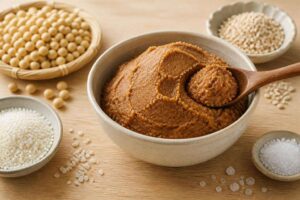
Soy miso is a fermented paste originating in Japan and consumed for over 2,500 years. It is made by mixing cooked soybeans, sea salt, and koji, then allowing the mixture to ferment for several months to several years. The result is a dense, salty, and umami-rich paste used as a condiment or broth base.
Fermentation transforms soy proteins into free amino acids, thereby improving their bioavailability. This process also produces digestive enzymes, lactic acid bacteria, and bioactive compounds absent from raw soy. According to ANSES( 2021[2], fermented soy-based foods have a distinct nutritional profile compared to unfermented soy products.
The 5 types of soy miso you should know
There are several varieties of soy miso, classified according to their color, curing time, and ingredients. Each type has a specific taste and nutritional profile.
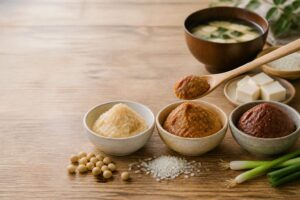
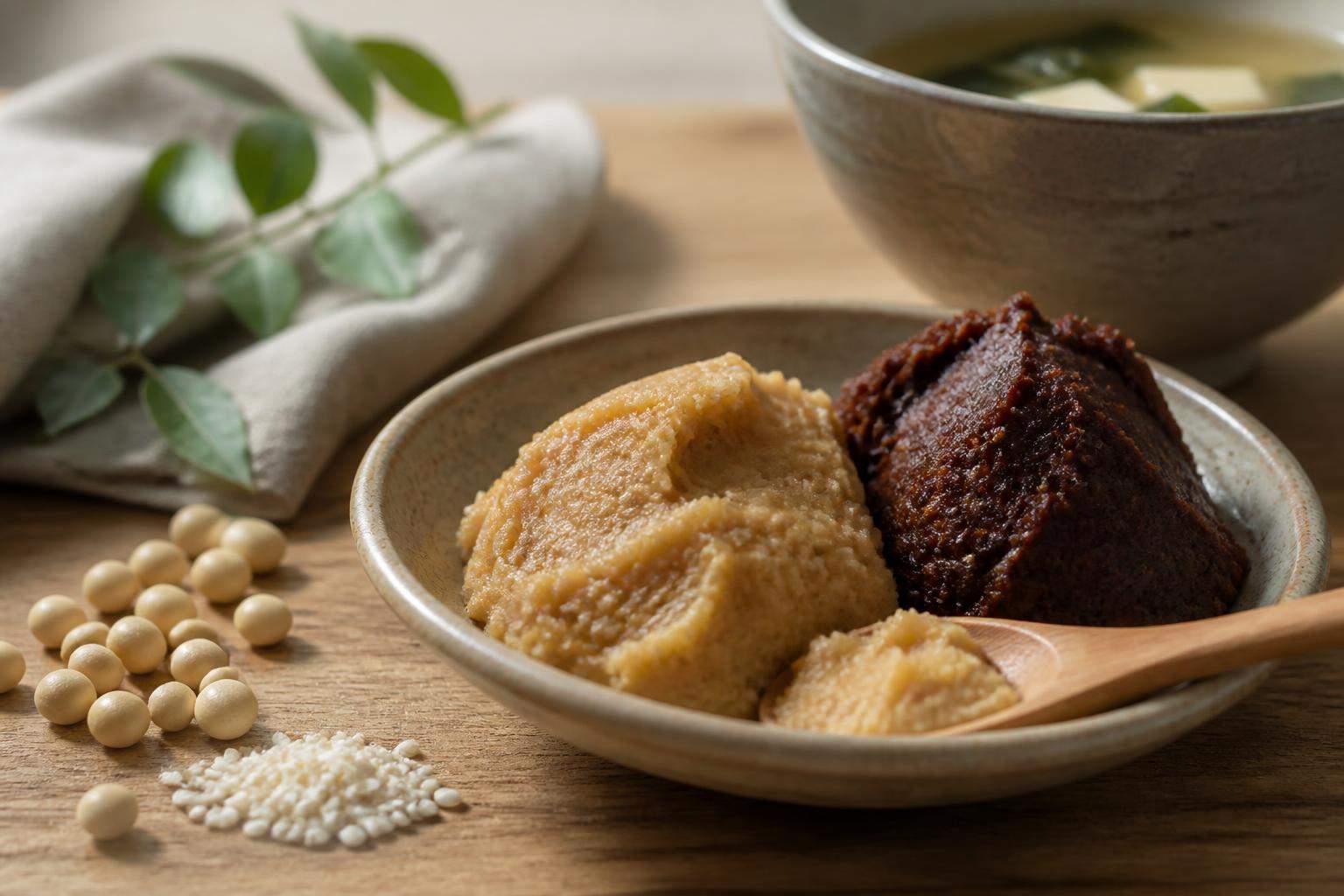
- Shiro miso (white miso) : fermented for 1 to 3 months, mild and slightly sweet, ideal for salad dressings
- Shinshu miso (yellow miso) : fermented for 3 to 12 months, balanced in flavor, the most consumed in Japan
- Also known as miso (red miso) : fermented for 1 to 3 years, intense and salty, rich in antioxidants
- Mame miso (pure soybean miso) : made only with soybeans and salt, without grains, aged for up to 2 years
- Mugi miso (barley miso) : a mixture of soybeans and barley, with a mild and earthy flavor, popular in southern Japan
Mame miso, or pure soybean miso, is the most concentrated form in protein and isoflavones. It also has the highest salt content, which should be monitored by those with high blood pressure.
Nutritional composition of soy miso per 100g
Soy miso offers a dense nutritional profile despite the small portions used in cooking: Here is a comparison of the main types:
| Type of soy miso | Protein (g) | Sodium (mg) | Calories (kcal) | Maturation period |
|---|---|---|---|---|
| Shiro miso (white) | 9 | 2 200 | 198 | 1 to 3 months |
| Shinshu miso (yellow) | 11 | 3 800 | 186 | 3 to 12 months |
| Aka miso (red) | 13 | 4 400 | 210 | 1 to 3 years |
| Mame miso (pure soy) | 17 | 4 600 | 217 | 2 to 3 years |
7 scientifically proven benefits of soy miso
Soy miso contains concentrated bioactive compounds whose effects have been documented in several clinical studies. These benefits are linked to fermentation, which amplifies the bioavailability of soy nutrients.
- Supporting the gut microbiota: Soy miso contains live lactic acid bacteria that enrich the gut flora. The benefits of probiotics on the gut flora are well documented.
- Cardiovascular risk reduction: a meta-analysis published in the European Journal of Clinical Nutrition () [3] associates daily consumption of soy miso with a 13% reduction in the risk of ischemic stroke.
- Antioxidant protection: Isoflavones from fermented soy, including genistein and daidzein, neutralize free radicals and reduce cellular oxidative stress.
- Immune support: Koji polysaccharides stimulate NK according to a study in the Journal of Agricultural and Food Chemistry ().
- Improved digestion: the enzymes produced during fermentation facilitate the breakdown of proteins and complex carbohydrates in the intestine.
- Vitamin K2 content: Soy miso contains menaquinone-7 (MK-7), which is involved in bone health and blood clotting.
- Potential anti-cancer effect: Japanese epidemiological studies suggest a correlation between regular consumption of soy miso and a reduced incidence of certain digestive cancers, although causality remains to be confirmed.
Soy miso and probiotics: what the research says
Unpasteurized soy miso contains live lactic acid bacteria, primarily Lactobacillus and Pediococcus, which survive fermentation and can temporarily colonize the colon. These microorganisms contribute to the balance of the gut microbiota and the production of short-chain fatty acids (SCFAs). The fermentation of lacto-fermented vegetables follows a similar process.
Many readers report that incorporating soy miso into their daily diet improves their digestive comfort within a few weeks. This observation is consistent with data published by the NCCIH [4] on fermented foods.
Caution: Pasteurization destroys live bacteria. Choose unpasteurized soy miso, sold refrigerated, to benefit from its probiotic properties. Powdered miso or instant soup packets generally no longer contain active bacteria.
How to use soy miso in cooking?
Soy miso is easily incorporated into many culinary preparations. Its intense umami flavor allows you to reduce the amount of salt needed in recipes. Here are the most common uses:
- Miso soup: Dissolve 1 teaspoon of soy miso in hot broth (dashi or vegetable) with tofu and wakame seaweed
- Marinade for meats and fish: mix miso, soy sauce, mirin and grated ginger to marinate salmon, chicken or eggplant
- Umami vinaigrette: emulsify soy miso, rice vinegar, sesame oil and garlic to season salads
- Sauce for roasted vegetables: brush on carrots, zucchini or mushrooms before baking.
- Ramen base: enrich a ramen broth with a spoonful of red soybean miso for added depth of flavor.
- Miso butter: Mix white soybean miso and unsalted butter to drizzle over pasta or grilled corn.
Golden rule: never add soy miso to boiling liquid. Add it off the heat or at less than 70°C to preserve its enzymes and live bacteria.
What dose of soy miso should I consume per day?
The recommended dose of soy miso varies depending on individual goals and health status. For the general population, 1 to 2 teaspoons per day (10 to 20 g) is sufficient to benefit from its nutritional properties without exceeding the recommended sodium intake.
- For digestion: 1 teaspoon (10 g) per meal, in a soup or sauce
- For protein: 2 teaspoons provide approximately 2 to 3g of additional protein
- If you have high blood pressure: limit to a maximum of 1 teaspoon per day, due to the sodium content.
- For children: half a teaspoon in soup, from 12 months old
TheWHO recommends not exceeding 2 g of sodium per day [5]. One teaspoon of red soy miso provides approximately 440 mg of sodium, or 22% of the maximum daily intake.
Miso soy and cardiovascular health: the Japanese paradox
Japan has one of the lowest cardiovascular mortality rates in the world, despite high salt consumption through soy miso. This phenomenon, known as the "Japanese paradox," is partly explained by the bioactive compounds in fermented soy that counteract the hypertensive effect of sodium. A cohort study of 40,000 Japanese adults, published in the British Medical Journal () [3], showed that regular consumers of soy miso had a 13% lower risk of stroke compared to non-consumers.
The isoflavones in soy miso, particularly genistein, exert a vasodilatory effect on the arteries and reduce LDL oxidation . These mechanisms contribute to the cardiovascular protection observed in Japanese epidemiological studies.
Soy miso and isoflavones: hormonal impact and menopause
Soy miso contains isoflavones, phytoestrogens that bind to estrogen receptors with moderate affinity. In menopausal women, several studies suggest that regular consumption of soy miso may alleviate hot flashes and improve bone density.
- Fermenting soybeans increases the bioavailability of isoflavones compared to unfermented soybeans
- Soy miso mainly contains equol, a form of isoflavone that is better absorbed by the body
- Women who produce equol (approximately 30 to 50% of the Western population) benefit more from soy isoflavones
- EFSAconsiders soy isoflavones safe for the general population at usual dietary doses
If you have hormone-dependent cancer or a family history of cancer, consult your doctor before increasing your consumption of soy miso.
How to choose a good soy miso?
The quality of soy miso varies considerably depending on the production method. Artisanal, unpasteurized, and naturally fermented soy miso has a far superior nutritional profile to industrial versions. Here are the criteria to check on the label:
- Ingredients: soy, salt, koji — short list with no additives or preservatives
- Unpasteurized: the label "unpasteurized" or "live" guarantees the presence of probiotics.
- Organic: Organic soy guarantees the absence of GMOs and pesticide residues
- Storage: Sold refrigerated or keep refrigerated after opening
- Colour: tailored to your needs — white for softness, red for intensity and antioxidants
Avoid instant miso soup mixes in packets: they generally contain monosodium glutamate, artificial flavorings, and pasteurized soy miso without active bacteria. Natural probiotic foods offer a more complete alternative.
Precautions and contraindications of soy miso
Soy miso is generally well tolerated, but some populations should limit their consumption or consult a doctor before consuming it regularly.
- Soy allergy: Soy miso is contraindicated in cases of confirmed soy allergy
- High blood pressure: the high sodium content requires monitoring of the daily dose
- Kidney failure: the sodium and protein in soy miso can worsen kidney function
- Hypothyroidism: Soy isoflavones may interfere with the absorption of levothyroxine — space out the dose by 4 hours
- Pregnancy: Moderate consumption is generally considered safe, but avoid large amounts of isoflavones.
Soy miso vs other fermented foods: a comparison
Soy miso stands out from other fermented foods due to its high concentration of protein and isoflavones. Here's how it compares to its competitors:
- Soy miso vs kimchi: kimchi is richer in fiber and vitamin C, but less concentrated in protein and isoflavones.
- Soy miso vs. kefir: kefir provides more calcium and diverse lactic acid bacteria, but does not contain isoflavones.
- Soy miso vs. tempeh: tempeh is richer in protein (19g/100g) and vitamin B12, but its flavor is less versatile in cooking.
- Miso soy sauce vs. soy sauce: soy sauce is thinner and saltier, but less rich in probiotics and nutrients
Storing soy miso: duration and method
Soy miso keeps very well thanks to its high salt content, which acts as a natural preservative. Unpasteurized soy miso, once opened, can be kept in the refrigerator for up to 12 months without significant loss of quality. Here are some best practices:
- Store in an airtight container in the refrigerator after opening
- Use a clean, dry spoon to avoid contamination
- A slight change in surface color is normal — it's oxidation, not mold
- Unopened soy miso can be stored for 1 to 2 years at room temperature if unpasteurized
- Soy miso is a Japanese fermented paste rich in probiotics, complete proteins and isoflavones with antioxidant properties.
- There are several types of soy miso — white, yellow, red, pure soy — each with a distinct taste and nutritional profile depending on the curing time.
- Regular consumption of soy miso is associated with a reduction in cardiovascular risk and a better balance of the gut microbiota.
- Choose an unpasteurized and organic soy miso to benefit from its live bacteria and avoid industrial additives
- Due to its sodium content, limit soy miso to 1-2 teaspoons per day, especially in cases of hypertension or kidney failure.
Frequently asked questions about soy miso
Is soy miso good for your health?
Yes, soy miso is known for its many benefits: it supports the gut microbiota thanks to its probiotics, provides complete proteins from fermented soy, and supplies antioxidants in the form of isoflavones. Regular consumption is associated with improved cardiovascular health in Japanese epidemiological studies.
What is the difference between white and red soy miso?
White soybean miso (shiro miso) is fermented for 1 to 3 months; it is mild and slightly sweet. Red soybean miso (also known as miso) is fermented for 1 to 3 years; it is more intense, saltier, and richer in antioxidants. Red miso is suitable for stews, while white miso is better for light sauces and salad dressings.
Does soy miso contain gluten?
It depends on the type. Mame miso (pure soybean miso) is naturally gluten-free because it contains only soybeans and salt. However, mugi miso (barley miso) and some shinshu miso contain gluten. Always check the ingredient list if you have celiac disease or are gluten intolerant.
Can you eat soy miso every day?
Yes, provided you respect the recommended doses. One to two teaspoons of soy miso per day allows you to benefit from its properties without exceeding the recommended sodium intake. The Japanese population has consumed it daily for centuries without any documented adverse effects at these doses.
Is soy miso suitable for vegetarians and vegans?
Yes, pure soybean miso (mame miso) is 100% vegan. Some varieties may contain fish dashi in ready-made preparations—check the ingredients. Soybean miso is an excellent source of protein for plant-based diets, providing all the essential amino acids.
How to cook with soy miso without destroying its probiotics?
Never add soy miso directly to boiling liquid. Turn off the heat or let the broth cool to below 70°C before dissolving it. For marinades cooked in the oven, probiotics are destroyed by heat, but other nutrients (proteins, isoflavones) remain intact.
Does soy miso cause weight gain?
No, soy miso is not a high-calorie food in the quantities used in cooking. One teaspoon (10 g) provides approximately 20 kcal. Its high protein and umami content promotes satiety and can even help reduce overall salt consumption in recipes.
What is the sodium content of soy miso?
The sodium content of soy miso varies depending on the type: from 2,200 mg/100 g for white miso to over 4,600 mg/100 g for pure soy miso. One teaspoon (10 g) provides between 220 and 460 mg of sodium. The WHO recommends not exceeding 2,000 mg of sodium per day.
Is soy miso suitable for people suffering from hypertension?
Use with caution. Soy miso is high in sodium, which can worsen hypertension if consumed in excess. However, Japanese studies suggest that the bioactive compounds in fermented soybeans may partially counteract the blood pressure-raising effect of salt. Limit yourself to one teaspoon per day and consult your doctor.
Does soy miso contain vitamin B12?
Some varieties of fermented soybean miso contain small amounts of vitamin B12 produced by bacteria during fermentation. However, the levels vary and are insufficient to meet daily requirements. Soybean miso should not be considered a reliable source of B12 for vegans.
How to recognize a quality soy miso in a store?
High-quality soy miso will be labeled "unpasteurized," sold refrigerated, and its ingredient list will be limited to soybeans, salt, and koji. Opt for organic versions to avoid GMOs and pesticides. Avoid products containing monosodium glutamate, artificial flavorings, or ethyl alcohol.
Where can I buy unpasteurized soy miso in France?
Unpasteurized soy miso can be found in organic stores (Biocoop, La Vie Claire), in specialty Asian grocery stores, and on online marketplaces selling artisanal Japanese products. Supermarkets generally offer pasteurized soy miso, which is less rich in active probiotics.
Is soy miso suitable for children?
Yes, in small quantities. Half a teaspoon of soy miso in soup is suitable for children from 12 months old. Avoid giving it in large quantities to young children due to its sodium content. Choose a white soy miso, which is milder and less salty, for recipes intended for children.
Key takeaways
Soy miso is much more than just a Japanese condiment. It's a complete fermented food, rich in probiotics, protein, isoflavones, and B vitamins, whose benefits for digestive, cardiovascular, and immune health have been documented by decades of research. Soy miso deserves a regular place in your diet, whatever your preferred cuisine.
To begin, add a teaspoon of unpasteurized soy miso to your evening soup or your lunchtime salad dressing. Choose an organic soy miso, sold refrigerated, and remember to add it off the heat to preserve its live bacteria. It's the simplest way to enrich your gut microbiota and your meal at the same time.
Sources and studies
- Fermented soy products and their potential health benefits — Journal of Nutritional Science and Vitaminology,
- Fermented foods — nutritional assessment — ANSES,
- Miso soup consumption and risk of cardiovascular disease in Japan — British Medical Journal / European Journal of Clinical Nutrition,
- Probiotics: What You Need To Know — NCCIH,
- Salt reduction — Fact sheet — WHO,
This article is provided for informational purposes only and does not constitute medical advice. Consult a qualified healthcare professional before use.