Miso paste: benefits, types and how to use it
⚠️ Medical advice : The information in this article is for educational purposes only. It is not a substitute for professional medical or dietitian advice. Consult a healthcare professional before making any changes to your diet, especially if you have a medical condition or are taking medication.
Miso paste is a fermented Japanese condiment made from soybeans, salt, and a fungus called koji, which ferments for anywhere from a few weeks to several years. According to a study published in the Journal of Nutritional Science and Vitaminology () [1], regular consumption of miso is associated with a significant reduction in the risk of cardiovascular disease in the Japanese population. Here are 5 key points to know:
- Miso paste contains probiotics resulting from fermentation.
- It is rich in essential amino acids, particularly thanks to soy protein.
- It provides an intense umami flavor with few calories.
- There are several types of miso: white (shiro), red (aka) and mixed (awase).
- It can be used in soups, marinades, sauces, vinaigrettes and many other preparations.
What exactly is miso paste?
Miso paste is a condiment of Japanese origin made by fermenting soybeans with salt and koji. This process transforms the proteins and carbohydrates in soybeans into free amino acids, organic acids, and complex aromatic compounds. The result is a dense, salty, and intensely umami paste that has been used in Japanese cuisine for over 1,300 years.
The term "miso" (味噌) literally means "fermented bean" in Japanese. Miso paste is produced in almost every region of Japan, with local variations that differ in fermentation time, the type of grain added (rice, barley, wheat), and the proportion of salt. Some versions are fermented for only three weeks; others are aged for up to three years.
Many readers tell us that miso paste surprises them with its aromatic complexity: at once salty, slightly sweet, earthy, and sometimes nutty. This sensory richness is directly linked to the duration and conditions of fermentation.
3 main types of miso paste you should know
Each type of miso paste has a distinct flavor profile and specific culinary uses. Here are the three main categories:
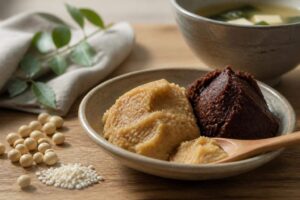
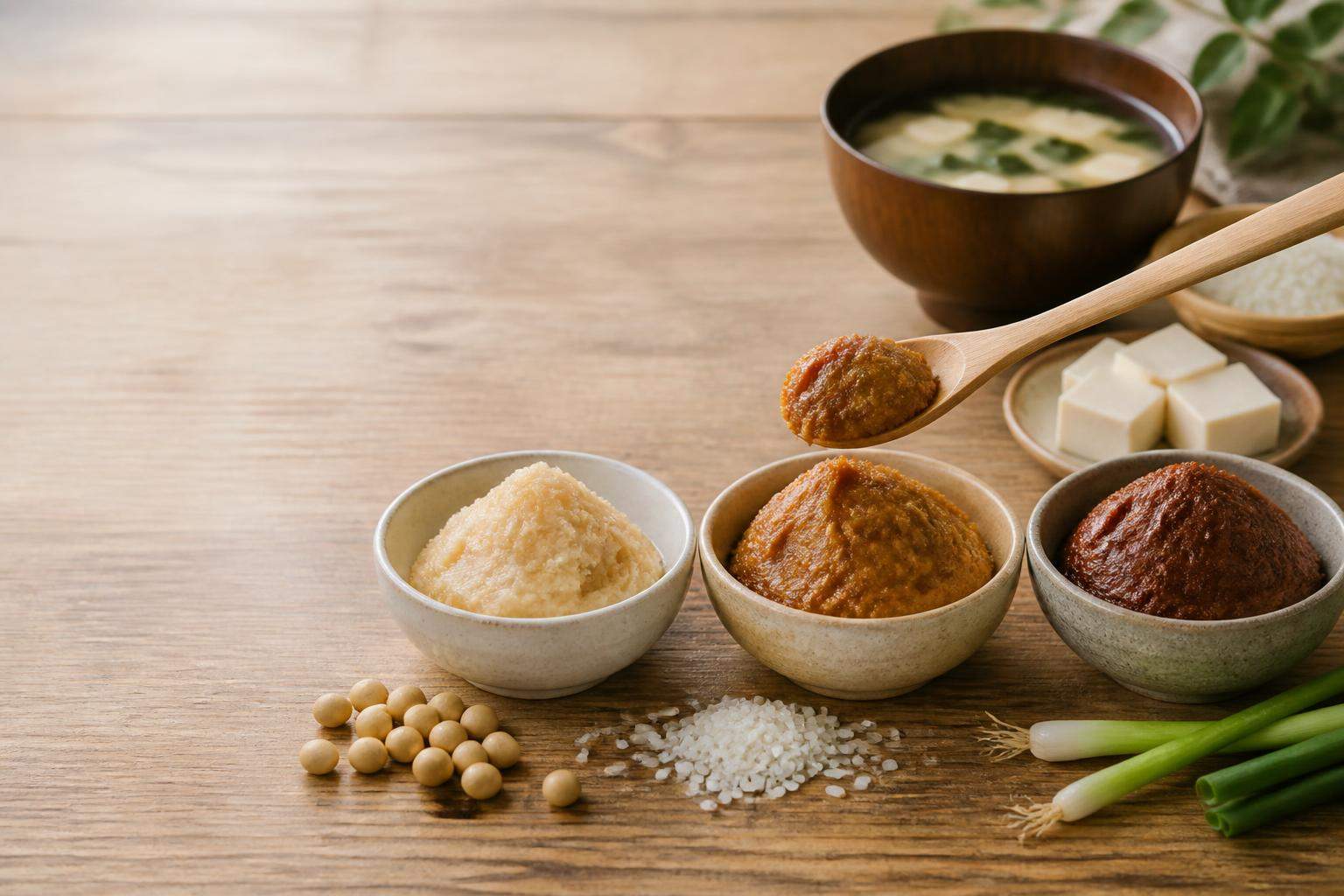
- Shiro miso (white miso) : short fermentation (3 to 6 weeks), mild and slightly sweet taste, ideal for salad dressings and light soups.
- Aka miso (red miso) : long fermentation (1 to 3 years), intense and salty flavor, perfect for marinades and rich broths.
- Awase miso (mixed miso) : a blend of white and red miso, versatile, the most commonly used on a daily basis.
There are also variations made with barley (mugi miso), rice (kome miso), or pure soybeans (hacho miso). Hatcho miso, fermented for at least two years, is the most concentrated in nutrients and flavor.
The color of miso paste is a reliable indicator of its intensity: the darker it is, the longer the fermentation has been and the more pronounced the flavor.
Nutritional composition of miso paste
Miso paste is a nutritionally dense food. Per 100g, it provides on average:
| Nutrient | Quantity per 100g | % of RDAs* |
|---|---|---|
| Calories | 199 kcal | 10 % |
| Proteins | 11.7 g | 23 % |
| Carbohydrates | 26.5 g | 10 % |
| Lipids | 6 g | 9 % |
| Sodium | 3,728 mg | 186 % |
| Vitamin K | 29.3 µg | 39 % |
| Manganese | 0.86 mg | 43 % |
| Copper | 0.42 mg | 47 % |
| Zinc | 2.56 mg | 26 % |
| Isoflavones | 42 mg | — |
| *Reference daily intake for an average adult (2,000 kcal/day) | ||
The high sodium content is the main concern. A standard serving of miso paste contains approximately 10 g, or 370 mg of sodium. ANSESrecommends not exceeding 2,000 mg of sodium per day [2], which suggests consuming miso paste in moderation.
5 documented benefits of miso paste
Miso paste has several interesting nutritional properties, confirmed by clinical and epidemiological studies.
1. Natural source of probiotics
The fermentation of miso paste generates beneficial bacterial strains, including lactobacilli. These microorganisms contribute to a balanced gut microbiota. To preserve these live bacteria, it is essential not to boil the miso paste: always add it off the heat. To learn more about this topic, consult our guide on gut flora and probiotics.
2. Intake of complete proteins
The soybeans used in miso paste contain all eight essential amino acids. Fermentation improves the bioavailability of these proteins by partially pre-digesting them. This is a significant advantage for vegetarian and vegan diets.
3. Rich in antioxidants
A study published in the Journal of Agricultural and Food Chemistry () [3] showed that miso paste contains high levels of phenolic compounds and melanoidins, brown pigments formed during prolonged fermentation. These molecules exhibit measurable antioxidant activity in vitro.
4. Isoflavones and hormonal health
Miso paste is one of the most concentrated food sources of soy isoflavones. According to a meta-analysis published in the European Journal of Clinical Nutrition () [4], regular consumption of isoflavones is associated with a reduction in hot flashes during menopause.
5. Cardioprotective potential
Despite its sodium content, epidemiological studies conducted in Japan suggest that miso paste does not increase the risk of hypertension in the same way as regular table salt. Researchers attribute this effect to bioactive peptides formed during fermentation, which are thought to have an inhibitory effect on ACE [1].
Miso paste and fermented foods: a broader context
Miso paste belongs to the large family of lacto-fermented foods, alongside kimchi, kefir, and kombucha. These foods share a common mechanism: transformation by microorganisms that enrich the nutritional and organoleptic profile of the base product.
The fermentation process of miso is unique: it relies primarily on the action of koji (Aspergillus oryzae), and not on lactic acid bacteria alone. This fungus produces enzymes (amylases, proteases, lipases) that break down the macronutrients in soybeans into simpler, more easily absorbed molecules.
If you wish to diversify your sources of probiotic foods, our article on natural probiotic foods will give you a comprehensive overview.
How to use miso paste in cooking?
Miso paste is one of the most versatile condiments in Asian cuisine. Here are some of its most common uses:
- Miso soup : Dilute 1 to 2 teaspoons of miso paste in hot broth (dashi or vegetable) off the heat. Add tofu, wakame seaweed, and chives.
- Marinade : Mix miso paste with mirin, sake and a little sugar to marinate salmon, chicken or eggplant for 24 hours.
- Vinaigrette : Whisk miso paste with rice vinegar, sesame oil and grated ginger for an umami salad dressing.
- Miso butter : Incorporate miso paste into softened butter to flavor roasted vegetables, grilled corn, or pasta.
- Wok sauce : dilute the miso paste in a little hot water, add soy sauce and honey for a quick glaze.
- Ramen and udon : miso paste is the base of the tare broth in many Japanese noodle recipes.
Golden rule: never boil miso paste. Excessive heat destroys the active enzymes and probiotic bacteria. Always stir it in at the end of cooking, into a liquid below 70°C.
How much miso paste should I consume per day?
The recommended daily intake to benefit from the nutritional effects without excess sodium is 10 to 20 g , or one to two level teaspoons. This amount corresponds to the portion used in a traditional miso soup.
- 10g of miso paste = approximately 370mg of sodium.
- 20 g of miso paste = approximately 740 mg of sodium, or 37% of the maximum intake recommended by ANSES[ 2].
- If you have high blood pressure, limit your intake to 5g per day and consult your doctor.
People on a low-salt diet should be careful. Reduced-sodium versions of miso paste (gen-en miso) are available in Japanese grocery stores and health food stores.
How to store miso paste?
Miso paste keeps very well thanks to its high salt content, which acts as a natural preservative. Here are the rules to follow:
- Once opened, store it in the refrigerator in an airtight container.
- Shelf life in the refrigerator: 6 to 12 months after opening.
- Unopened, miso paste can be stored for 1 to 2 years at room temperature (away from heat and light).
- Freezing is possible and does not alter the taste qualities.
- A slight browning on the surface is normal (Maillard reaction); simply remove the surface layer.
Avoid contaminating the pot with damp or dirty utensils, as this can promote the growth of unwanted mold.
Miso paste and soy: what science says
Miso paste is intrinsically linked to soybeans, its main ingredient. Fermented soybeans offer distinct advantages over unfermented soybeans. Fermentation, in particular, reduces the content of phytates and trypsin inhibitors, two antinutrients found in raw soybeans.
To learn more about the links between miso and soy, see our article dedicated to soy miso and its benefits.
EFSA concluded in a opinion that soy isoflavones are safe for the general population at usual dietary intake levels [5]. However , people with a history of hormone-dependent cancer should consult their doctor before increasing their consumption of miso paste.
Miso paste and digestion: the role of probiotics
Unpasteurized miso paste contains live bacteria that can support digestive health. These microorganisms contribute to gut microbiota diversity, a key factor in overall health according to current research. To learn more about the role of probiotics in digestion, see our guide on probiotics and digestion.
It is important to distinguish between pasteurized miso paste (sold in supermarkets) and the unpasteurized version (available in Japanese or organic grocery stores). Pasteurization extends the shelf life but destroys the live bacteria.
If you are looking to maximize your probiotic intake, opt for unpasteurized miso paste, kept in the refrigerator, and always add it off the heat.
Where can I buy quality miso paste?
Miso paste is now available through many distribution channels in France:
- Japanese and Asian grocery stores : the best choice for finding unpasteurized and artisanal versions.
- Organic stores : often offer certified organic misos, without additives.
- Supermarkets : the international products or condiments sections generally offer pasteurized shiro miso or awase miso.
- Specialized online sales sites : allow access to Japanese artisanal misos imported directly.
Read the label carefully: a quality miso paste should contain only soybeans, salt, rice or barley, and koji. Beware of versions containing added monosodium glutamate, colorings, or chemical preservatives.
Precautions and contraindications
Miso paste is generally well tolerated, but some people should exercise caution:
- Soy allergy : Miso paste contains soy and is contraindicated in case of a proven allergy.
- Celiac disease : miso made from barley or wheat contains gluten. Opt for kome miso (made from rice) or check for the "gluten-free" label.
- High blood pressure : the high sodium content requires strict portion limitation.
- Anticoagulant treatment : the vitamin K present in miso paste may interfere with warfarin-type medications.
- Pregnancy : Unpasteurized miso paste should be consumed with caution, like any raw fermented food.
- Miso paste is a fermented Japanese condiment rich in probiotics, proteins, and isoflavones.
- It comes in three main varieties: white (mild), red (intense) and mixed (versatile).
- Miso paste should never be boiled to preserve its live bacteria and enzymes.
- Its high sodium content requires moderate consumption: 10 to 20 g maximum per day.
- Unpasteurized miso paste is richer in probiotics than industrially pasteurized versions.
Frequently asked questions about miso paste
Is miso paste good for your health?
Yes, miso paste has several documented nutritional benefits: it provides probiotics, complete proteins, antioxidants, and isoflavones. However, its high sodium content necessitates moderate consumption, ideally limited to 10-20g per day.
What is the difference between white miso and red miso?
White miso (shiro) is fermented for a shorter time (3 to 6 weeks), giving it a mild and slightly sweet taste. Red miso (aka) is fermented for 1 to 3 years, resulting in a more intense, salty, and complex flavor. Red miso paste is also more concentrated in nutrients.
Is it okay to eat miso paste every day?
Yes, provided you consume a reasonable portion (10 to 20 g per day). Daily consumption of miso paste is a traditional practice in Japan, associated with good digestive health. However, people with high blood pressure should limit their intake.
Does miso paste contain gluten?
Some miso pastes contain gluten, particularly those made from barley (mugi miso) or wheat. People with celiac disease should choose a rice-based miso (kome miso) and check for the "gluten-free" label.
How do you dissolve miso paste in broth?
Take the desired amount of miso paste and dilute it in a small ladleful of hot (but not boiling) broth before adding it to the rest of the soup. This technique prevents lumps and preserves the live bacteria.
Is miso paste vegan?
The vast majority of miso pastes are vegan, as they contain only soy, salt, and koji. However, check the label, as some versions may contain fish extract (dashi) incorporated directly into the paste.
Does miso paste cause weight gain?
No, miso paste is low in calories: about 20 kcal per 10g serving. It can even promote satiety thanks to its protein and intense umami taste, which reduces the desire to add salt or fat to dishes.
What is the shelf life of opened miso paste?
Once opened, miso paste can be stored in an airtight container in the refrigerator for 6 to 12 months. The high salt content acts as a natural preservative. A slight browning on the surface is normal and harmless.
Can miso paste be used in Western recipes?
Absolutely. Miso paste blends perfectly into salad dressings, pasta sauces, vegetable soups, marinades for meat or fish, and even some pastries to add a subtle umami note.
Is miso paste safe during pregnancy?
Pasteurized miso paste is generally considered safe during pregnancy. The unpasteurized version, which contains live bacteria, should be consumed with caution. Consult your doctor or midwife for personalized advice.
How to choose a good miso paste?
Choose a miso paste with a short ingredient list: soy, salt, rice or barley, koji. Avoid versions containing added MSG, colorings, or preservatives. For maximum probiotics, choose an unpasteurized version that has been refrigerated.
Is miso paste rich in vitamin B12?
Miso paste contains very small amounts of vitamin B12, insufficient to meet daily requirements. It cannot be considered a reliable source of B12 for vegans, who must use specific supplements.
Key takeaways
Miso paste is much more than just a condiment: it's a fermented food with remarkable nutritional properties, rich in probiotics, complete proteins, and antioxidants. Consumed daily at a rate of 10 to 20 grams, miso paste can contribute to digestive health, hormonal balance, and cardiovascular protection. Choose an unpasteurized version to maximize the intake of live bacteria, and always stir it in off the heat to preserve its benefits.
Practical action: start by incorporating homemade miso soup into your morning or lunchtime routine, using 10g of white miso paste diluted in hot vegetable broth, tofu, and wakame seaweed. It's simple, quick, and nutritionally dense.
Sources and studies
- Miso Soup and Cardiovascular Disease Risk in Japan — Journal of Nutritional Science and Vitaminology,
- Salt and health: nutritional recommendations — ANSES,
- Antioxidant Activity of Miso and Soy Sauce — Journal of Agricultural and Food Chemistry,
- Soy Isoflavones and Menopausal Symptoms: A Meta-Analysis — European Journal of Clinical Nutrition,
- Risk Assessment for Peri- and Post-Menopausal Women Taking Food Supplements Containing Isolated Isoflavones — EFSA,
This article is provided for informational purposes only and does not constitute medical advice. Consult a qualified healthcare professional before use.