When to take psyllium: 8 key moments according to experts
⚠️ Medical Disclaimer: The information in this article is for informational purposes only and is not a substitute for professional medical advice. Consult your doctor or pharmacist before making any changes to your diet or starting psyllium supplementation, especially if you are taking medication or have a chronic condition.
When to take psyllium : The optimal time is 30 minutes before main meals, accompanied by at least 200 ml of water, to maximize the feeling of fullness and regulate bowel movements. A study published in the American Journal of Clinical Nutrition () [1] confirms that taking psyllium before meals significantly reduces postprandial blood glucose levels.
- Before meals : promotes satiety and slows down carbohydrate absorption
- In the morning on an empty stomach : stimulates digestion and prepares the intestines for the day
- In the evening : facilitates nighttime elimination in constipated individuals
- After meals : useful for absorbing excess dietary fats
- A 4- to 8-week course of treatment is recommended by theEFSA [2] for measurable effects.
Why taking psyllium before meals is often the best choice
Taking psyllium 30 minutes before eating allows the mucilaginous fiber to form a viscous gel in the stomach. This gel slows gastric emptying and creates a lasting feeling of fullness. This is the most scientifically documented time to take psyllium.
A meta-analysis published in the Journal of the American Association of Nurse Practitioners ( ) [3] shows that this pre-meal intake reduces total caloric intake by 12 to 15% over 12 weeks. The effect is linked to the viscosity of Plantago ovata gel .
- Gel forms in 2 to 3 minutes in the stomach
- Slowing of carbohydrate and lipid absorption
- Reduction of postprandial blood glucose by up to 20% [1]
- Natural appetite suppressant effect without stimulants
Taking psyllium in the morning on an empty stomach: benefits and precautions
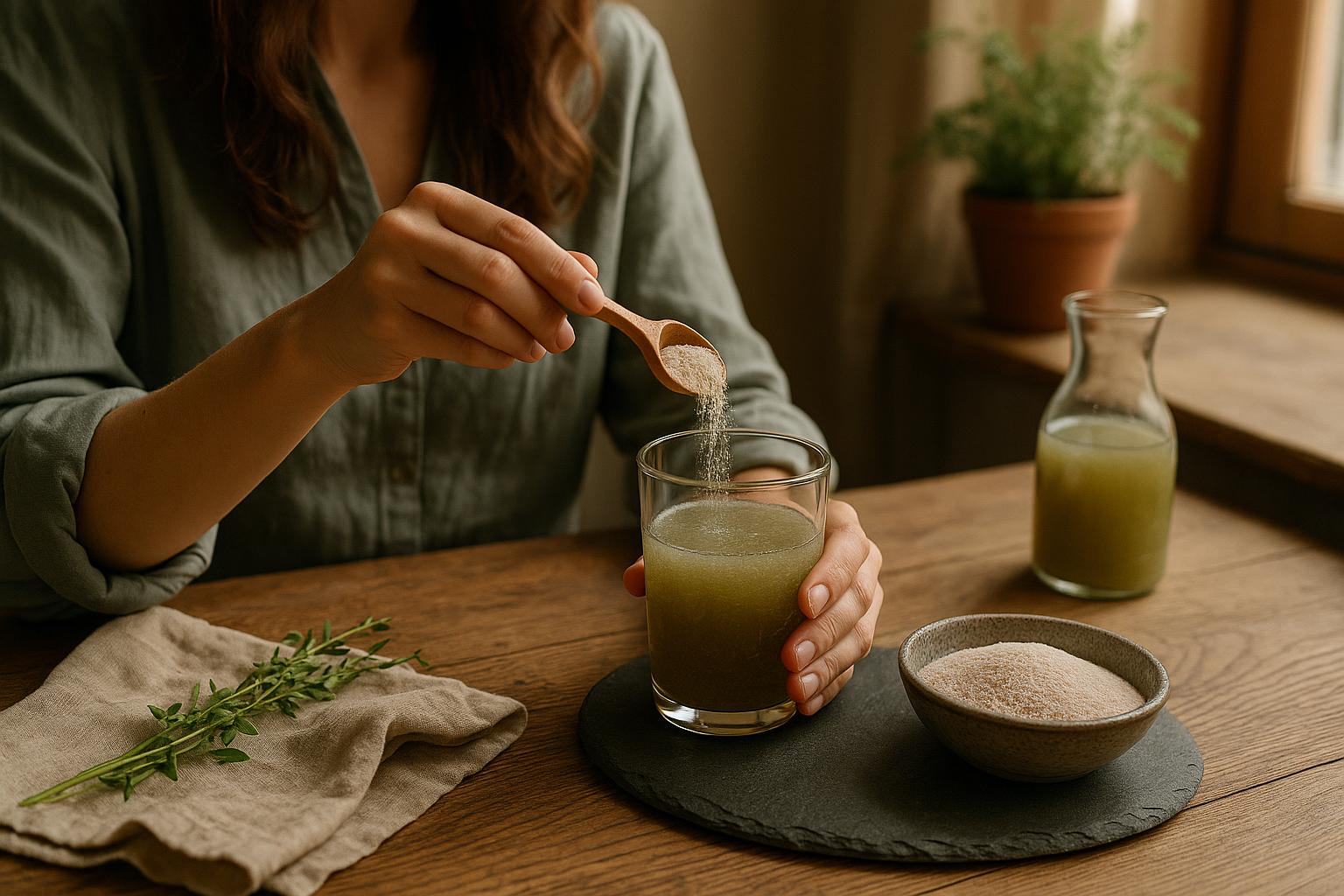
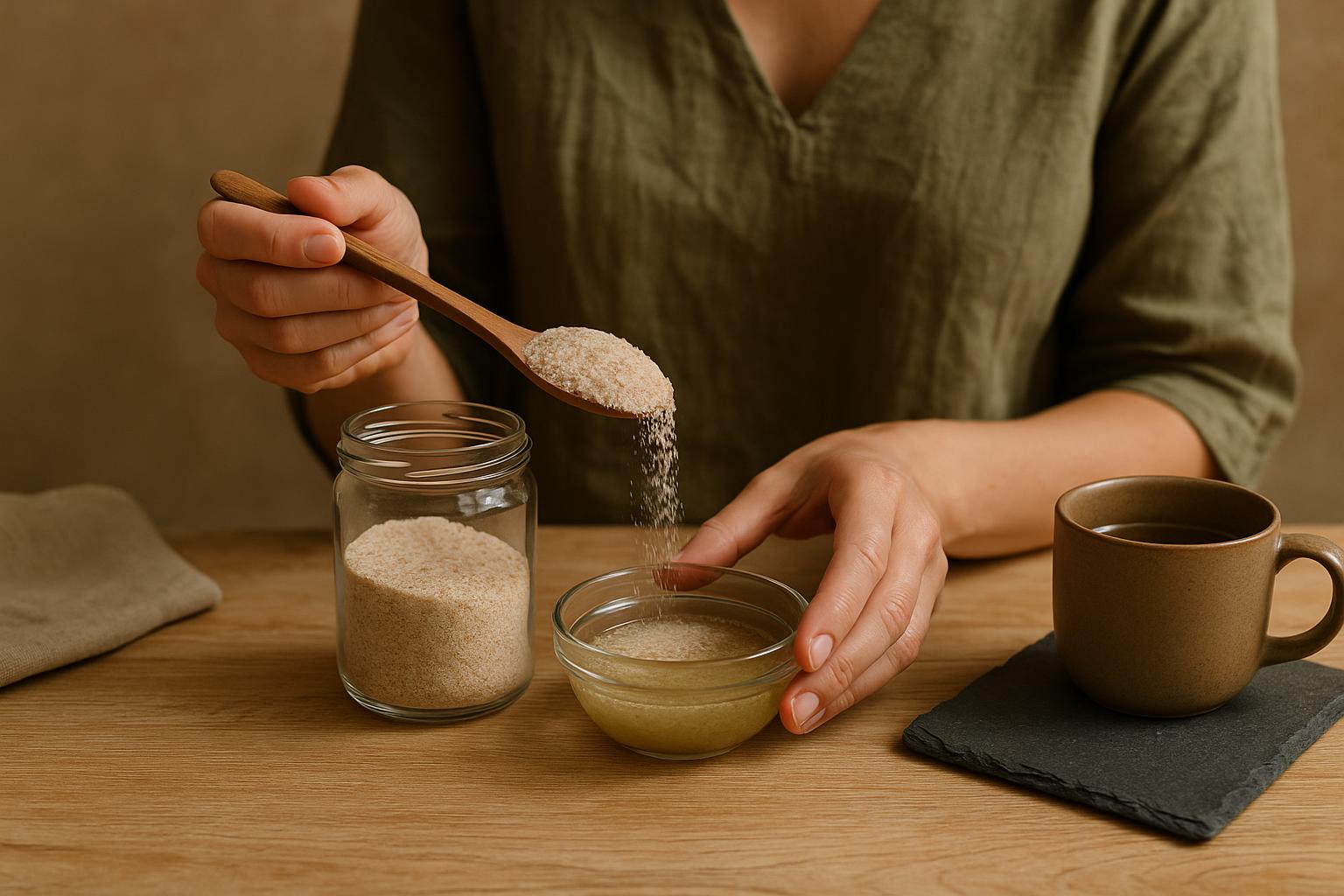
Taking psyllium on an empty stomach in the morning is a strategic time to determine when to take it if your goal is to regulate bowel movements. The intestines have been at rest for several hours. Taking 5g ofpsyllium in a large glass of water triggers a rapid mechanical response.
Many readers report that taking it in the morning on an empty stomach provides the fastest results for chronic constipation, often as early as the third day. ANSES[ 4] recommends gradually increasing the dose to avoid initial bloating.
- Start with 3g in the morning for 3 days
- Increase to 5 g then 10 g depending on tolerance
- Drink at least 200 ml of water immediately afterwards
- Wait 30 minutes before taking any other medication
When to take psyllium in the evening: is it effective?
Taking psyllium in the evening is less well-documented, but it offers real benefits for certain individuals. Taking psyllium in the evening, one hour before dinner or at bedtime, can support nighttime elimination and improve morning bowel movements.
This approach is particularly suitable for people with constipation-predominant IBS . A study in the World Journal of Gastroenterology ( ) [5] shows that taking soluble fiber in the evening improves stool consistency the following morning in 68% of participants.
- Recommended evening intake: 5 g in 250 ml of water
- Avoid taking it right before bedtime (risk of suffocation)
- Remain standing for at least 30 minutes after taking it
- Ideal when combined with a morning dose for severe cases
If you wish to go further, how to take psyllium for constipation will give you a detailed step-by-step protocol.
After meals: when to take psyllium for cholesterol
For those wishing to lower their LDL, taking it after meals is a proven strategy. Psyllium then absorbs bile acids in the small intestine, forcing the liver to draw on its cholesterol reserves to produce new cholesterol.
In , the EFSA [2] granted psyllium an official health claim for reducing blood cholesterol. The recommended dose is 10 g per day, divided into 2 to 3 doses with meals. It is one of the few supplements to have received such European regulatory approval.
| Objective | Time of capture | Recommended dose | Minimal water |
|---|---|---|---|
| Satiety / weight | 30 minutes before meals | 5 g | 200 ml |
| Transit / constipation | Morning on an empty stomach | 5 to 10 g | 250 ml |
| Diarrhea / IBS | After meals | 5 gx 2 | 200 ml |
| LDL Cholesterol | During or after meals | 10 g / day | 300 ml |
| Postprandial blood glucose | Before meals | 5 to 7 g | 200 ml |
5 common mistakes about when to take psyllium
Knowing when to take psyllium isn't enough if you make these common mistakes. They reduce the effectiveness of the treatment and can cause avoidable side effects.
- Not enough water: Psyllium without sufficient water can obstruct the esophagus or worsen constipation
- Taking it simultaneously with other medications: psyllium gel delays the absorption of many treatments (metformin, levothyroxine, warfarin)
- Too high a dose from the outset: starting at 10g causes intense bloating in people who are not used to it.
- Irregular intake: the effect on bowel movements requires regular daily intake for at least 4 weeks.
- Lie down immediately afterwards: risk of esophageal swelling if you do not remain upright for 30 minutes
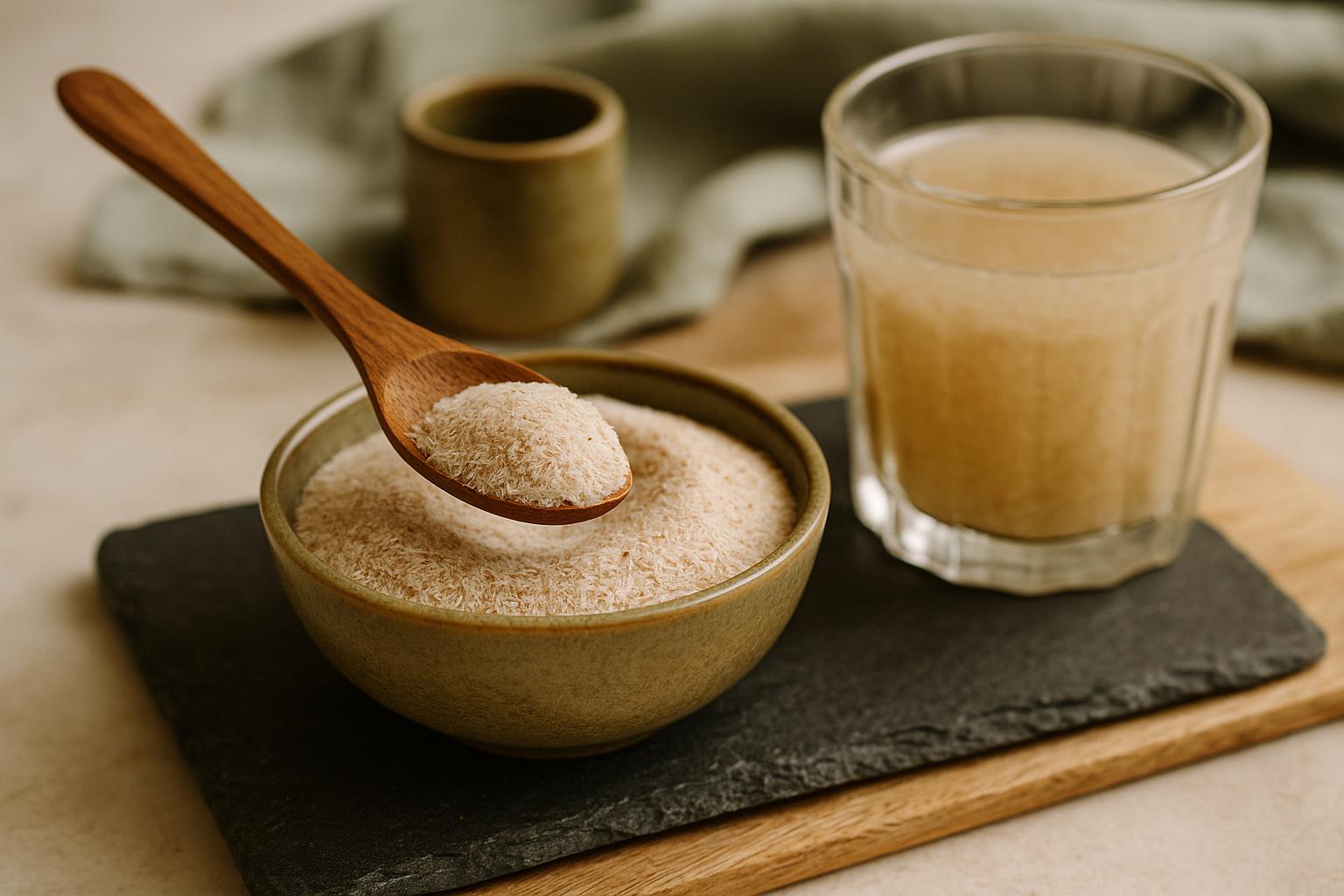
How many times a day should I take psyllium?
The optimal frequency depends on your goal. For when to take psyllium daily, experts recommend 1 to 3 doses per day, depending on the total target dose. The maximum daily dose validated by theEFSA [2] is 10 to 15 g for a healthy adult.
Spreading doses throughout the day improves digestive tolerance. A single 10g dose causes more bloating than two 5g doses taken 6 hours apart. Here is the recommended distribution depending on the objective:
- 1 dose/day : maintenance of bowel regularity, prevention of occasional constipation
- 2 doses/day : chronic constipation, IBS, blood sugar control
- 3 doses/day : LDL cholesterol reduction (EFSA dose: 10 g/day minimum)
To find out if you can take psyllium every day, consult our guide dedicated to long-term use.
When to take psyllium with medication: the 2-hour rule
Psyllium is a mucilaginous fiber that forms a thick gel in the digestive tract. This gel can trap the active ingredients of medications and reduce their absorption. The universal safety rule is simple: leave a 2-hour interval between taking psyllium and any other medication.
The medications most affected by this interaction are listed below. Your pharmacist is the best person to consult to adjust when to take psyllium in relation to your personal treatment.
- Levothyroxine (hypothyroidism)
- Metformin (type 2 diabetes)
- Warfarin and oral anticoagulants
- Digoxin (heart failure)
- Lithium (bipolar disorder)
- Tricyclic antidepressants
Psyllium on an empty stomach: good or bad idea?
Taking psyllium on an empty stomach is a common practice and generally well-tolerated by healthy adults. It is even the recommended method to maximize its effect on bowel movements. Unlike some stimulant laxatives, the fiber from Plantago ovata does not irritate the gastric mucosa when taken on an empty stomach.
However, people suffering from gastroesophageal reflux or active ulcers should take it during or after meals. The gel that forms can increase intragastric pressure in these individuals. Discover the benefits of blond psyllium to understand why this fiber is so different from others.
Duration of a course of treatment: how long should you take psyllium?
The minimum duration to observe clinically measurable effects is 4 weeks. The most robust studies on when to take psyllium and its effects on cholesterol use protocols of 6 to 12 weeks [1][3]. An 8-week course is the standard most often recommended by practitioners.
There is no official maximum duration. Psyllium can be taken long-term without developing a tolerance, unlike stimulant laxatives. ANSES[ 4] does not set a time limit for dietary fiber intake in healthy adults.
- Short course: 4 weeks (temporary constipation)
- Standard treatment: 8 weeks (transit, blood sugar, weight)
- Long-term treatment: 12 weeks or more (cholesterol, chronic IBS)
- Continuous use is possible under medical supervision
To learn more, discover how to consume psyllium in the different forms available (powder, husks, capsules).
When to take psyllium during pregnancy and breastfeeding
Psyllium is considered one of the safest fibers during pregnancy. It is not absorbed by the body and does not enter the mother's bloodstream. Gynecologists frequently recommend it to treat gestational constipation, which affects up to 40% of pregnant women.
The recommended dose during pregnancy is 5 g per dose, 1 to 2 times a day, always with plenty of water. When to take psyllium during pregnancy: preferably in the morning, away from iron supplements which can worsen constipation.
- Safe for all three quarters according to available data
- Compatible with breastfeeding (not absorbed systemically)
- Avoid formulas with additives or artificial flavorings
- Consult your midwife or obstetrician before starting
When to take psyllium for weight loss: the optimal protocol
When to take psyllium for weight loss is crucial. Taking it 30 minutes before each main meal is the most effective protocol. It reduces feelings of hunger and limits portion sizes without altering the nutritional value of the meals.
A randomized controlled trial published in the Nutrition Journal () [3] shows that taking 7 g of psyllium before meals for 12 weeks resulted in an additional weight loss of 1.3 kg compared to the placebo group. The effect is modest but real and without major side effects. Find out what dose of psyllium to use for colon cleansing as part of a detox program.
- Dosage: 5 to 7 g in 300 ml of water, 30 minutes before each meal
- Results observable from 4 weeks
- Combine with a balanced diet and physical activity
- This does not replace personalized dietary monitoring
When to give psyllium to children: age and dosage
Psyllium can be used in children over 6 years of age under medical supervision. The pediatric dose is generally half the adult dose, i.e., 2.5 to 5 g per dose. When to take psyllium for children: always with or just before a meal, never on an empty stomach for children under 10 years of age.
ANSESa medical prescription. Monitoring hydration is essential in young children to avoid any risk of digestive obstruction.
Key takeaways
Knowing when to take psyllium transforms a simple supplement into a precise therapeutic tool. The golden rule: 30 minutes before meals for satiety and blood sugar control, in the morning on an empty stomach for digestive health, and after meals for cholesterol management. Always respect the 2-hour rule with your medications and drink plenty of fluids with each dose.
Start with 3 to 5 grams per day and gradually increase the dose. When taken regularly for 4 to 8 weeks, the benefits for digestion, blood sugar, and cholesterol are scientifically proven. Your concrete action: choose your main objective, identify the corresponding time to take it in the table above, and start tomorrow morning with a large glass of water.
- When to take psyllium for satiety: 30 minutes before meals, with at least 200 ml of water
- When to take psyllium for digestion: in the morning on an empty stomach, starting with 3g and gradually increasing the dose
- When to take psyllium with medications: always leave a 2-hour gap to avoid interactions
- When to take psyllium for cholesterol: 10 g/day divided into 2 to 3 doses with meals, according to the official EFSA claim
- When to take psyllium as a course of treatment: a minimum of 4 weeks for measurable effects, 8 weeks for optimal results
Frequently asked questions about when to take psyllium
When to take psyllium: before or after meals?
The answer depends on your goal. For satiety and blood sugar control, take psyllium 30 minutes before meals. For cholesterol or diarrhea, taking it during or after meals is more effective. Both approaches are scientifically validated for the specific indication.
Can psyllium be taken in the evening before going to sleep?
No, not right before bed. Remain upright for at least 30 minutes after taking it to avoid any risk of esophageal bloating. However, taking it 1 to 2 hours before bedtime is well tolerated and can improve morning bowel movements in people who are constipated.
When should I take psyllium for effective weight loss?
For weight loss, take 5 to 7 g of psyllium in 300 ml of water, 30 minutes before each main meal. This strategy reduces hunger and total calorie intake. Studies show a modest but real additional weight loss over 12 weeks [3].
How long before eating should psyllium be taken?
Ideally, take it 20 to 30 minutes before your meal. This allows the psyllium to form its viscous gel in the stomach, creating a feeling of fullness by the time you start eating. Taking it less than 15 minutes beforehand significantly reduces its effect.
When should you take psyllium in case of severe constipation?
For severe constipation, take psyllium in the morning on an empty stomach and in the evening before dinner. Start with 5 g per dose with 250 ml of water. If there is no effect after 72 hours, consult a doctor. Psyllium is not an emergency laxative but a gradual regulator.
Is it safe to take psyllium on an empty stomach every morning?
Yes, taking it on an empty stomach in the morning is recommended for intestinal transit. Psyllium does not cause gastric irritation when taken on an empty stomach. Drink at least 200 ml of water immediately afterward. Wait 30 minutes before eating breakfast to optimize its effect.
When should I take psyllium in case of diarrhea?
For diarrhea, take psyllium after meals, 5 g twice a day. The soluble fiber absorbs excess water in the colon and improves stool consistency. The effect is usually noticeable after the second dose. Maintain good hydration.
When should I take psyllium to reduce cholesterol?
To lower LDL cholesterol, take 10 g of psyllium daily, divided into 2 to 3 doses with meals. This dose is the one validated by the official EFSA health claim. Results are observable after 6 to 8 weeks of regular intake [2].
When should psyllium be taken with metformin?
Leave a 2-hour interval between taking psyllium and metformin. Psyllium gel can reduce the intestinal absorption of metformin and decrease its effectiveness in lowering blood sugar. Consult your diabetes specialist to adjust the dosing schedule to suit your treatment.
When to take psyllium during pregnancy?
During pregnancy, take psyllium in the morning with breakfast or 30 minutes beforehand. The recommended dose is 5 g per dose, 1 to 2 times a day. Avoid taking it simultaneously with iron supplements. Always inform your gynecologist about your psyllium intake.
Does psyllium work faster in the morning or in the evening?
Taking it in the morning on an empty stomach generally acts more quickly on bowel movements, often within 12 to 24 hours. Taking it in the evening produces its effects the following morning. For optimal results, combine the two doses if you suffer from chronic constipation, always with plenty of water.
When to take psyllium in capsules versus in powder form?
The timing of intake is the same for both forms. The powder forms its gel more quickly and is slightly more effective for pre-meal satiety. The capsules are more convenient for taking away from home. The effective dose is the same: 5 to 10 g per dose with at least 200 ml of water.
Sources and studies
- Psyllium fiber improves glycemic control proportional to loss of glycemic control — American Journal of Clinical Nutrition,
- Scientific Opinion on the substantiation of health claims related to psyllium seed husk — EFSA Journal,
- Psyllium supplementation in adolescents improves fat distribution and lipid profile — Nutrition Journal,
- Dietary fiber: definition, sources and recommendations — ANSES,
- Dietary fiber and the human gut microbiota: application of evidence mapping methodology — World Journal of Gastroenterology,
This article is provided for informational purposes only and does not constitute medical advice. Consult a qualified healthcare professional before use.