How to take psyllium for constipation: 7 steps
⚠️ Medical Disclaimer: The information in this article is for educational purposes only. It is not a substitute for professional medical advice. Consult your doctor before making any changes to your diet or starting any dietary supplements, especially if you have a chronic illness, are pregnant, or are taking medication.
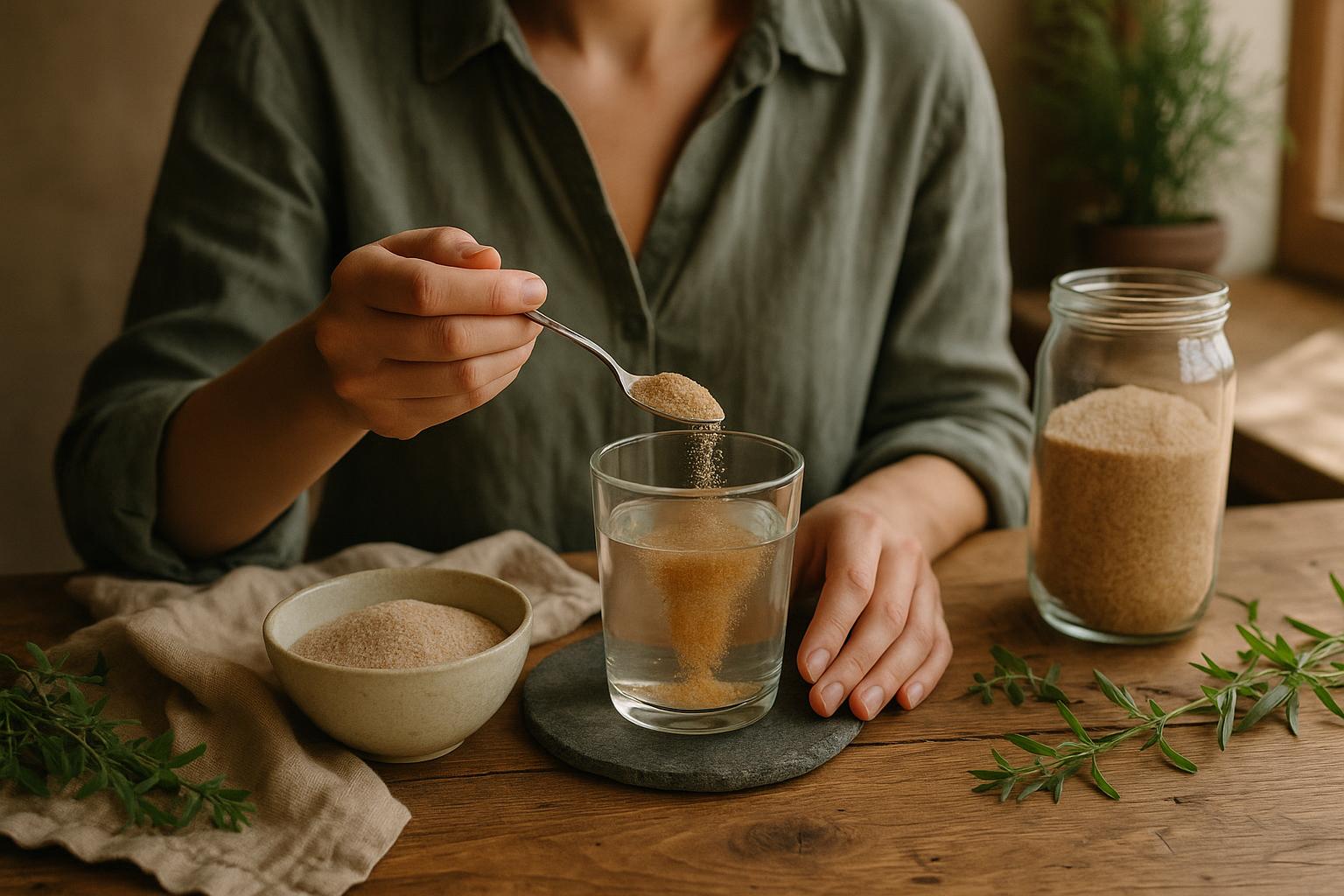
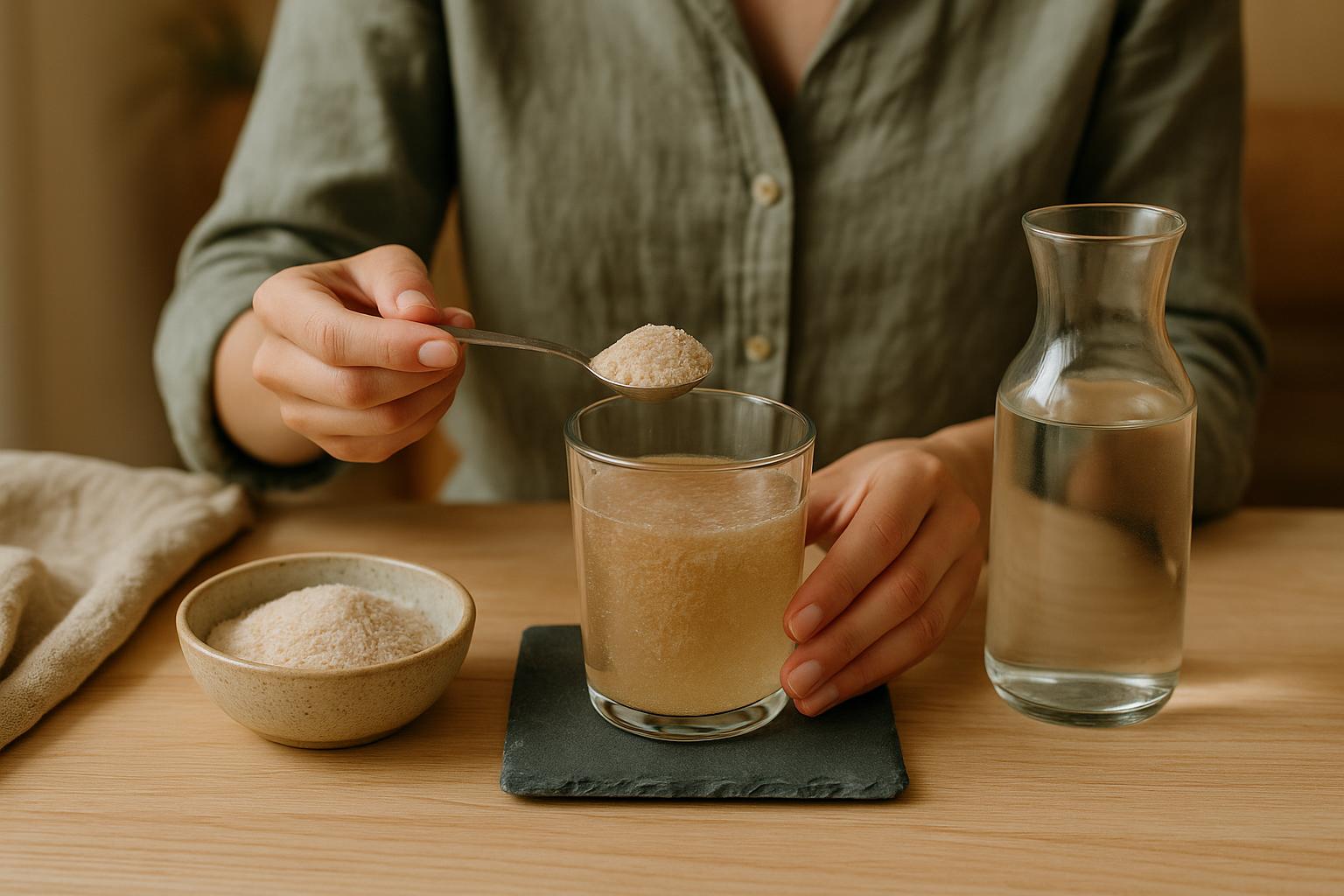
How to take psyllium for constipation : Mix 5 to 10 g of powder (about 1 to 2 teaspoons) in a large 250 ml glass of water, drink immediately, and then stay well hydrated throughout the day. A meta-analysis published in the American Journal of Clinical Nutrition () [1] confirms that psyllium significantly increases bowel movement frequency in adults with chronic constipation.
- Starting dose: 5 g per day (1 teaspoon), to be increased gradually
- Water is essential: a minimum of 250 ml per dose, plus 1.5 L throughout the day.
- Best time: in the morning on an empty stomach or 30 minutes before a meal
- Expected results: improved bowel function within 12 to 72 hours
- Recommended duration: 4 to 8 weeks for a lasting effect on the microbiota
What is psyllium and why does it help with constipation?
Psyllium, derived from the Plantago ovata, is an soluble fiber . Its seed husks contain up to 85% mucilage, a gelatinous substance that swells upon contact with water. This mucilaginous gel lubricates the colon, softens stools, and mechanically stimulates intestinal peristalsis.
Ispaghula — another common name for blond psyllium — is recognized by the EFSA [2] for its ability to increase stool volume. This mechanism is purely mechanical, without any harsh chemical laxative effect. This is why it is tolerated even in the long term .
To understand what psyllium is used for in its entirety, it is important to know that it acts on both constipation and diarrhea, depending on the direction of the intestinal imbalance.
Dosage: How to take psyllium effectively for constipation
The standard dose for taking psyllium for constipation starts at 5g per day. You can increase this up to 30g daily, divided into 2 or 3 doses, depending on your digestive tolerance. One level teaspoon is approximately 5 to 7g of psyllium powder.
| Profile | Daily dose | Number of sockets | Minimum water |
|---|---|---|---|
| Beginner (1st week) | 5 g (1 tsp) | 1 time/day | 250 ml per dose + 1.5 L/day |
| Moderate constipation | 10 to 15 g | 2 times/day | 250 ml per dose + 2 L/day |
| Severe constipation | 20 to 30 g | 3 times/day | 250 ml per dose + 2 L/day |
| Transit maintenance | 5 to 10 g | 1 time/day | 250 ml per dose + 1.5 L/day |
Many readers have reported that starting directly at 30g causes bloating. Gastroenterologists consistently recommend a gradual increase over two weeks. For more information, see our guide on psyllium powder and its uses.
When is the best time to take psyllium for constipation?
To determine how to take psyllium for constipation with maximum effectiveness, timing plays a key role. Taking it in the morning on an empty stomach is the most recommended method according to scientific literature. This takes advantage of the natural gastrocolic reflex that is activated upon waking.
- On an empty stomach in the morning: better activation of bowel movements, effect felt in 2 to 4 hours
- 30 minutes before a meal: also reduces the feeling of hunger and slows down the absorption of carbohydrates
- At bedtime: possible, but less effective for stimulating morning bowel movements.
- Avoid taking medication just beforehand (at least 2 hours apart).
A study published in the Journal of the American Association of Nurse Practitioners () [3] confirms that morning intake improves bowel regularity more markedly than evening intake.
Preparation: How to take psyllium for constipation without making a mistake
Proper preparation is crucial. Here is the proven method for taking psyllium optimally for constipation:
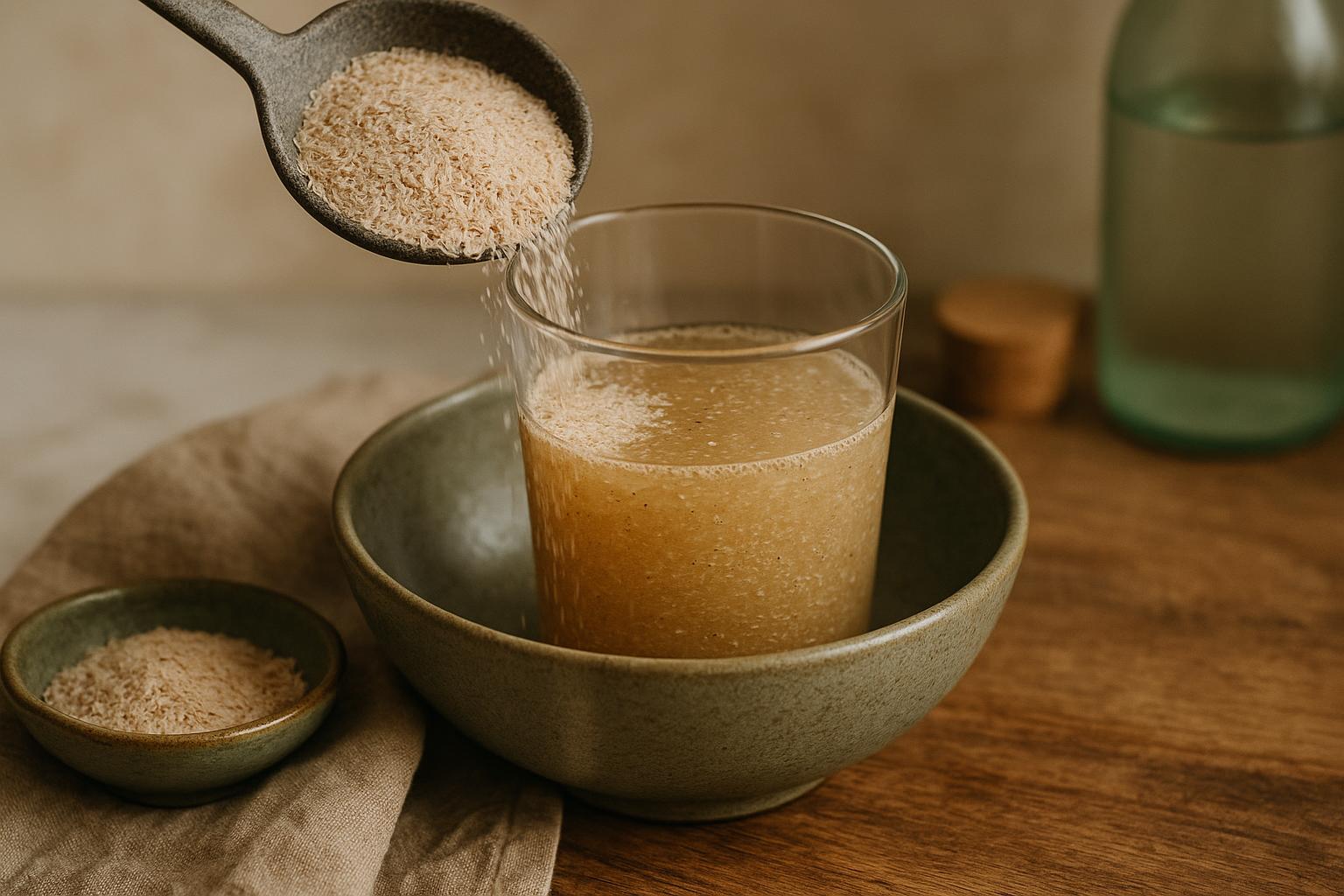
- Pour 5 to 10 g of powder into a large glass (250 to 300 ml minimum)
- Add cold or lukewarm water (never boiling, which destroys the mucilage)
- Mix vigorously for 10 seconds
- Drink immediately before gel forms (within 30 seconds)
- Rinse the glass with an additional 100 ml of water and drink it
Psyllium can also be added to yogurt, smoothies, or porridge. However, the liquid form remains the most effective for intestinal transit because it ensures immediate hydration of the mucilage. For a comprehensive overview, our article on how to consume psyllium details all the possible forms.
Why water is essential with psyllium
Psyllium without sufficient water can worsen constipation instead of relieving it. The mucilage absorbs up to 40 times its volume in water to form the gel that facilitates bowel movements. Without this hydration, it can form a compact mass in the intestine.
- Drink at least 250 ml of water per dose of psyllium
- Aim for 1.5 to 2 liters of total water intake per day
- Avoid alcoholic beverages that dehydrate the colon
- Coffee and tea are important, but they don't replace pure water
ANSESout that dehydration is one of the leading causes of chronic constipation in adults. Psyllium significantly increases this need for water.
How long should I take psyllium for constipation?
The duration of the treatment depends on the nature of the constipation. For occasional constipation, 3 to 7 days is usually sufficient. For chronic constipation, a 4- to 8-week course is recommended before assessing the results.
Unlike stimulant laxatives, psyllium is not addictive. It can be taken long-term under medical supervision. See our article on daily psyllium intake for information on how to use it for an extended period.
- Occasional constipation: 3 to 7 days, 5 to 10 g/day
- Chronic constipation: 4 to 8 weeks, 10 to 20 g/day
- Preventive maintenance: 5 g/day continuously possible
- Recommended break: 1 week off after 3 continuous months
Psyllium powder, capsules or shells: which form to choose?
How to take psyllium for constipation also depends on the form chosen. Each form has its advantages depending on your lifestyle and preferences.
- Blond psyllium powder: the most concentrated and economical form, fast-acting
- Whole psyllium husks: less processed, rich in complementary insoluble fibers
- Psyllium capsules: convenient for travel, but require more water and units.
- Psyllium in pre-measured sachets: ideal for beginners, precise dosage guaranteed
Powder remains the preferred form in clinical studies. It offers the largest surface area for mucilaginous contact with the intestinal contents. Discover how to use psyllium in all its forms according to your goal.
5 common mistakes when taking psyllium for constipation
Even with the best intentions, taking psyllium for constipation can go wrong if certain pitfalls are ignored. Here are the most common mistakes:
- Too high a dose at the outset: causes bloating, gas and cramps. Always start with 5 g.
- Not enough water: psyllium without sufficient hydration worsens constipation.
- Taking with medication: mucilage may reduce the absorption of some medications. Allow a 2-hour interval between doses.
- Preparing in advance: gel formed in advance is difficult to swallow and less effective.
- Abrupt cessation after constipation: continue for a few days after normalization to consolidate bowel movements.
Who should avoid psyllium or consult a doctor beforehand?
The method for taking psyllium for constipation is not universal. Some situations require prior medical advice. The NCCIH [5] identifies several contraindications that must be observed.
- Known or suspected intestinal obstruction: absolute contraindication
- Difficulty swallowing (dysphagia): risk of esophageal obstruction
- Grass allergy: possible cross-reactions with Plantago ovata
- Treated diabetes: psyllium alters blood sugar levels, treatment adjustment may be necessary
- Pregnancy and breastfeeding: use should be discussed with your doctor.
- Children under 6 years: not recommended without pediatric advice
Possible side effects of psyllium on digestion
Psyllium is generally well tolerated. Adverse effects occur mainly with too rapid an introduction or insufficient hydration. A study published in the World Journal of Gastroenterology () [3] reports that less than 10% of users report significant side effects.
- Bloating and flatulence (especially during the first 2 weeks)
- Mild to moderate abdominal cramps
- Sensation of gastric fullness
- Rarely: allergic reaction (hives, breathing difficulties)
These effects usually disappear after 10 to 14 days of adjustment. If symptoms persist or worsen, consult a doctor.
Psyllium and gut microbiota: a winning combination against constipation
The use of psyllium for constipation takes on a new dimension when its action on the gut microbiota is understood . Psyllium acts as a natural prebiotic . It nourishes Bifidobacterium and Lactobacillus , bacteria associated with regular bowel movements.
Partial colonic fermentation of the mucilage produces SCFAs (short-chain fatty acids) that stimulate intestinal motility. This prebiotic effect complements the mechanical action of the gel. To enhance this effect, combining psyllium with fermented foods can amplify the results. Consult our guide on colon cleansing with psyllium for a comprehensive approach.
What science really says about psyllium and constipation
The scientific evidence supporting the use of psyllium for constipation is strong. In , the EFSA [2] granted an official health claim: "Psyllium contributes to the maintenance of normal bowel movements." This claim is one of the few granted to a plant fiber.
- Increased stool frequency: effect demonstrated in 14 randomized controlled trials
- Softening of stools: confirmed from 10 g/day
- Reduction in colonic transit time: 20 to 30% according to studies
- Effect on postprandial blood glucose: a bonus for people with diabetes
- LDL cholesterol reduction: an additional effect documented by the US FDA
Practical tips for incorporating psyllium into your daily routine
Incorporating psyllium for constipation into your routine requires a few simple adjustments. Consistency is more important than dosage.
- Prepare your glass of psyllium the night before so you don't forget in the morning
- Combine it with a diet rich in vegetables and fruits to amplify the fiber effect
- Engage in 30 minutes of physical activity daily: walking stimulates peristalsis
- Avoid ultra-processed foods that slow down digestion
- Record the frequency of your bowel movements in a notebook for the first 2 weeks
- How to take psyllium for constipation: 5 g in 250 ml of water, once a day in the morning, gradually increasing up to 30 g in 3 doses.
- Taking psyllium for constipation requires sufficient hydration: a minimum of 1.5 L of water per day for the mucilage to form an effective gel.
- Taking psyllium for constipation gives results in 12 to 72 hours for occasional constipation, and in 4 to 8 weeks for chronic constipation.
- Taking psyllium for constipation involves respecting a 2-hour interval with any medication to avoid absorption interactions.
- Taking psyllium for constipation is validated by EFSA and NCCIH as a safe and effective approach, without the risk of addiction unlike stimulant laxatives.
Frequently asked questions about how to take psyllium for constipation
How to take psyllium for constipation for the first time?
Start with 5 g (1 teaspoon) in 250 ml of cold or lukewarm water, on an empty stomach in the morning. Drink immediately after mixing, then drink another glass of water. Wait one week before increasing the dose if bowel movements do not improve.
How long does it take for psyllium to work on constipation?
For occasional constipation, the first effects are felt within 12 to 72 hours. For chronic constipation, a regular effect is established after 2 to 4 weeks of daily use. Regularity of use is more important than the dose.
Can psyllium be taken daily for constipation?
Yes, psyllium can be taken daily over the long term. It is not addictive, unlike stimulant laxatives. A one-week break after three consecutive months is recommended as a precaution. Consult your doctor for use beyond six months.
What is the maximum dose of psyllium for constipation?
The maximum recommended dose is 30 g per day, divided into three 10 g doses. Do not exceed this limit without medical advice. The EFSA validates 10 g per day as an effective dose for maintaining normal bowel function in adults.
Is psyllium effective for chronic constipation?
Yes, several meta-analyses confirm the effectiveness of psyllium for chronic constipation. It increases stool frequency, improves stool consistency, and reduces straining during defecation. The results are comparable to some osmotic laxatives, with a better long-term safety profile.
How to take psyllium for constipation in capsule form?
Take 3 to 6 capsules (depending on the concentration indicated on the packaging) with at least 250 ml of water. Follow the same hydration guidelines as with the powder. Capsules are less convenient for high doses but are well-suited for maintenance.
Can psyllium be mixed with fruit juice for constipation?
Yes, you can mix psyllium into fruit juice, a smoothie, or yogurt. This improves adherence without significantly reducing effectiveness. However, be sure to drink an extra glass of water afterward to ensure the mucilage is properly hydrated.
Can psyllium worsen constipation?
Yes, if the amount of water drunk is insufficient. Without adequate hydration, mucilage forms a compact mass in the intestine, worsening the obstruction. This is the most common mistake. Always adhere to the rule of at least 250 ml of water per dose and 1.5 L per day.
How to take psyllium for constipation in the elderly?
For older adults, start with a very low dose (2.5 g) and increase it very gradually. Ensure adequate hydration, as the sensation of thirst decreases with age. Consult your doctor, especially if you are taking medication for your heart or thyroid.
Does psyllium interact with medications?
Yes. The mucilage can reduce the absorption of digoxin, lithium, thyroid medications, and some antidiabetic drugs. Leave at least 2 hours between taking psyllium and any other medication. Always inform your doctor if you are taking any long-term medication.
What is the difference between blond psyllium and black psyllium for constipation?
Blond psyllium (Plantago ovata) contains 85% mucilage compared to 40% for black psyllium (Plantago psyllium). It is therefore significantly more effective for constipation and better tolerated by the digestive system. The majority of clinical studies focus on blond psyllium. Choose this form for optimal results.
How to take psyllium for constipation in children?
Psyllium is not recommended for children under 6 years of age without medical advice. For children between 6 and 12 years old, the dose is a maximum of 2.5 to 5 g per day, under parental and medical supervision. For adolescents, adult doses can be gradually increased starting at age 12.
Key takeaways
Taking psyllium for constipation can be summarized in three golden rules: start slowly (5 g/day), drink plenty of fluids (at least 250 ml per dose), and be consistent (same time every morning). These principles are validated by theEFSA and confirmed by numerous clinical studies.
Taking psyllium correctly for constipation also involves choosing the right form (powder is preferable), respecting contraindications, and the recommended interval between use and medication. With these precautions, psyllium is one of the best-documented natural solutions for restoring regular and lasting bowel movements.
Practical action: Starting tomorrow morning, prepare a 250 ml glass of water with 1 teaspoon of blond psyllium powder. Drink it immediately, then a second glass of water. Repeat this every morning for 14 days and observe the changes in your bowel movements.
Sources and studies
- Psyllium fiber supplementation and constipation: a systematic review and meta-analysis — American Journal of Clinical Nutrition,
- Scientific Opinion on the substantiation of a health claim related to psyllium husk and maintenance of normal bowel function — EFSA,
- Dietary fiber and bowel transit time: a randomized controlled trial — World Journal of Gastroenterology,
- Dietary fiber: needs and sources — ANSES,
- Psyllium: Uses, Side Effects, and Safety — NCCIH,
This article is provided for informational purposes only and does not constitute medical advice. Consult a qualified healthcare professional before use.